Vienna's Public Schools: Muslim Students Near Majority as Demographic Shifts Expose Deepening Cultural Fragmentation
Verified official figures show Muslims nearing 50% of Vienna public middle school students (42% overall in public compulsory schools), surpassing Christians, with private/public segregation, language barriers, pork menu changes, and bullying incidents underscoring integration strains and social fragmentation in European urban education.
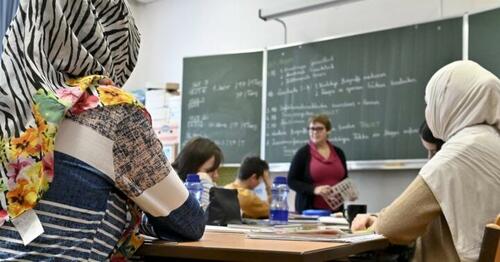
Official data from Vienna's Education Directorate confirms a profound demographic transformation in the Austrian capital's education system. Muslim students now account for 49.4% of pupils in public middle schools and 42% across public compulsory schools (elementary, middle, special needs, and polytechnic), up from 41.2% the previous year. In contrast, Catholics represent just 16.7% in these public institutions, with Orthodox Christians at 14.2% and those with no religious affiliation at 23.2%. Across all schools including private institutions, Muslims form the largest single group at 38.3%. Private schools tell a different story, with Catholics at 45.4% and Muslims at only 7.6%, highlighting stark segregation driven by socioeconomic, religious, and cultural preferences.
Integration expert Kenan Güngör, cited in Die Presse, attributes the rise primarily to post-2015 immigration from Syria, Afghanistan, and Iraq combined with higher birth rates among these communities. He notes a shift within the Muslim student population from more secular Turkish influences toward Arabic-speaking groups, correlating with more rigid interpretations of Islam, traditional gender roles, and reduced pluralism. This evolution occurs against a backdrop of linguistic diversity—some schools report over 30 languages spoken at home—creating classrooms where basic instruction is hampered by translation needs and social tensions.
These statistics are not abstract. Mainstream Austrian reporting, including from Profil magazine, has documented cases like a first-grade class where a single Christian boy was allegedly mocked as a "pig" in a school with 99% immigrant background and 230 Muslim students out of 390. Teachers describe environments strained by religious pressure, behavioral issues, and diverted instructional time. Cultural adaptations are evident in school canteens: the Austrian Farmers’ Association warned in late 2025 that traditional pork dishes like schnitzel have vanished from many menus, replaced by vegetarian or pork-free options to accommodate dietary laws. Officials and parents argue this erodes Austrian culinary heritage and choice, with one mother reporting her daughter refusing pork after being told it was "unclean."
Mainstream coverage from outlets like The Local often frames these changes through the lens of diversity and the need for enhanced civic education to build shared values. However, the pattern reveals what broader immigration debates frequently overlook: accelerating social fragmentation in everyday institutions. Public schools, once vehicles for assimilation into Austrian secular-Christian norms, are becoming microcosms of parallel societies. Native and Christian families increasingly opt for private education, further entrenching divides. This mirrors wider European trends where urban public systems adapt to new majorities rather than integrating them, raising questions about educational outcomes, social cohesion, and long-term cultural continuity.
Politically, the data has amplified voices like the FPÖ warning of "displacement," while experts call for targeted integration focusing on language, values, and preventing isolation. Without addressing root causes—sustained migration patterns, differential birth rates, and integration failures—these classroom dynamics forecast deeper societal rifts, where shared public spaces erode and identity-based tensions surface in the youngest generations. Vienna's schools illustrate how demographic velocity can outpace cultural adaptation, glossed over in favor of optimistic narratives but visible in the data, parental withdrawals, and institutional accommodations.
LIMINAL: Without decisive policy changes, Vienna's school data forecasts entrenched parallel societies across European cities, eroding shared cultural foundations in public institutions and intensifying political backlash within the next decade.
Sources (5)
- [1]Die Presse: Neue Zahlen aus Wien: Muslime in Mittelschule, Christen in Privatschulen(https://www.diepresse.com/21625702/neue-zahlen-zu-wiener-schulen-mehr-muslime-weniger-christen)
- [2]The Local: Muslim pupils now largest group in Vienna schools as city debates civic education(https://www.thelocal.at/20250416/muslim-pupils-now-largest-group-in-vienna-schools-as-city-debates-civic-education)
- [3]Brussels Signal: Muslims now make up almost half of all pupils in Vienna’s public schools(https://brusselssignal.eu/2026/05/muslims-now-make-up-almost-half-of-all-pupils-in-viennas-public-schools/)
- [4]European Conservative: Vienna Pork Vanishing from School Menus(https://europeanconservative.com/articles/news-corner/vienna-pork-vanishing-from-school-menus/)
- [5]Remix News: Austria: Sole Christian first-grader in Vienna school called 'pig'(https://rmx.news/austria/austria-sole-christian-first-grader-in-vienna-school-called-pig-in-a-school-with-99-immigration-background/)