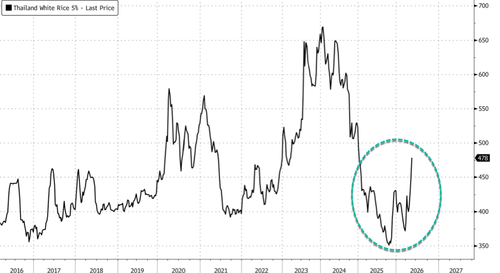
Rice Prices Post Largest Surge Since 2008 as Hormuz Disruptions and El Niño Converge on Global Food Security
May 2026 saw record rice price jumps not witnessed since 2008, driven by Hormuz-related fertilizer and energy shocks plus looming El Niño impacts, signaling delayed but significant food inflation and supply risks for over half the global population per Bloomberg, FAO, and IFPRI analysis.
Asian rice prices recorded their sharpest monthly increase in nearly two decades during May 2026, with Thailand's benchmark white rice rallying approximately 20%—the largest gain in data stretching back to 2008. This spike, also reflected in Chicago rice futures rising 15%, comes as a confluence of geopolitical shocks in the Strait of Hormuz and anticipated El Niño weather patterns threaten production of the staple that feeds an estimated 3.5 to 4 billion people worldwide. Bloomberg's reporting highlights how elevated diesel and fertilizer costs, exacerbated by shipping disruptions in the Persian Gulf amid the Iran conflict, are compounding risks for fertilizer-intensive rice farming across Asia, where irrigation often relies on diesel pumps. Farmers in Vietnam's Vinh Long province are already skipping planting cycles due to these input costs and extreme heat. The International Rice Research Institute has documented fertilizer price surges of nearly 50% since late February in Thailand, Cambodia, and the Philippines. The Philippines government has warned a strong El Niño could slash its rice output by up to 700,000 tons, or 3.5% of annual targets. FAO data confirms the broader trend: the Food Price Index rose for a third consecutive month by April 2026, with the Cereal Price Index and All Rice Price Index both climbing amid higher energy costs linked to Hormuz disruptions and drought concerns. Analysts including those at IFPRI and Carnegie have flagged that fertilizer and energy shortages from the Gulf will translate into higher food prices and potential yield reductions with a lag of six to nine months—placing the most acute risks in late 2026 or early 2027. This pattern echoes the 2008 global food price crisis that triggered widespread unrest, yet mainstream coverage frequently minimizes supply shock signals until retail shelves reflect the strain. Deeper connections reveal systemic vulnerabilities: rice-dependent nations in South and Southeast Asia source much of their nitrogen fertilizer from Gulf producers, meaning prolonged Hormuz instability could force farmers to cut applications or switch crops, reducing yields precisely when El Niño brings hotter, drier conditions to key growing belts. Historical food inflation episodes, from the Arab Spring triggers to the 2022 Ukraine-related spikes, demonstrate how such commodity surges disproportionately harm billions in low-income regions, often manifesting first as social instability rather than headline economic data. With global stocks under pressure and trade flows potentially tightening, the current rice surge serves as an early warning for broader grain market volatility that could reignite food inflation risks long downplayed in policy discussions.
LIMINAL: The 20% rice price surge flags converging fertilizer shortages from geopolitical conflict and climate risks that could drive sustained food inflation and regional shortages for billions by late 2026, following a predictable lag pattern that authorities tend to acknowledge only after visible crises emerge.
Sources (4)
- [1]Asia Rice Surges 20% in May as War and Weather Threaten Output(https://www.bloomberg.com/news/articles/2026-05-29/asia-rice-surges-20-in-may-as-war-and-weather-threaten-output)
- [2]FAO Food Price Index(https://www.fao.org/worldfoodsituation/foodpricesindex/en)
- [3]The Iran war's impacts on global fertilizer markets and food production(https://www.ifpri.org/blog/the-iran-wars-impacts-on-global-fertilizer-markets-and-food-production/)
- [4]Iran war: Strait of Hormuz shutdown could spark food crisis(https://www.dw.com/en/iran-us-israel-war-food-crisis-prices-fertilizer-energy-costs-inflation/a-76286348)