Founding Era Immigration Laws and the Assimilation Imperative: Historical Context for Modern Debates
Historical evidence from the Naturalization Act of 1790 and Founders' writings shows selective immigration favoring assimilation, not open multiculturalism, amid ongoing debates on American identity.
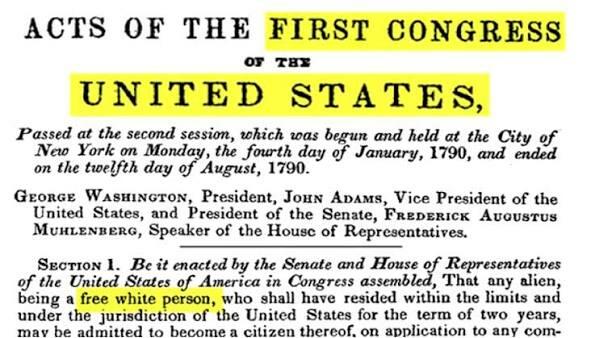
The 1790 Naturalization Act, the first uniform federal rule under the Constitution, restricted citizenship to 'free white persons' of good moral character after two years of residency, reflecting the Founders' emphasis on selective entry and cultural cohesion rather than unrestricted multiculturalism.
Primary records from the First Congress and correspondence by figures like James Madison underscore the priority of immigrants who would 'incorporate' into American society, adding to its 'wealth and strength' rather than forming separate enclaves. Madison warned against those who might evade integration, while George Washington stressed assimilation through 'intermixture' to become 'one people,' cautioning against groups retaining foreign languages, habits, and principles.
Thomas Jefferson and Alexander Hamilton echoed concerns about unassimilated inflows introducing discordant principles or foreign biases that could undermine republican unity. Hamilton argued that indiscriminate citizenship risked admitting 'the Grecian horse into the citadel of our liberty.'
These policies evolved with later acts adjusting residency (e.g., five years in 1795), but the core framework prioritized character, allegiance, and compatibility over open borders or demographic transformation. Strobe Talbott's 1992 Time essay 'The Birth of the Global Nation' later articulated a contrasting globalist vision of eroding national sovereignty through economic interdependence and supranational structures, highlighting enduring tensions between assimilationist heritage and modern multicultural frameworks.
This historical record challenges narratives of the early republic as an unqualified 'melting pot' for all peoples without regard to origins or integration, revealing instead a deliberate focus on preserving a cohesive national character amid ideological debates over identity and cohesion.
[Historian]: Selective assimilation policies in the founding era underscore persistent tensions between national cohesion and globalist pressures, shaping contemporary identity debates without implying inevitability of either extreme.
Sources (5)
- [1]Naturalization Act of 1790(https://en.wikisource.org/wiki/United_States_Statutes_at_Large/Volume_1/1st_Congress/2nd_Session/Chapter_3)
- [2]America Abroad: The Birth of the Global Nation - TIME(https://content.time.com/time/magazine/article/0,9171,976015,00.html)
- [3]Early U.S. Naturalization Laws | Constitution Annotated(https://constitution.congress.gov/browse/essay/artI-S8-C4-1-2-3/ALDE_00013163/)
- [4]Founding Fathers Immigration Quotes: Praise and Warnings(https://legalclarity.org/founding-fathers-immigration-quotes-praise-and-warnings/)
- [5]No, America's Founders Didn't Support Open Borders(https://thefederalist.com/2023/05/10/americas-founders-didnt-support-open-borders-and-neither-should-we/)