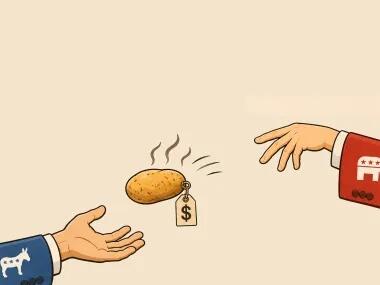
The Persistent Shadow of Pandemic Inflation: How Monetary Expansion Fueled U.S. Political Volatility Through 2026
Pandemic-era money printing and stimulus caused persistent high inflation that drove U.S. electoral shifts from 2022-2024 and ongoing political turbulence into 2026, corroborated by economic data and voting studies.
The rapid expansion of the U.S. money supply during the COVID-19 pandemic—driven by roughly $5-6 trillion in fiscal stimulus and Federal Reserve actions—produced the highest inflation in four decades, peaking at 9.1% in 2022. This surge, far exceeding post-2008 outcomes due to direct household transfers amid supply constraints, eroded real wages and purchasing power, reshaping voter behavior across multiple election cycles.[1][2][3]
Analyses from NBER and academic studies confirm that inflation perceptions and real wage declines correlated strongly with Democratic losses in the 2022 midterms and Trump's 2024 victory, with exit polls showing 75% of voters citing inflation-related hardship. County-level data revealed Republican gains in high-inflation areas, particularly lower-income ones, though effects varied by category like food and housing.[4][5][6]
By November 2026, with cumulative prices up over 20% since 2021, Trump's approval ratings have fallen to historic lows around 37%, coinciding with Democratic Socialist gains in the midterms—quadrupling their congressional presence amid broader economic discontent. This pattern underscores inflation's role as a durable driver of anti-incumbent sentiment, extending beyond initial supply shocks to sustained demand pressures from policy responses.[7][8]
Deeper connections emerge in comparisons to prior crises: unlike 2008 QE that largely stayed in bank reserves, pandemic measures directly boosted velocity and consumer spending, amplifying price effects per quantity theory analyses. Mainstream outlets and think tanks like Mercatus and WSJ highlight how unchecked fiscal-monetary coordination without repayment expectations fueled the episode, a dynamic often underemphasized in coverage focused on transitory factors.
Sources (7)
- [1]Why Didn’t 2008 Bank Bailouts Produce COVID-Level Inflation?(https://thedailyeconomy.org/article/why-didnt-bank-bailouts-produce-covid-level-inflation/)
- [2]What Caused the US Pandemic-Era Inflation?(https://www.nber.org/papers/w31417)
- [3]The impact of inflation on the 2024 presidential election(https://hub.jhu.edu/2024/11/20/how-inflation-impacted-2024-election/)
- [4]Trump Approval Rating Today: 37.5% (Nov 6, 2026)(https://electionsusa.org/approval/trump/)
- [5]America doesn't like socialism, but the candidates keep winning(https://www.cnbc.com/2026/11/07/socialism-elections-economy.html)
- [6]Inflation Is Largely a Demand-Side Problem(https://www.mercatus.org/research/federal-testimonies/inflation-largely-demand-side-problem)
- [7]How Government Spending Fuels Inflation(https://www.wsj.com/opinion/government-spending-fuels-inflation-covid-relief-pandemic-debt-federal-reserve-stimulus-powell-biden-stagflation-11645202057)