US-Iran Military Exchange Signals Rising Cyber Warfare Risks in Geopolitical Flashpoint
The US-Iran military exchange in the Strait of Hormuz on May 7, 2026, highlights not only physical conflict but also the looming threat of cyber warfare. Beyond Defense News’ coverage, this incident connects to Iran’s growing digital capabilities, historical US cyber operations like Stuxnet, and geopolitical stakes involving China and Russia. The risk of escalation into hybrid warfare demands urgent focus on cyber defense and regional stability.
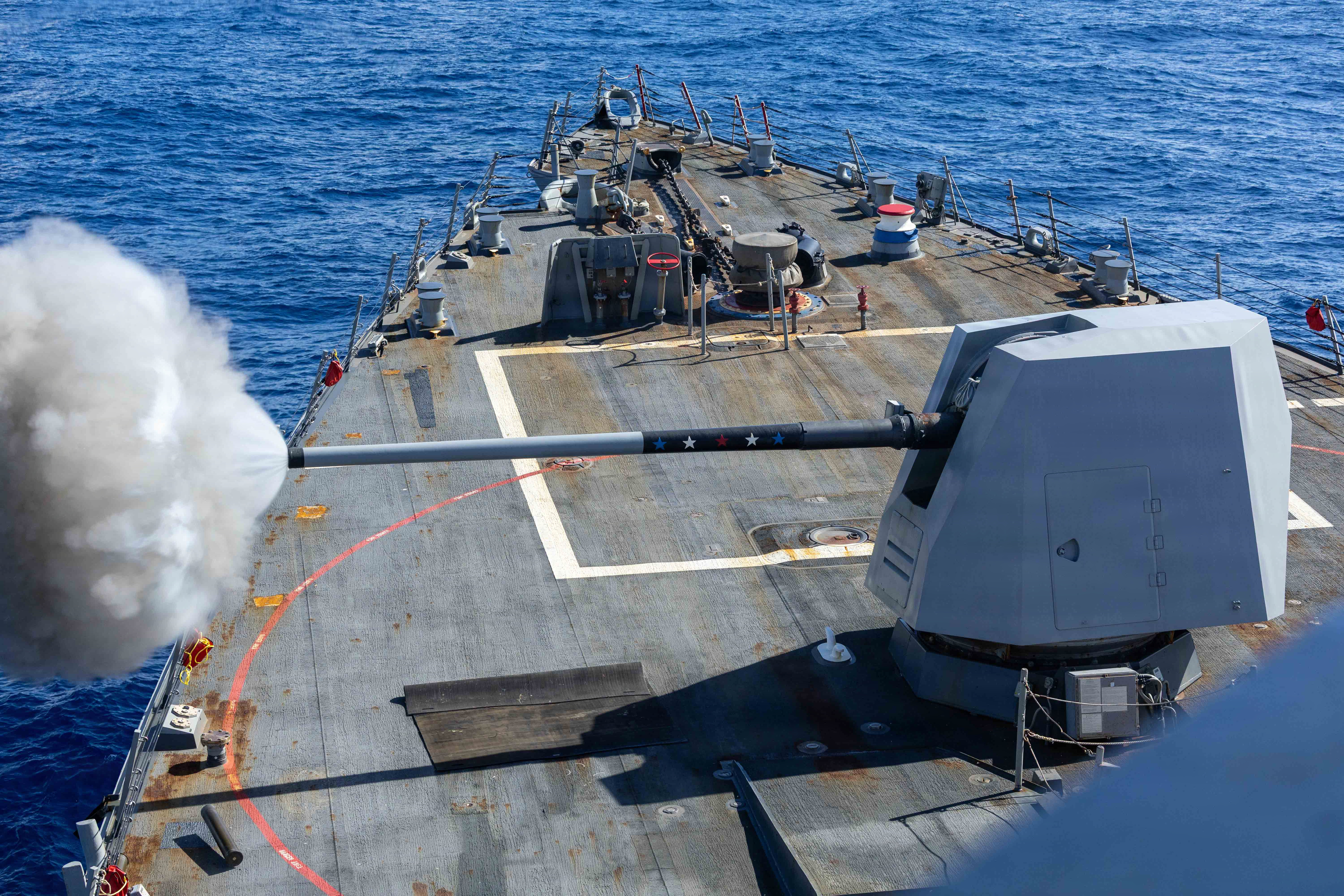
The recent exchange of fire between US and Iranian forces in the Strait of Hormuz, involving Arleigh Burke-class destroyers and Iranian missiles, drones, and small boats, marks a dangerous escalation in an already volatile region. While Defense News reported on the physical confrontation and President Trump's dismissive 'love tap' comment alongside his assertion that the war will 'be over quickly,' the deeper implications of this incident extend far beyond kinetic warfare. The Strait of Hormuz, a critical chokepoint for global oil transit, is not only a physical battlefield but also a digital one, where cyber warfare capabilities of both nations could amplify the stakes of such conflicts. This incident, occurring on May 7, 2026, as reported, is a flashpoint that could trigger cascading effects across military, economic, and cyber domains.
What the original coverage misses is the broader context of cyber threats that have historically accompanied US-Iran tensions. Iran has significantly developed its cyber capabilities over the past decade, with groups like APT33 (linked to the Iranian government) targeting critical infrastructure, including energy and maritime sectors in the Gulf. A 2019 cyberattack attributed to Iran disrupted Saudi Aramco’s operations, showcasing Tehran’s ability to weaponize digital tools against regional adversaries. The US, in turn, has conducted operations like the Stuxnet attack on Iran’s nuclear facilities in 2010, demonstrating its own cyber prowess. The current military exchange, while not yet tied to a specific cyber incident, raises the likelihood of retaliatory digital strikes. Iranian hackers could target US naval command-and-control systems or disrupt civilian infrastructure in the Gulf, while the US might escalate with cyberattacks on Iran’s already strained power grid or military networks.
Moreover, the original reporting overlooks the geopolitical ripple effects. The Strait of Hormuz is not just a bilateral US-Iran issue; it involves global powers like China and Russia, who have vested interests in Iran’s stability and access to energy markets. China, a major importer of Iranian oil, has deepened military and economic ties with Tehran through initiatives like the 25-year cooperation agreement signed in 2021. A prolonged conflict, even if Trump predicts a quick resolution, risks drawing in these powers, potentially through proxy cyber operations. The pause of Project Freedom, the US escort mission in the Strait, also signals a tactical retreat that could embolden Iran or its allies like Hezbollah to test US resolve in both physical and digital arenas.
Synthesizing additional sources, a 2025 report from the Center for Strategic and International Studies (CSIS) warned that Iran’s cyber doctrine increasingly integrates with its asymmetric warfare strategy, aiming to offset conventional military disadvantages. Similarly, a 2024 Reuters investigation highlighted US Cyber Command’s expanded focus on preemptive strikes against adversarial networks in the Middle East, suggesting that both sides are primed for digital escalation. These patterns indicate that the current military skirmish is not an isolated event but part of a broader hybrid conflict where cyber and kinetic actions are intertwined.
The confidence in Trump’s assertion of a quick resolution, as reported, appears misplaced given historical patterns of protracted US-Iran tensions and the complexity of negotiating a peace memorandum that halts Iran’s nuclear ambitions. More critically, the risk of miscalculation in cyberspace—where attribution is murky and response times are short—could transform a limited exchange into a full-spectrum crisis. The US and its allies must prioritize cyber defense of critical maritime and energy infrastructure in the region while preparing for Iran’s likely pivot to digital retaliation. This incident is a stark reminder that in 2026, warfare is no longer confined to missiles and drones; it extends into the unseen battlefield of code and data.
SENTINEL: The US-Iran clash risks spiraling into a hybrid conflict where cyber retaliation could target critical infrastructure. Expect heightened digital skirmishes within the next 3-6 months if de-escalation fails.
Sources (3)
- [1]US and Iran Exchange Fire as Trump Says War Will ‘Be Over Quickly’(https://www.defensenews.com/news/your-navy/2026/05/07/us-and-iran-exchange-fire-as-trump-says-war-will-be-over-quickly/)
- [2]CSIS Report: Iran’s Cyber Threat Evolution(https://www.csis.org/analysis/irans-cyber-threat-evolution-2025)
- [3]Reuters: US Cyber Command Expands Middle East Operations(https://www.reuters.com/technology/us-cyber-command-middle-east-operations-2024)