Robots Over Hormuz: US Autonomous Mine Sweepers Signal AI militarization in Global Energy Chokepoints
US deployment of CUSV, Kingfish, and Knifefish autonomous systems to clear Iranian mines in the Strait of Hormuz confirms rising Iran-US tensions while accelerating the integration of AI-driven unmanned platforms into strategic energy chokepoints, with implications for future unmanned-dominated naval conflicts drawn from Ukraine experience.
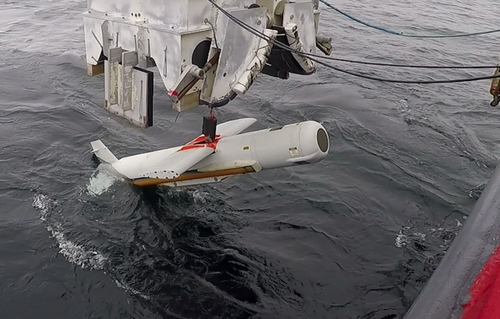
The US Navy has deployed a suite of autonomous and unmanned systems to clear Iranian-laid mines from the Strait of Hormuz, a critical artery carrying roughly one-fifth of global oil transit. According to The Wall Street Journal, these include the Common Uncrewed Surface Vessel (CUSV) built by RTX that tows the AQS-20 floating sonar system, scanning 100-foot-wide swaths of the seafloor, alongside battery-powered unmanned underwater vehicles like the MK 18 Mod 2 Kingfish and Knifefish from General Dynamics. DefenseScoop and Politico report that U.S. Central Command activated underwater drones in mid-April 2026 as part of a broader mine-clearance effort following Iranian mining operations that disrupted tanker traffic and escalated tensions with the Trump administration.
This operation goes beyond tactical demining. It reveals the accelerating militarization of AI-enabled autonomous systems in precisely the maritime chokepoints that underpin global energy flows. Retired naval experts cited in Navy Times and Asia Times note these platforms allow the Navy to send attritable assets into minefields without risking sailors, echoing lessons from Ukraine where low-cost unmanned systems have transformed naval warfare. The shift from traditional Avenger-class minesweepers (retired in 2025) to Littoral Combat Ships deploying remote sonar, AI-assisted target recognition, and semi-autonomous drones marks a doctrinal leap.
Connections others miss: While clearing the strait could take weeks and benefit US LNG exporters as Gulf production remains offline, this deployment normalizes AI 'kill chains' and autonomous patrolling in contested energy corridors. Similar systems tested in Ukraine are now operationalized against Iranian asymmetric threats, pulling 2030s-era robotic warfare into the present. As RAND analysts have observed, reduced concern over attrition lowers barriers to operating in high-risk zones, yet raises deeper questions about escalation control, AI autonomy thresholds in crowded shipping lanes, and the quiet proliferation of such systems by peer competitors like China in the South China Sea or Taiwan Strait. The Hormuz operation is thus both a response to immediate Iran conflict risks and a live demonstration of how AI is reshaping control over the world's most vital maritime bottlenecks.
LIMINAL: US robot deployment in Hormuz normalizes AI systems as primary guardians of energy chokepoints, lowering human costs but accelerating autonomous arms races that could destabilize global shipping and pull future unmanned naval warfare into today's great-power flashpoints.
Sources (5)
- [1]The Navy Sends in the Robots to Clear Hormuz of Mines(https://www.wsj.com/world/middle-east/the-navy-sends-in-the-robots-to-clear-hormuz-of-mines-1c107caa)
- [2]Navy to use underwater drones to help clear Iranian mines from Strait of Hormuz(https://defensescoop.com/2026/04/11/strait-of-hormuz-mine-clearance-navy-centcom-underwater-drones/)
- [3]Navy plays deadly game of hide-and-seek with Iranian mines(https://www.politico.com/news/2026/04/15/navy-deadly-game-iran-mines-00874500)
- [4]US Navy leaning on AI to sweep Iran’s Hormuz mines(https://asiatimes.com/2026/04/us-navy-leaning-on-ai-to-sweep-irans-hormuz-mines/)
- [5]The US has several options to counter Iranian mines. These are some key assets(https://www.navytimes.com/news/your-navy/2026/03/16/the-us-has-several-options-to-counter-iranian-mines-these-are-some-key-assets/)