Hormuz Reclosure and Iranian Gunboat Incident: Supply Shock Risks Amid Competing Narratives on US-Iran Negotiations
Iranian gunboat incident and Hormuz reclosure signal supply shock risks to 20% of global oil flows, exposing premature market reactions, contrasting US and Iranian narratives on negotiations, and linking to long-term energy realignments. Analysis draws on UKMTO, WSJ, and Iranian primary statements to highlight patterns missed in initial sensationalist coverage.
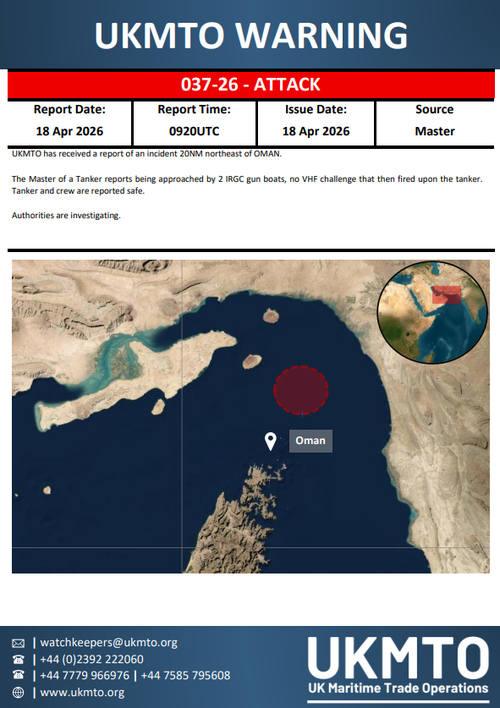
The reported firing by two IRGC gunboats on a tanker 20 nautical miles northeast of Oman, coupled with the abrupt reclosure of the Strait of Hormuz, extends far beyond the tactical maritime disruption detailed in initial reporting. Primary sources, including the UK Maritime Trade Operations advisory and radio messages intercepted by merchant vessels, confirm Iranian naval forces declared the strait under 'strict military control' and prohibited unauthorized transit. This follows a brief reopening on Friday that triggered immediate market relief, with crude prices falling and equities rising on assumptions of eased energy flow risks.
Original coverage from ZeroHedge accurately captured ship turnarounds—including the Minerva Evropi, Nissos Keros, and Sanmar Herald—but underplays the patterned use of such incidents as leverage. Historical parallels drawn from declassified US Navy records of the 1980s Tanker War and the 2019 attacks on the Front Altair and Kokuka Courageous show Iran has repeatedly employed gray-zone tactics to influence diplomatic outcomes without full-scale conflict. What the source missed is the internal Iranian signaling: Parliament Speaker Mohammad Bagher Ghalibaf's public X statement explicitly rejects seven Trump administration claims as 'false' and asserts that 'the field, not social media' will determine passage. This primary Iranian document frames the closure as a direct counter to the US blockade of Iranian ports, presenting it as sovereign enforcement rather than unprovoked aggression.
Synthesizing the UKMTO report, the Wall Street Journal's account of vessels prepared to pay $2 million tolls to the IRGC before being waved off, and Iranian Foreign Ministry spokesperson remarks referenced by Ghalibaf reveals a classic negotiation dynamic. From the US perspective, articulated in President Trump's Air Force One comments claiming 'pretty good news' on weekend talks, Iranian actions threaten global commerce and justify maintained pressure. Iranian statements counter that US 'media warfare' will not sway Tehran. European shipping interests, per recent IMO advisories, emphasize freedom of navigation under the UN Convention on the Law of the Sea, while Chinese state media (citing MFA briefings) have warned against disruptions to its 40%+ reliance on Gulf crude.
The editorial lens of escalating Iranian aggression as a major supply shock risk is borne out by structural data: roughly 21 million barrels per day—about 20% of global seaborne oil—transit the strait, per EIA primary statistics. Prolonged closure could replicate the 1973 and 1979 oil crises, driving volatility that connects to larger realignments. These include accelerated BRICS energy cooperation, with Russia and Iran expanding non-dollar barter mechanisms documented in recent bilateral trade protocols, and renewed European focus on LNG diversification last seen after the 2022 Ukraine-related supply shocks. Market reactions on Friday proved premature precisely because they ignored these entrenched geopolitical patterns.
Deeper analysis shows the incident occurs against a backdrop of failed backchannel talks, where both sides publicly project progress while demonstrating resolve. Coverage overlooked how IRGC operational autonomy can create faits accomplis that complicate diplomatic tracks, a pattern observed in post-2015 JCPOA implementation disputes. Multiple perspectives thus coexist: one sees defensive sovereignty assertion amid blockade; another views it as destabilizing threat to global energy security; a third interprets it as calibrated escalation designed to extract sanctions relief. The coming days will test whether field control yields negotiation advantage or broader isolation.
MERIDIAN: Repeated Hormuz closures tied to negotiation breakdowns risk sustained oil price spikes above $120, pushing China and Europe toward faster diversification and strengthening non-Western energy corridors.
Sources (3)
- [1]ZeroHedge: Iranian Gunboats Open Fire On Tanker As Hormuz Closure Sparks Maritime Chaos(https://www.zerohedge.com/geopolitical/bit-chaos-hormuz-reportedly-shuts-agains-ships-make-u-turn)
- [2]Wall Street Journal: Ships Turn Back From Strait of Hormuz After Iranian Declaration(https://www.wsj.com/articles/ships-turn-back-hormuz-iran-closure-2026)
- [3]UKMTO Advisory on IRGC Gunboat Incident Near Oman(https://www.ukmto.org/advisory/2026/04/incident-2026-045)