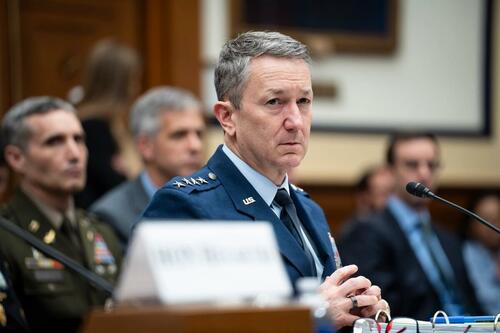
US General Confirms Russian Support for Iran in 2026 War, Highlighting Deepening Anti-US Axis
Top US General Dan Caine confirmed Russian actions supporting Iran during the 2026 war in Senate testimony, coming amid Iranian threats over the closed Strait of Hormuz, high oil prices, and recent Moscow-Tehran diplomacy. This points to a maturing Russia-Iran strategic partnership challenging US influence that extends beyond immediate battlefield support.
In a Senate Armed Services Committee hearing on April 30, 2026, General Dan Caine, Chairman of the Joint Chiefs of Staff, publicly confirmed that Russia is providing tangible assistance to Iran amid its ongoing conflict with the United States. When asked by Sen. Roger Wicker whether there was any question that Vladimir Putin's government was undermining US efforts, Caine responded cautiously but affirmatively: 'There's definitely some action there,' while declining to elaborate in open session. This marks one of the most direct official US acknowledgments of Russian involvement in the conflict that erupted on February 28, 2026.[1][2]
The war, which has seen US and Israeli strikes including the assassination of Supreme Leader Ali Khamenei, Iranian retaliation via missiles and drones, and Tehran's closure of the Strait of Hormuz, has already triggered a global energy crisis. Iran has maintained its blockade despite a fragile ceasefire, threatening "long and painful strikes" on US positions and warships if attacks resume. US naval blockades of Iranian ports have created a dual chokehold on the critical waterway, which carries roughly one-fifth of global oil and gas shipments. Oil prices have surged, pushing US regular gasoline to $4.30 per gallon and diesel to $5.49, with the UN warning of slowed global growth, rising inflation, and millions more pushed into poverty if disruptions continue.[3][4]
This confirmation arrives days after Iran's Foreign Minister Abbas Araghchi visited Moscow for consultations with Putin, underscoring "close consultations... on a wide range of issues, especially regional issues." While President Trump has downplayed Chinese involvement, describing Beijing's role as limited, the Russia-Iran collaboration fits a longer pattern of strategic cooperation. Moscow and Tehran have coordinated in Syria, exchanged drone technology (with Russia deploying Iranian-designed systems in Ukraine and potentially now reversing flows of expertise or electronic warfare capabilities), and aligned against perceived US hegemony. Intelligence reports suggest Russia may be supplying munitions, satellite data, or advisory support to help Iran sustain its asymmetric campaign around the Persian Gulf.[5][1]
Mainstream coverage has often framed the conflict in narrow terms of nuclear concerns or regional flashpoints, yet the Russia-Iran axis represents a deeper challenge: the consolidation of a multipolar bloc explicitly designed to contest American dominance in energy chokepoints and great-power competition. This partnership, built on mutual sanctions resilience and anti-Western ideology, risks prolonging the Iran conflict, drawing in further escalation, and accelerating shifts in global alliances. As The Atlantic notes, the ramifications of the Hormuz crisis and the war's ripple effects have only begun to unfold, with the strait increasingly viewed through the lens of Iranian leverage.[6]
The episode reveals how surface-level reporting on ceasefires and oil prices masks the structural realignment underway. With gasoline prices causing domestic pain and global growth forecasts darkening, the covert alliance signals that US military efforts in the Middle East now contend with great-power backing for its adversaries—a pattern likely to define future conflicts.
LIMINAL: Russian material and technical aid to Iran will likely extend the Hormuz standoff and US entanglement, strengthening an anti-hegemonic axis that raises long-term costs for American power projection while driving sustained global energy instability.
Sources (5)
- [1]American general confirms Russia aiding Iran in war with US(https://kyivindependent.com/american-general-confirms-russia-aiding-iran-in-war-against-us/)
- [2]Iran threatens painful response if US renews attacks(https://www.reuters.com/business/energy/us-seeks-international-help-reopen-strait-hormuz-crude-prices-surge-2026-04-30/)
- [3]2026 Iran war(https://en.wikipedia.org/wiki/2026_Iran_war)
- [4]The Iran War's Ramifications Have Only Just Begun(https://www.theatlantic.com/national-security/2026/04/the-iran-wars-ramifications-have-only-just-begun/687004/)
- [5]US general says Russia is helping Iran in war(https://www.pravda.com.ua/eng/news/2026/04/30/8032570/)