Ukrainian Drone Strike Hits Moscow Refinery Amid Escalating Global Diesel Supply Squeeze
Credible reports confirm the Sept 20, 2026 Ukrainian drone strike on Moscow's Gazprom Neft refinery amid Russia's ongoing diesel export restrictions driven by cumulative war damage to its refining capacity, contributing to global price pressures.
On September 20, 2026, Ukrainian forces conducted a large-scale drone attack on Moscow, striking the Gazprom Neft-owned Moscow Oil Refinery in the Kapotnya district approximately 15-16 km from the Kremlin. The facility, with a capacity of around 11-12 million metric tons of crude per year (roughly 245,000 barrels per day), supplies a significant portion of fuel to the Moscow region. Ukrainian President Volodymyr Zelenskyy confirmed the strike on multiple units including primary processing and isomerization facilities, deploying systems such as FP-1, Palianytsia, and others, describing it as impacting billions sustaining Russia's war effort. Russian authorities reported downing over 1,600 drones, with some reaching the refinery causing fires and smoke visible across the city; two deaths and injuries occurred in the broader Moscow region from the barrage. This follows prior attacks on the same site, including in June 2026 that reportedly halted operations until at least 2027.
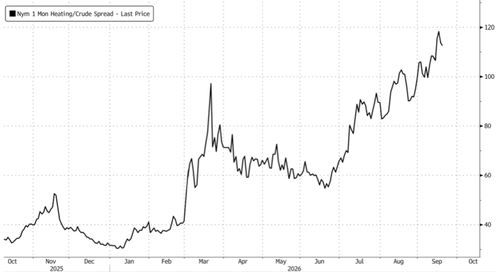
The strike occurs against a backdrop of mounting pressure on global diesel markets. Repeated Ukrainian attacks on Russian refineries have reduced output, prompting Russia to extend diesel export bans (most recently until September 30, 2026, with further extensions under consideration) to stabilize domestic supplies amid shortages and price spikes. Refining margins have surged, with US heating oil cracks reaching record levels near $117 per barrel. Broader disruptions from conflicts in the Gulf and Russia have tightened availability of the fuel critical for transport, industry, and heating ahead of the Northern Hemisphere winter. US officials, including Senate Majority Leader John Thune, have signaled openness to exploring diesel export restrictions, while President Trump has publicly linked the price rises primarily to the Russia-Ukraine conflict and urged de-escalation on energy infrastructure strikes.
These developments underscore converging risks: energy infrastructure targeting in active conflicts, retaliatory export controls, and potential spillover effects on worldwide fuel availability and prices, with limited near-term paths to resolution.
[Energy Analyst]: Cumulative refinery outages and export curbs could sustain elevated diesel prices through winter 2026-27, amplifying economic pressures on import-dependent economies and complicating de-escalation efforts.
Sources (6)
- [1]Two dead in Moscow region, drones hit oil refinery in Russian capital(https://www.reuters.com/world/europe/two-dead-moscow-region-drones-hit-oil-refinery-russian-capital-2026-09-20/)
- [2]Zelensky Confirms Strikes on Moscow Refinery and Logistics Facilities(https://www.kyivpost.com/post/84942)
- [3]Ukraine’s long-range strikes reach Moscow’s fuel supply as Russia votes in State Duma elections(https://euromaidanpress.com/2026/09/20/ukraines-launches-massive-attack-on-moscow/)
- [4]Refineries Are Now the Main Chokepoint for Global Energy Supplies — WSJ(https://www.tradingview.com/news/DJN_DN20260919000891:0/)
- [5]Russia extends ban on diesel exports until September 30(https://www.reuters.com/business/energy/russia-extends-ban-diesel-exports-until-september-30-2026-08-29/)
- [6]Moscow Refinery - Wikipedia(https://en.wikipedia.org/wiki/Moscow_Refinery)