From Hormuz to Harvests: Untangling Energy Disruptions, Fertilizer Chains, and Risks of Global Economic Contagion
MERIDIAN analysis connects Vitol executive warnings on Hormuz LNG disruptions to fertilizer shortages and food inflation risks, synthesizing FT summit statements, FAO price indices, World Bank outlooks, and IEA gas reports. The piece highlights historical patterns, regional asymmetries, and cascading economic instability missed by alarmist coverage while presenting trader, agronomist, and policy perspectives without endorsement.
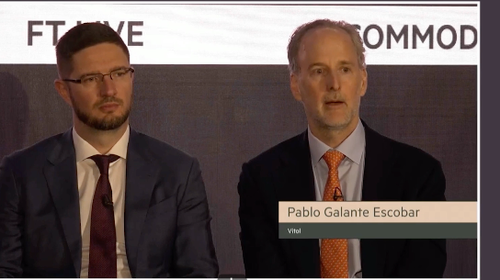
Pablo Galante Escobar, head of LNG at Vitol, told the FT Commodities Summit that prolonged closure of LNG trade through the Strait of Hormuz places the world 'on borrowed time,' with disruptions likely transferring from energy markets into food systems within three to five months even if flows resume immediately. Primary remarks, as captured in summit coverage, underscore that natural gas is the essential feedstock for ammonia-based fertilizers; absent it, global agricultural input costs rise sharply and yields fall.
ZeroHedge reporting accurately conveys Escobar's timeline and the 20 million ton annual LNG supply shortfall projected for 2027-2028 but frames the issue primarily as an immediate trading signal, underplaying longer structural patterns and differential regional exposure. Coverage also gives limited attention to historical precedents documented in primary sources. The FAO's Food Price Index monthly releases from 2007-2008 and 2021-2022 demonstrate clear lagged correlation between natural gas price spikes and subsequent food commodity surges, with urea prices moving in near lockstep with European TTF gas benchmarks. The World Bank's Commodity Markets Outlook (April 2022) similarly records how the post-Ukraine invasion energy shock drove fertilizer prices to levels last seen during the 2008 food riots, contributing to political instability in import-dependent states.
A third primary reference, the IEA's Gas Market Report 2024, notes that Qatar and neighboring Gulf projects represent roughly 20 percent of planned global LNG capacity growth through 2028. Damage or delay here does not simply postpone a 'glut'—as Mercuria's Julien Bourdeau also observed at the same summit—but removes baseload supply at a moment when Europe continues to rebuild inventories and East Asia faces coal-to-gas switching pressures.
Multiple perspectives emerge. Energy traders emphasize market tightness and arbitrage opportunities, arguing that US and Australian LNG can eventually reroute though at higher prices and with greater shipping emissions. Agricultural ministries in India and Brazil, per statements filed with the UN Committee on World Food Security, stress that smallholder farmers cannot absorb sustained 30-50 percent fertilizer cost increases without yield losses estimated by the International Fertilizer Association at 5-12 percent for key staples. Economists at the IMF, in their 2023 working paper on commodity price transmission, caution that food price shocks now feed directly into core inflation measures, complicating monetary policy in emerging markets already managing debt-service burdens.
What remains undercovered is the feedback loop into broader economic instability: reduced harvests tighten grain markets, elevate export restrictions (as seen in 2022 Indian wheat and 2023 Egyptian rice measures), and can spark balance-of-payments crises. Primary documents from the UN World Food Programme's quarterly assessments link the 2008 and 2022 episodes to increased civil unrest in 22 food-importing countries. Current Gulf tensions around Hormuz add a geopolitical overlay—any sustained closure intertwines energy security, maritime freedom-of-navigation concerns, and agricultural outcomes in ways few single-discipline analyses capture.
The pattern is therefore not merely sequential but systemic. Fertilizer production, energy markets, shipping chokepoints, and sovereign food policies form a tightly coupled network. Escobar's warning, read alongside FAO price data, World Bank forecasts, and IEA supply projections, suggests the next food-price inflection point may arrive sooner and persist longer than consensus trading desks currently price. Observers from different institutional vantage points agree on the transmission mechanism but diverge on remedies: accelerated investment in precision agriculture and alternative nitrogen fixation versus renewed diplomatic focus on de-risking critical maritime routes. The coming quarters will test which response prevails.
MERIDIAN: Energy shocks at chokepoints like Hormuz reliably transmit to fertilizer and food prices with 3-9 month lags, as shown in repeated FAO and World Bank data; without diversified supply or efficiency gains this linkage risks renewed inflation volatility and policy strain across emerging economies by late 2026.
Sources (4)
- [1]We're On Borrowed Time: Vitol LNG Chief Warns Of Coming Food Price Shock(https://www.zerohedge.com/commodities/were-borrowed-time-vitol-lng-chief-warns-coming-food-price-shock)
- [2]FAO Food Price Index(https://www.fao.org/worldfoodsituation/foodpricesindex/en/)
- [3]World Bank Commodity Markets Outlook April 2022(https://www.worldbank.org/en/research/commodity-markets)
- [4]IEA Gas Market Report 2024(https://www.iea.org/reports/gas-market-report-2024)