Maersk CEO's Iran War Warning Signals Deeper Risks to Global Supply Chains
Maersk CEO Vincent Clerc's warning about the Iran war as a 'wake-up call' for global trade, centered on the Strait of Hormuz closure, reveals deeper risks to supply chains beyond energy markets. This analysis explores overlooked systemic impacts, historical parallels like the Tanker War, and compounding geopolitical stressors such as U.S.-China tensions. It highlights second-order effects on inflation and developing economies, drawing on Maersk’s earnings, IEA data, and WTO reports to frame the crisis as a catalyst for rethinking trade resilience.
The recent warning by Maersk CEO Vincent Clerc about the Iran war as a 'new wake-up call' for global trade, as reported by ZeroHedge, underscores a critical juncture for international commerce amid escalating tensions in the Middle East. Clerc's comments, made during a CNBC interview following Maersk's latest earnings report, highlight the immediate threat posed by the near-standstill of traffic through the Strait of Hormuz—a chokepoint through which 20% of the world's oil and significant container shipments pass. However, the original coverage misses the broader systemic implications of this crisis, including historical parallels, cascading effects on non-energy sectors, and the geopolitical undercurrents driving the deadlock. This analysis delves into these overlooked dimensions, situating the current crisis within a pattern of trade disruptions and examining its potential to reshape global economic stability.
The Strait of Hormuz has long been a flashpoint for geopolitical tensions, with past incidents like the 1980s Tanker War during the Iran-Iraq conflict demonstrating the fragility of this corridor. Today’s crisis, however, unfolds against a backdrop of heightened global supply chain vulnerabilities, exacerbated by recent events such as the COVID-19 pandemic and the 2021 Suez Canal blockage. Maersk’s earnings report notes that sustained disruption could depress global container demand growth, projected at 2-4%, and drive crude oil prices to $90-100 per barrel. Yet, the report and subsequent coverage underplay the second-order effects: rising shipping costs could fuel inflation in consumer goods, particularly in Asia and Europe, where reliance on Gulf energy and trade routes is acute. For instance, Europe imports approximately 30% of its oil through Hormuz, per data from the International Energy Agency (IEA), while Asia’s dependence on LNG and crude from the region is even higher. A prolonged closure could thus trigger factory slowdowns, exacerbate energy shortages, and strain already fragile post-pandemic recovery efforts.
Moreover, the ZeroHedge article overlooks the interplay between the Iran war and other geopolitical stressors, such as U.S.-China trade tensions and recent tariffs on American imports mentioned by Maersk. These overlapping pressures suggest a compounding risk to supply chain resilience, a concern echoed in a 2023 World Trade Organization (WTO) report warning of 'fragmentation risks' in global trade due to rising militarization of key maritime routes. The current crisis also parallels disruptions in the Red Sea caused by Houthi attacks, which have already forced rerouting of shipments around the Cape of Good Hope, adding weeks and significant costs to journeys. Maersk’s call for 'new tools' to mitigate disruptions signals an industry-wide recognition that traditional risk management strategies are insufficient in an era of cascading crises—a point underexplored in the original reporting.
Geopolitically, the stalled negotiations and fragile ceasefires in Iran and Lebanon, as noted by Maersk, reflect deeper strategic calculations. Iran’s control over Hormuz is a lever of influence, historically used to counter U.S. sanctions and assert regional dominance. The U.S. prioritization of reopening the strait, as highlighted in the article, aligns with its broader policy of securing energy markets, evident in past interventions like Operation Earnest Will in the 1980s. However, the current U.S. administration faces a more complex landscape, balancing domestic political pressures with the risk of escalation. A breakthrough in negotiations, as reported on Thursday with stuck ships potentially moving, offers a glimmer of hope, but the underlying tensions remain unresolved, casting doubt on long-term stability.
What the original coverage also misses is the disproportionate impact on smaller economies and developing nations, which lack the resources to absorb shocks from higher shipping and energy costs. For example, South Asian countries like India, heavily reliant on Gulf oil, could face acute economic strain, potentially destabilizing regional markets further. This asymmetry in impact underscores a critical flaw in global trade architecture: the lack of equitable mechanisms to shield vulnerable economies from geopolitical fallout.
In synthesizing these insights with primary sources, Maersk’s earnings report provides direct evidence of industry concern, while the IEA’s 2022 Annual Report offers quantitative backing for Hormuz’s centrality to energy flows. The WTO’s 2023 Trade Outlook contextualizes the crisis within broader fragmentation trends, revealing a pattern of escalating risks that the Iran war amplifies. Together, these sources suggest that while the immediate focus is on energy and shipping, the true challenge lies in reimagining supply chain resilience amid a fracturing geopolitical order. The clock, as the original article notes, is indeed ticking—but the countdown is not just to an energy crisis, but to a potential realignment of global trade dynamics.
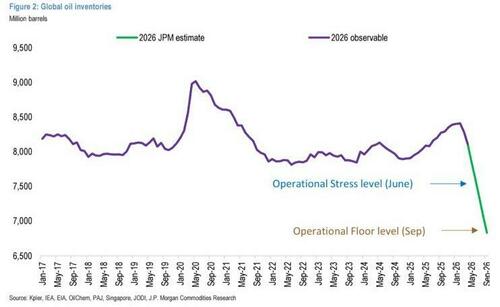
MERIDIAN: If the Strait of Hormuz remains closed beyond June, expect a sharp spike in shipping costs and oil prices, potentially triggering inflationary pressures and factory disruptions, especially in Asia and Europe.
Sources (3)
- [1]Maersk Q1 2023 Earnings Report(https://www.maersk.com/news/articles/2023/05/04/q1-2023-interim-report)
- [2]International Energy Agency 2022 World Energy Outlook(https://www.iea.org/reports/world-energy-outlook-2022)
- [3]World Trade Organization 2023 World Trade Report(https://www.wto.org/english/res_e/publications_e/wtr23_e.htm)