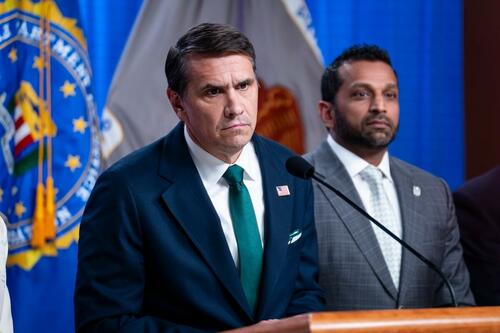
DOJ Report on Anti-Christian Bias: Exposing the Administrative State's Cultural Orthodoxy and Hidden Policy Agendas
Official 2026 DOJ Task Force report details systemic anti-Christian actions across Biden-era agencies on abortion, gender policy, education, and conscience protections, revealing bureaucratic enforcement of progressive cultural mandates that clashed with religious liberty. Analysis uncovers deeper agenda of using federal power to sideline traditional Christianity in favor of secular orthodoxy.
The April 30, 2026 release of the Task Force to Eradicate Anti-Christian Bias report marks more than a partisan postmortem on the Biden years. Compiled by 17 federal agencies under Executive Order 14202 and chaired by Acting Attorney General Todd Blanche, the roughly 500-page document (including exhibits) systematically catalogs how prosecutions, regulations, and internal guidance across the DOJ, FBI, IRS, Department of Education, HHS, and others created what it terms a pattern of targeting Christians who sought to live out convictions on abortion, gender, education, and conscience.[1][1]
Official findings highlight the 2023 FBI memo on "radical traditionalist Catholics" that relied on Southern Poverty Law Center designations, disparate enforcement of the FACE Act favoring abortion clinic access over attacks on pregnancy centers and churches, aggressive reinterpretation of Bostock v. Clayton County to mandate gender ideology in schools and sports while dismissing religious exemptions as insincere, and the Garland school board memo that framed concerned Christian parents as potential domestic threats. COVID vaccine mandates subjected federal employees and contractors holding traditional faith-based objections to invasive scrutiny that courts later found presumptively violated RFRA standards. The Civil Rights Division allegedly produced guidance suggesting Christians could not be victims of discrimination, only perpetrators.[2][2]
Going beyond headlines that frame this as mere retaliation, the report reveals a deeper structural shift: the quiet establishment of a secular-progressive moral framework as de facto administrative policy. Where the First Amendment traditionally shielded religious exercise from majoritarian whims, Biden-era agencies treated sincere Christian anthropology—beliefs about biological sex, the sanctity of life, and parental authority—as obstacles to "equity" objectives. This was not overt violence of historical persecutions but a sophisticated bureaucratic persecution through funding conditions, regulatory capture, selective prosecution, and cultural gatekeeping. Critics from groups like the Freedom From Religion Foundation dismiss the task force as a "political stunt" promoting a narrative of Christian victimhood, while supporters see validation of long-voiced concerns that federal power was being weaponized against the nation's historically dominant faith tradition.[3]
The connections missed in mainstream coverage lie in the continuity with broader patterns. The same agencies that monitored traditional Catholics had previously applied SPLC frameworks to evangelical nonprofits and homeschool networks. The expansive reading of Bostock flowed logically from viewing religious objections to gender transitions or same-sex marriage as analogous to racial discrimination—an ideological reframing that collapses theological dissent into bigotry. This mirrors global trends where secular states incrementally sideline traditional religions under human rights or public health pretexts. In the U.S. context, it suggests an unspoken agenda: replacing pluralistic religious liberty with a managed marketplace of approved beliefs where Christianity's residual cultural influence must be neutralized to clear ground for new protected orthodoxies around identity and autonomy.
The Trump administration's response—reversing guidance, restoring exemptions, and forming the task force—represents a counter-reset, yet the underlying tension persists. Religious liberty has become zero-sum in the eyes of many bureaucrats: elevating conscience rights for one group necessarily limits the state's ability to enforce uniformity on contested moral issues. As this report enters litigation, congressional oversight, and public memory, it underscores how administrative agencies, insulated from electoral accountability, can function as instruments of cultural transformation. The real question is whether this exposure leads to durable structural reforms or merely fuels the next cycle of partisan task forces. Either way, it confirms that in 21st-century America, the administrative state's deepest biases often wear the clothes of compassion, equity, and public safety.
Liminal Analyst: The formal documentation of anti-Christian administrative patterns will likely intensify legal and legislative pushback on religious exemptions, polarizing cultural policy for years while validating narratives of institutional capture that could mobilize faith-based voting blocs in future elections.
Sources (4)
- [1]Task Force Publishes Report on Eradicating Anti-Christian Bias and Restoring Religious Liberty(https://www.justice.gov/opa/pr/task-force-publishes-report-eradicating-anti-christian-bias-and-restoring-religious-liberty)
- [2]Trump DOJ report lays bare Biden administration's alleged anti-Christian bias(https://www.foxnews.com/politics/trump-doj-report-lays-bare-biden-administrations-alleged-anti-christian-bias)
- [3]DOJ releases report detailing anti-Christian bias under Biden(https://www.christianpost.com/news/doj-releases-report-detailing-anti-christian-bias-under-biden.html)
- [4]FFRF calls DOJ 'anti-Christian bias' report stacked(https://ffrf.org/news/releases/ffrf-calls-doj-anti-christian-bias-report-stacked/)