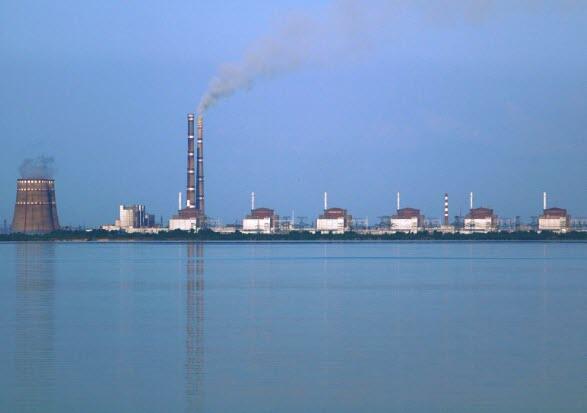
Regulators from 38 countries warn nuclear accident risk in Ukraine is rising this winter
On 16 November 2026, nuclear and radiation regulators from 38 countries warned that Russian strikes on Ukraine’s power grid are raising the risk of a nuclear accident this winter, including a possible nationwide blackout affecting all nine operating reactors. The IAEA had already reported grid-driven power cuts and another loss of off-site power at Zaporizhzhia.
Documented: On 16 November 2026, three associations of nuclear and radiation-safety regulators — the Western European Nuclear Regulators Association (WENRA), the Heads of the European Radiological Protection Competent Authorities (HERCA), and the Heads of the Nordic Radiation Safety Authorities (NORA) — issued a joint statement warning that risks to nuclear safety in Ukraine are increasing because of attacks on energy infrastructure. The groups say they represent 38 countries, including every EU member plus the United States, Britain, Canada and Japan. They call for Russia to stop striking Ukrainian nuclear facilities and the grid those plants need to operate safely, and they warn that further damage could produce a nationwide blackout with “further serious implications for the safety of all nuclear facilities.” A deterioration, they write, could lead to radioactive releases affecting people and the environment in Ukraine and possibly beyond. They also say they are strengthening European emergency preparedness and cross-border coordination, and continuing support to Ukraine’s regulator, SNRIU.
Documented, from the same day’s Reuters interview with Per Strand, who heads both HERCA and NORA: Strand said recent Russian strikes have used drones with larger payloads and more precise targeting, and that “clearly the highest risk will be this winter for a nuclear accident.” His stated worst case is a national blackout hitting all nine operating Ukrainian reactors at once, which he described as “quite a severe situation” if radioactive releases followed. He said the outcome could still be avoided if Russia is pressed now to stop attacks on energy infrastructure; if not, European states would need to coordinate emergency preparedness. Reuters reported that Ukraine’s three operating plants — as distinct from the occupied Zaporizhzhia plant, which is not generating — supply about 80 percent of the electricity the country is using this winter, so the grid and the reactors depend on each other.
Documented, from the International Atomic Energy Agency in the days before the regulators’ statement: On 14 November, Director General Rafael Grossi said grid instability from military activity had forced several operating Ukrainian units to reduce power that week, and that he could “hardly overstate” concern about the grid’s effect on nuclear safety as winter arrives. The IAEA reported that Zaporizhzhia lost all off-site power for more than 12 hours on 8 November after damage to the Ferosplavna-1 330 kV line, and that the plant has repeatedly had to fall back on emergency diesel generators. Reuters, citing the IAEA, reported that Zaporizhzhia has lost off-site power 27 times since the war began and has depended on a single off-site line since late March. Earlier IAEA updates this autumn described strikes on substations that feed operating plants and repeated that a secure off-site supply is one of the conditions the agency treats as indispensable during armed conflict.
What is claimed, and by whom: The regulators and Strand attribute the rising risk specifically to Russian attacks, including what they describe as more destructive weapons and a new drone tactic. Moscow has, throughout the war, denied deliberately endangering nuclear sites and has accused Ukraine of striking facilities and lines, including around Zaporizhzhia. Those competing attributions are not settled by the 16 November statement; the statement is a regulatory warning, not a forensic finding.
What is not established: The statement does not say an accident is imminent, or that any release would match Chernobyl in 1986. Chernobyl is the historical reference point for how far a large civil release can travel; the regulators’ own language is about a possible deterioration that could produce releases, not a prediction of that scale. Diesel generators, residual heat removal, and operator procedures are designed precisely for loss of off-site power; the documented concern is that repeated, simultaneous, and prolonged losses — especially a total blackout across all operating units, or the single-line situation at Zaporizhzhia — erode the redundancy those designs assume. Repair of a shattered transmission network in wartime is itself uncertain, which is why the associations flag that restoring the grid after a total blackout “could be very difficult.”
The less obvious connection is structural, not tactical. Ukraine’s operating reactors are now both the backbone of winter supply and customers of the same damaged grid. Attacks that cut thermal plants and substations do not have to hit a reactor building to raise nuclear risk: they can force power reductions, trip lines, and leave safety systems on backup power while demand peaks. Zaporizhzhia, cold and occupied, is a separate and longer-running single-point failure. The 38-country statement is unusual less for inventing that mechanism than for nuclear regulators, rather than foreign ministries, putting a winter blackout scenario and a call to halt strikes on the record together — and pairing it with a commitment to cross-border emergency coordination if the strikes continue.
Operating Ukrainian reactors supply most of the country’s winter electricity and need a stable grid to keep fuel cool, so strikes on substations and lines raise nuclear risk even when reactor buildings are not hit. Regulators covering the EU, the US, Britain, Canada and Japan say a full blackout this winter is the scenario they are most worried about, and they are preparing cross-border emergency coordination if attacks continue.
Sources (5)
- [1]Risk of nuclear accident in Ukraine increasing this winter, atomic safety regulators say — Reuters(https://www.reuters.com/business/energy/risk-nuclear-accident-ukraine-increasing-this-winter-atomic-safety-regulators-2026-11-16/)
- [2]Joint statement by WENRA, HERCA and NORA — HERCA(https://www.herca.org/joint-statement-by-wenra-herca-and-nora-on-the-potential-impact-on-nuclear-safety-from-russias-attacks-on-ukrainian-energy-infrastructure/)
- [3]Update 375 — IAEA Director General Statement on Situation in Ukraine(https://www.iaea.org/newscenter/pressreleases/update-375-iaea-director-general-statement-on-situation-in-ukraine)
- [4]Update 374 — IAEA Director General Statement on Situation in Ukraine(https://www.iaea.org/newscenter/pressreleases/update-374-iaea-director-general-statement-on-situation-in-ukraine)
- [5]Ukraine faces rising nuclear accident risk this winter, regulators warn — Kyiv Independent(https://kyivindependent.com/ukraine-faces-rising-nuclear-accident-risk-this-winter-regulators-warn/)