Senate passes 62-33 permitting bill that fast-tracks nuclear and enrichment plants
The Senate passed a bipartisan permitting bill 62-33 that accelerates nuclear and enrichment project approvals, shortens environmental review challenges, and reallocates data-center grid costs. The shift gives developers faster regulatory certainty while narrowing avenues for legal and tribal challenge.
The Senate passed the Bipartisan American Affordability and Jobs Act 62-33 late Thursday, clearing a roughly 500-page permitting overhaul negotiated by senators and the White House. The bill sets deadlines for National Environmental Policy Act reviews, limits agencies' ability to revoke permits for projects already operating or under construction, and assigns grid costs to large data centers. It also creates a nuclear title that would allow nuclear fuel enrichment plants to begin building before final Nuclear Regulatory Commission sign-off.
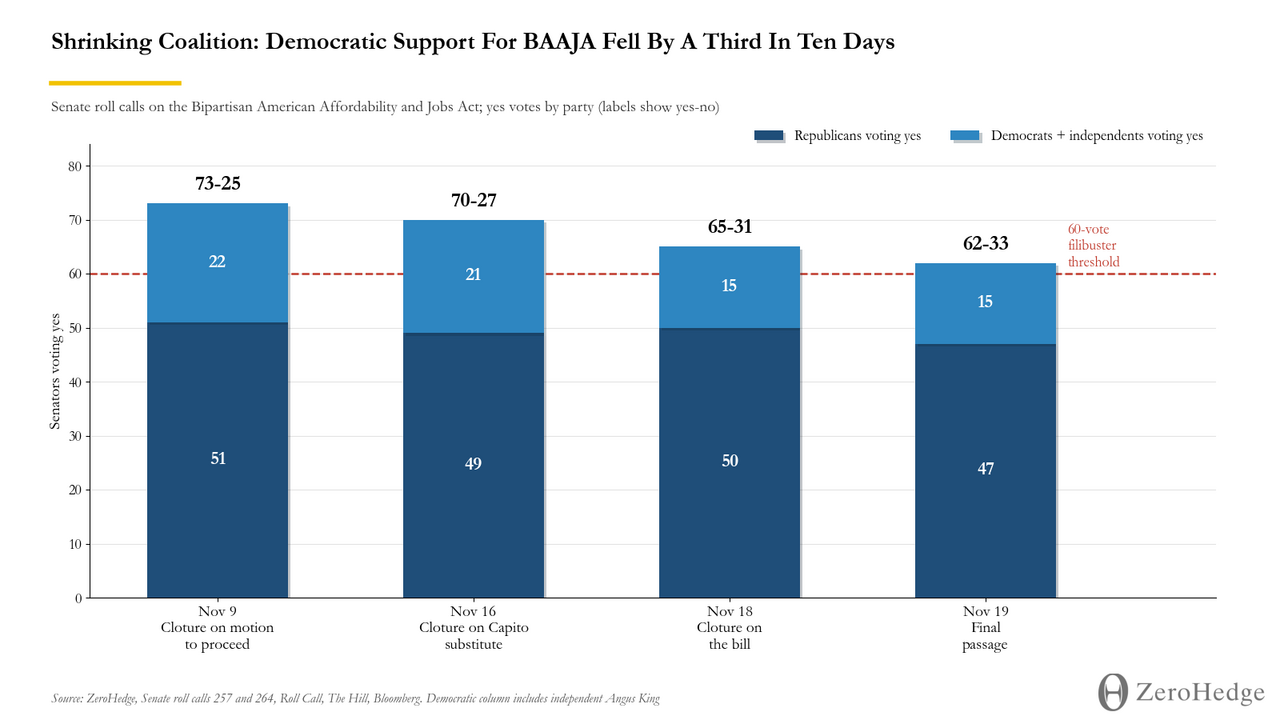
The vote count shows a narrower final margin than the cloture vote. Twenty-two Democrats and independents backed opening debate on November 9, but only 15 supported final passage: 14 Democrats plus independent Angus King. Republicans Josh Hawley and Mike Rounds voted no, citing expanded federal power to site transmission lines. The final manager's package collapsed after Oregon Democrats Jeff Merkley and Ron Wyden refused consent, leaving proposed tribal, historic-preservation and eminent-domain fixes out. Nearly every Democrat on Environment and Public Works voted against, except Sheldon Whitehouse.
Permitting is the binding constraint on new nuclear capacity. Scientific American reported that permitting accounts for about 40% of the decade needed to plan and build a new reactor, or roughly four years of paperwork. The bill folds in four of six House-passed nuclear bills, shortens legal challenge windows to 150 days, limits standing to commenters who can show direct harm, and allows projects to continue while agencies redo paperwork after a remand. The result lowers regulatory risk for developers and utilities.
The measure redistributes bargaining power among states, federal agencies, energy developers and large electricity users. It gives industry faster approval certainty and shifts data-center grid costs away from ratepayers, while environmental and tribal groups say it weakens consultation and judicial review. The bill now goes to the House with the Sierra Club, NRDC, the National Congress of American Indians and 17 Democratic states opposed, while oil, gas and clean-energy groups support it.
The bill affects utilities, data-center operators, energy developers, ratepayers, and communities near projects by changing who pays for grid upgrades and how quickly nuclear facilities can move toward construction.
Sources (1)
- [1]Fast-Track For Nuclear Reactors: Senate Passes Permitting Overhaul 62-33 That Lets Enrichment Plants Build Before NRC Signs Off(https://www.zerohedge.com/markets/fast-track-nuclear-reactors-senate-passes-permitting-overhaul-62-33-lets-enrichment-plants)