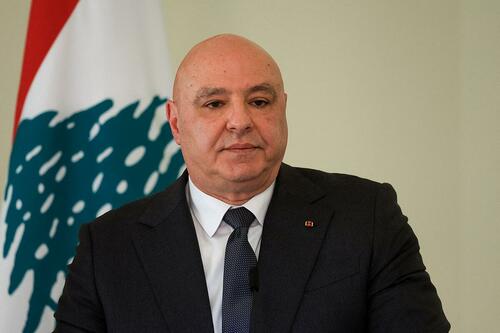
Lebanese President Exposes Iran-Hezbollah Proxy Strategy: Lebanon as Disposable Bargaining Chip
Lebanon's President Joseph Aoun publicly condemns Iran and Hezbollah for treating the country as a disposable proxy in regional conflicts with Israel and the US, exposing long-term patterns of exploitation, domestic fractures, and the degradation of Tehran's 'Axis of Resistance' model that mainstream coverage frequently underemphasizes.
In a rare CNN exclusive interview, Lebanese President Joseph Aoun delivered unusually sharp criticism of Iran and its premier proxy Hezbollah, accusing Tehran of exploiting Lebanon and its people as a "bargaining chip" in negotiations with the United States and Israel. Aoun told Christiane Amanpour that Lebanese citizens are "fed up" with a conflict that has exacted a heavy toll since Hezbollah's involvement in the post-October 2023 Gaza spillover, declaring directly to Iran: "You are not trying to help us … the people of Lebanon are paying the price … for the sake of your own interest" and "It’s not your country, it’s our country." He emphasized that Lebanese and Iranian interests "do not coincide" and rejected ongoing interference by the IRGC.[1][2]
This public rebuke, reported across Reuters, The Times of Israel, Al-Monitor, and the Jerusalem Post, highlights a pattern long evident to regional analysts but frequently softened in mainstream Middle East coverage: Iran's systematic use of Hezbollah as a forward militia to project power against Israel and the West while Lebanese sovereignty and civilians absorb the costs. Hezbollah's refusal to join U.S.-brokered ceasefire talks and its continued operations, even after a Washington-negotiated Lebanese-Israeli understanding, underscore the disconnect between Beirut's state interests and Tehran's regional chess game. Israeli strikes continue in southern Lebanon amid displacement and Hezbollah drone responses, illustrating the human price of proxy entanglements.[3][4]
Deeper context reveals this as no aberration but the logical outcome of Iran's decades-long proxy doctrine. Since the 1980s, Tehran has invested heavily in Hezbollah—providing funding, training, weapons, and ideological guidance rooted in velayat-e faqih—to transform a local Shia militia into its most capable non-state asset. This model allowed Iran deniability and strategic depth without direct conventional war. Analyses from the Belfer Center and Gulf International Forum describe Hezbollah's prioritization of Iranian security imperatives over Lebanese stability, especially evident in its 2023 intervention that triggered devastating Israeli retaliation and marked a turning point in the proxy's overextension. Similar patterns appear with the Houthis in Yemen, Shia militias in Iraq, and forces in Syria, forming an "Axis of Resistance" that advances confrontation at the expense of host nations' development and peace.[5][6]
Aoun's Christian-led perspective reflects Lebanon's confessional fractures and growing domestic fatigue with Hezbollah's de facto parallel state, which has dominated politics and foreign policy for years. His call for dialogue and reassertion of Lebanese agency arrives as think-tank reports document the degradation of Iran's proxy model amid battlefield losses, economic pressures on Tehran, and shifting Arab state calculations. Mainstream outlets have often emphasized "resistance" narratives or Gaza linkages while downplaying how proxies like Hezbollah function as disposable instruments in Iranian power projection—sacrificing Lebanese infrastructure, lives, and sovereignty for broader anti-Israel and anti-U.S. objectives.
This moment may represent an inflection: a sovereign Lebanese pushback that could accelerate Hezbollah's isolation, facilitate genuine state control over southern territories, and contribute to the unraveling of Iran's extended influence network. As ceasefire prospects evolve, Aoun's stance underscores that proxy pawns eventually resist when the board burns their own homes.
LIMINAL: Aoun's rare public defiance marks eroding legitimacy for Hezbollah inside Lebanon, hastening the fracture of Iran's proxy architecture and creating openings for state-centric diplomacy that could reshape the Levant balance away from Tehran.
Sources (6)
- [1]Lebanon’s President slams IRGC, calls on Hezbollah to pursue dialogue in CNN exclusive(https://www.cnn.com/2026/06/05/world/video/lebanon-president-joseph-aoun-cnn-exclusive-amanpour-iran-barganing-chip-intl-dsk)
- [2]Iran Using Lebanon as Bargaining Chip in US Talks, Lebanese President Says(https://www.usnews.com/news/world/articles/2026-06-05/iran-using-lebanon-as-bargaining-chip-in-us-talks-lebanese-president-says)
- [3]Lebanese president says Iran using his country as 'bargaining chip' in talks with US(https://www.timesofisrael.com/lebanese-president-says-iran-using-his-country-as-bargaining-chip-in-talks-with-us/)
- [4]'Not your country': Lebanon president's message to Iran(https://www.al-monitor.com/originals/2026/06/not-your-country-joseph-aoun-tells-iran-stay-out-lebanons-affairs)
- [5]The Degradation of Iran's Proxy Model(https://www.belfercenter.org/research-analysis/degradation-irans-proxy-model)
- [6]Lebanon Is Where Iran's Proxy Empire Unravels(https://gulfif.org/lebanon-is-where-irans-proxy-empire-unravels/)