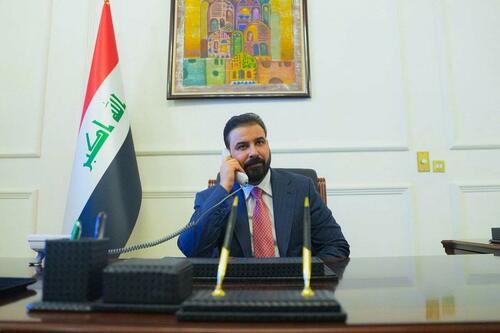
Trump's Backing of Iraq's Zaidi Accelerates Push to Disarm Iran-Backed Militias, Reshaping U.S.-Iran Proxy Dynamics
Trump's congratulations to Iraq PM-designate Ali al-Zaidi coincide with accelerated Iraqi efforts to disarm pro-Iran PMF factions under U.S. pressure, potentially weakening Iranian influence but risking domestic instability and highlighting links between U.S. politics and regional militia control.
In a notable development in Middle Eastern geopolitics, U.S. President Donald Trump has publicly congratulated Iraq's prime minister-designate Ali al-Zaidi, signaling strong American support for a new government contingent on curbing the influence of pro-Iran militias. This endorsement comes as a high-level Iraqi committee—including Zaidi, outgoing Prime Minister Mohammed Shia al-Sudani, and Badr Organization leader Hadi al-Amiri—is finalizing an executive plan to disarm resistant factions within the Popular Mobilization Forces (PMF) and integrate their fighters into state structures. The plan is set to be presented to U.S. officials imminently, reflecting intensified Washington pressure amid ongoing regional tensions.[1][2]
The committee's efforts, first reported in detail by Asharq Al-Awsat, highlight secret negotiations with militia leaders offering pathways for disarmament. However, hardline groups such as Kataib Hezbollah, Kataib Sayyid al-Shuhada, and Harakat al-Nujaba have rejected surrendering weapons, with one spokesperson stating they are prepared to "pay any price" for defiance. This resistance underscores deep fractures within Iraq's Shia political landscape, where the Coordination Framework that nominated Zaidi must balance U.S. demands against Iranian-aligned interests.[2]
Trump's outreach, including an invitation for Zaidi to visit Washington, emphasizes forming a government "free from terrorism"—a clear reference to severing ties with Iran-backed armed groups. U.S. Defense Secretary Pete Hegseth reportedly conveyed in a recent call that the new government's legitimacy hinges on distancing militias from state institutions, including barring their representatives from senior posts. This aligns with broader U.S. objectives to dismantle these networks, especially following escalations involving PMF drone attacks and U.S. responses.[3][4]
Going deeper, this moment reveals underreported connections between American domestic politics and foreign militia disarmament. Trump's return has enabled more assertive conditionality on Iraq, leveraging economic and diplomatic tools in ways previous administrations approached cautiously. Historical parallels emerge with earlier U.S. engagements: figures like former General David Petraeus, who once collaborated with leaders like Amiri on post-2003 security structures (including controversial police units), illustrate the long arc of American attempts to reshape Iraqi forces. Yet full PMF integration—originally formed in 2014 against ISIS with IRGC support—has remained elusive, complicating efforts to monopolize violence under the state.[5]
The implications extend to U.S.-Iran relations. By conditioning support for Zaidi on militia reforms, Washington aims to weaken Tehran's proxy architecture in Iraq at a sensitive time, potentially altering the balance in the region following reported U.S.-Iran clashes. Success could diminish Iran's strategic depth, foster stronger U.S.-Iraq ties focused on counterterrorism and economic reform, and reduce risks of Iraq becoming a launchpad for attacks on U.S. interests. Failure, however, risks internal Shia conflict, militia fragmentation, or renewed violence, as some factions view disarmament as existential surrender. Analysts note that while Zaidi, a relative outsider with business ties, offers a fresh face less entangled than predecessors, PMF-linked parties remain embedded in his coalition, making implementation fraught.[6][7]
This underreported convergence—U.S. political shifts directly engineering foreign security restructuring—may signal a pragmatic realignment in the post-occupation era, where Iraqi sovereignty is tested against great-power competition. Observers will watch closely whether the tripartite committee's plan yields tangible disarmament or merely performative gestures.
Geopolitical Analyst: Trump's conditional support for Zaidi could significantly erode Iran's militia proxies in Iraq, fostering a more independent Baghdad but heightening risks of Shia infighting and proxy retaliation.
Sources (5)
- [1]Trump congratulates Zaidi on his nomination to be next Iraqi prime minister(https://www.reuters.com/world/trump-congratulates-zaidi-his-nomination-be-next-iraqi-prime-minister-2026-04-30/)
- [2]Three-Member Committee Negotiates With Washington on Disarming Iraqi Factions(https://english.aawsat.com/arab-world/5271010-three-member-committee-negotiates-washington-disarming-iraqi-factions)
- [3]Trump gives his blessing to Iraq's new pick for prime minister(https://www.nbcnews.com/world/middle-east/trump-gives-blessing-iraqs-new-pick-prime-minister-invites-al-zaidi-wa-rcna342977)
- [4]Iraqi factions mull disarming in bid for government role(https://www.newarab.com/news/iraqi-factions-mull-disarming-bid-government-role)
- [5]What a New Iraqi Government Would Mean for the United States(https://www.americansecurityproject.org/new-iraqi-prime-minister-ali-al-zaidi-millitias/)