Japan's Yen-Driven Bankruptcy Surge Exposes SME Fragility Amid Persistent Currency Weakness
Credible reports from Bloomberg, Reuters, Straits Times, and Tokyo Shoko Research corroborate a 32%+ YoY rise in yen-linked bankruptcies to 45 in H1 2026, the highest since tracking began. This signals SME strain from import costs outweighing exporter benefits, with policy and global carry-trade implications.
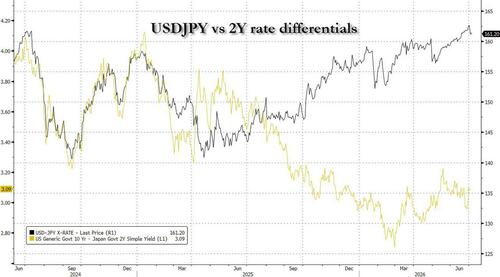
Japan recorded 45 corporate bankruptcies explicitly tied to the weak yen in the first half of 2026, marking a more than 30% increase from the prior year and the highest first-half tally since Tokyo Shoko Research began tracking the metric in 2022. The data, released July 1, highlights how prolonged yen depreciation—hitting 40-year lows near 162 per dollar—has shifted from a net positive for large exporters to a survival challenge for import-dependent small and medium-sized enterprises (SMEs).
Mainstream reporting from Bloomberg, the Straits Times, and others confirms the concentration in wholesale and import sectors, with examples including food importers like Merry Time Foods citing squeezed margins from higher raw material and energy costs. Broader corporate bankruptcies have also climbed, reaching multi-year highs in prior fiscal periods amid rising prices and wages, per Reuters and Nikkei Asia.
The yen's weakness stems from interest rate differentials, negative real rates in Japan, and institutional positioning, creating a self-reinforcing loop despite Bank of Japan interventions. While large-cap firms benefit from boosted earnings, SMEs—employing most Japanese workers—face import cost spikes and limited pricing power. This dynamic strengthens arguments for further BOJ rate hikes to narrow gaps with U.S. rates and support the currency, even as higher borrowing costs pose short-term risks.
Deeper implications include potential carry-trade ripple effects globally, as sustained yen weakness encourages leveraged positions that could unwind sharply. Official data shows producer prices and SME input costs surging, sustaining elevated inflation. The findings underscore currency-driven economic fragility that disproportionately burdens smaller firms, a pattern mainstream coverage often frames narrowly around export gains rather than systemic vulnerabilities.
BOJ: Further gradual rate hikes likely to support yen and mitigate SME insolvencies, though global carry-trade volatility could amplify spillovers if intervention thresholds are breached.
Sources (4)
- [1]Japan Records Leap in Bankruptcies Triggered By Weak Yen(https://www.bloomberg.com/news/articles/2026-07-01/weak-yen-pushes-first-half-bankruptcies-to-highest-since-2022)
- [2]Japan sees leap in bankruptcies triggered by weak yen(https://www.straitstimes.com/business/economy/japan-records-leap-in-bankruptcies-triggered-by-weak-yen)
- [3]Japan's bankruptcy cases hit 12-year high in 2025, survey shows(https://www.reuters.com/world/asia-pacific/japans-bankruptcy-cases-hit-12-year-high-2025-survey-shows-2026-01-13/)
- [4]Japan corporate bankruptcies hit 12-year high on rising prices, wages(https://asia.nikkei.com/economy/japan-corporate-bankruptcies-hit-12-year-high-on-rising-prices-wages)