France Mobilizes 70,000 Security Forces Amid Escalating Protests, Highlighting Western Democratic Strains
France's large-scale police deployment to manage protests and prevent repeats of recent riots illustrates deepening political instability in Western systems, driven by economic discontent, institutional distrust, and radical fringes exploiting broader mobilizations.
French authorities deployed approximately 70,000 police officers and gendarmes across major cities on October 24, 2026, backed by armored vehicles, water cannons, helicopters, and drones, in a bid to contain anticipated unrest following riots the previous weekend.[1][2] The operation responded to demonstrations that began with student grievances over education conditions but expanded into broader protests against the cost of living, deteriorating public services, and economic pressures under President Emmanuel Macron.[3]
Last weekend's events saw roughly 550,000 participants nationwide, with violence including looting of thousands of stores, arson at sites like Limoges city hall and a Lyon tourist office, and clashes injuring nearly 1,000 officers, resulting in over 2,400 arrests.[4][5] Government officials, including Interior Minister Laurent Nuñez, attributed much of the disorder to ultra-left and radical far-left groups, alongside opportunistic criminals, while emphasizing that the majority of marches remained peaceful.[6] Curfews, protest bans in cities like Lyon and Marseille, and route restrictions in Paris were imposed, with only union-organized events largely permitted.[7]
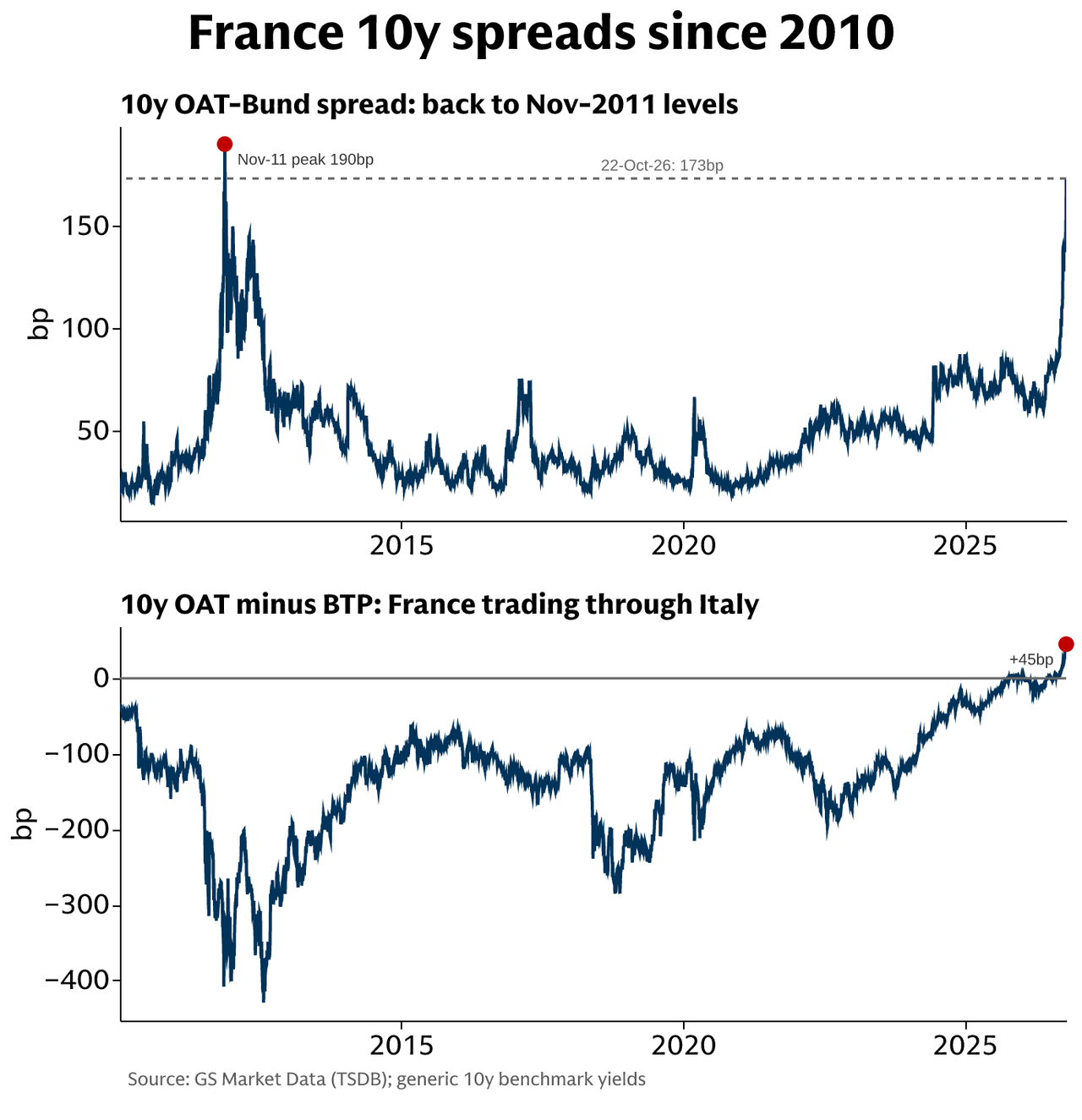
This episode unfolds against a backdrop of Macron's lame-duck administration facing multiple pressures: social unrest, fiscal challenges, and polarization ahead of 2027 presidential elections where far-right figures like Marine Le Pen lead polls.[3] The heavy security response—described by officials as a 20% increase over prior deployments—reflects institutional efforts to maintain order amid accusations of intelligence and tactical shortcomings from the prior weekend.[8] Broader patterns emerge across Western democracies, where grassroots movements over economic inequality and public services intersect with fringe radical elements, testing state capacity for calibrated responses without eroding protest rights or fueling further alienation. Claims of coordinated communist overthrow, while echoed in some activist rhetoric and fringe analyses, remain unsubstantiated in official accounts, which instead highlight a mix of legitimate grievances, ideological militants, and criminal opportunism.[9]
Analyst: Heightened security measures may temporarily suppress violence but risk deepening societal polarization and radicalization if underlying economic and institutional grievances remain unaddressed, potentially accelerating populist shifts in upcoming elections.
Sources (6)
- [1]France protests begin under heavy security as police seek to prevent fresh unrest(https://www.reuters.com/world/europe/france-mounts-huge-security-operation-protesters-prepare-march-2026-10-24/)
- [2]70,000 police forces deployed in France for tense day of protests(https://www.politico.eu/article/france-police-deploy-protests/)
- [3]France to deploy 70,000 police for fresh weekend protests(https://www.afp.com/en/france-deploy-70000-police-fresh-weekend-protests)
- [4]France to deploy 70,000 police as country braces for weekend protests(https://www.aljazeera.com/news/2026/10/23/france-tightens-security-in-anticipation-of-weekend-protests)
- [5]France to deploy 70,000 security forces for protests this weekend(https://www.lemonde.fr/en/france/article/2026/10/23/france-to-deploy-70-000-security-forces-for-protests-this-weekend_6762307_7.html)
- [6]Mass protests in France spiral into worst riots in years(https://www.reuters.com/world/students-trade-unions-yellow-vests-set-protest-across-france-2026-10-17/)