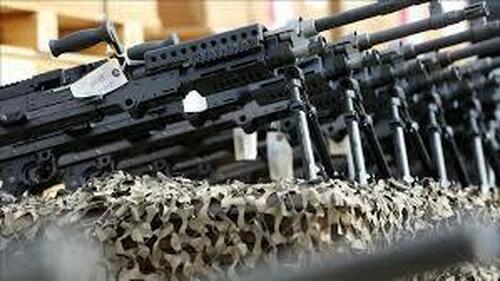
Bulgaria's Defection: First NATO State Halts Ukraine Arms Aid as Eurosceptic Wave Exposes Alliance Cracks
Bulgaria under new Prime Minister Rumen Radev halts all further arms deliveries to Ukraine, becoming the first NATO member to do so. This reflects election-driven Eurosceptic realignment and broader European war fatigue, exposing fractures that may spread to other skeptical governments and pressure the alliance toward negotiations.
In a development that underscores deepening war fatigue and ideological fractures within the Western alliance, Bulgaria has become the first NATO member to formally suspend military assistance to Ukraine under its new leadership. Defense Minister Dimitar Stoyanov announced on June 9, 2026, that the government will no longer provide weapons, stating "Ukraine needs more people, not more armament" and emphasizing the need to "sit at the negotiating table" for a "just peace" acceptable to both sides. This marks a sharp reversal from the previous administration, which had dispatched 13 aid packages since Russia's 2022 invasion.
The policy shift stems directly from the landslide victory of Rumen Radev's Progressive Bulgaria party in the April 19, 2026 parliamentary elections. Radev, a former president and NATO-trained fighter pilot with a pragmatic stance toward Moscow, resigned his prior office to enter parliamentary politics, securing an absolute majority with over 44% of the vote. His platform heavily criticized EU sanctions, green-energy mandates, and unconditional military support for Kyiv, instead advocating resumed Russian energy ties and diplomatic resolutions. Sworn in as Prime Minister in May, Radev's government now sits at the EU's southeastern flank, creating what analysts describe as a Russia-sympathetic foothold within both NATO and the bloc.
This is not an isolated event but a visible node in a larger pattern of Eurosceptic resurgence across Europe. Bulgaria's move aligns with longstanding positions in Hungary under Viktor Orbán and Slovakia under Robert Fico, both of whom have resisted aspects of the unified Western approach. It reflects broader voter disillusionment after more than four years of conflict—evident in low turnout during recent Bulgarian polls and rising support for populist parties in France, Germany, and Italy skeptical of endless fiscal and military commitments. Underlying drivers include economic pressures from inflation and energy volatility (Bulgaria historically depended on Russian supplies), alongside public perception that the war has become an unwinnable attrition battle despite massive armament inflows.
While Radev is unlikely to fully jeopardize EU funding flows critical to Bulgaria's economy, the announcement has drawn scrutiny from Brussels, Washington, and Kyiv. It exposes the limits of enforced alliance cohesion when domestic mandates shift toward "peace through negotiation" rather than victory on the battlefield. By prioritizing Bulgarian interests and openly questioning the EU's mediator role given its prior military involvement, Sofia is testing the durability of the post-2022 consensus. If unaddressed, this could embolden similar realignments elsewhere, accelerating a transition from proxy support to frozen conflict or talks—connections often missed amid mainstream focus on battlefield updates alone.
Sources confirm the election outcome, Radev's rapid policy implementation, and the explicit linkage to negotiation over armament. Bulgaria's defense spending is paradoxically set to rise to 5% of GDP to meet NATO targets, revealing the nuanced position: strengthening national posture while withdrawing from Ukraine-specific aid.
LIMINAL: Bulgaria's open break as the first NATO defector on Ukraine aid will likely catalyze further erosion of unified European support, amplifying Eurosceptic electoral gains and hastening a negotiated endgame that prioritizes realism over prolonged attrition.
Sources (5)
- [1]Bulgaria halts Ukraine military aid(https://www.politico.eu/article/bulgaria-halts-ukraine-military-aid/)
- [2]Bulgaria’s New Government to Stop Supplying Weapons to Ukraine(https://www.bloomberg.com/news/articles/2026-06-09/bulgaria-s-new-government-to-stop-supplying-weapons-to-ukraine)
- [3]Bulgaria's new government to stop sending arms to Ukraine(https://kyivindependent.com/bulgaria-to-stop-sending-arms-to-ukraine/)
- [4]2026 Bulgarian parliamentary election(https://en.wikipedia.org/wiki/2026_Bulgarian_parliamentary_election)
- [5]Bulgaria's new government plans to cut off weapons to Ukraine(https://www.kyivpost.com/post/77838)