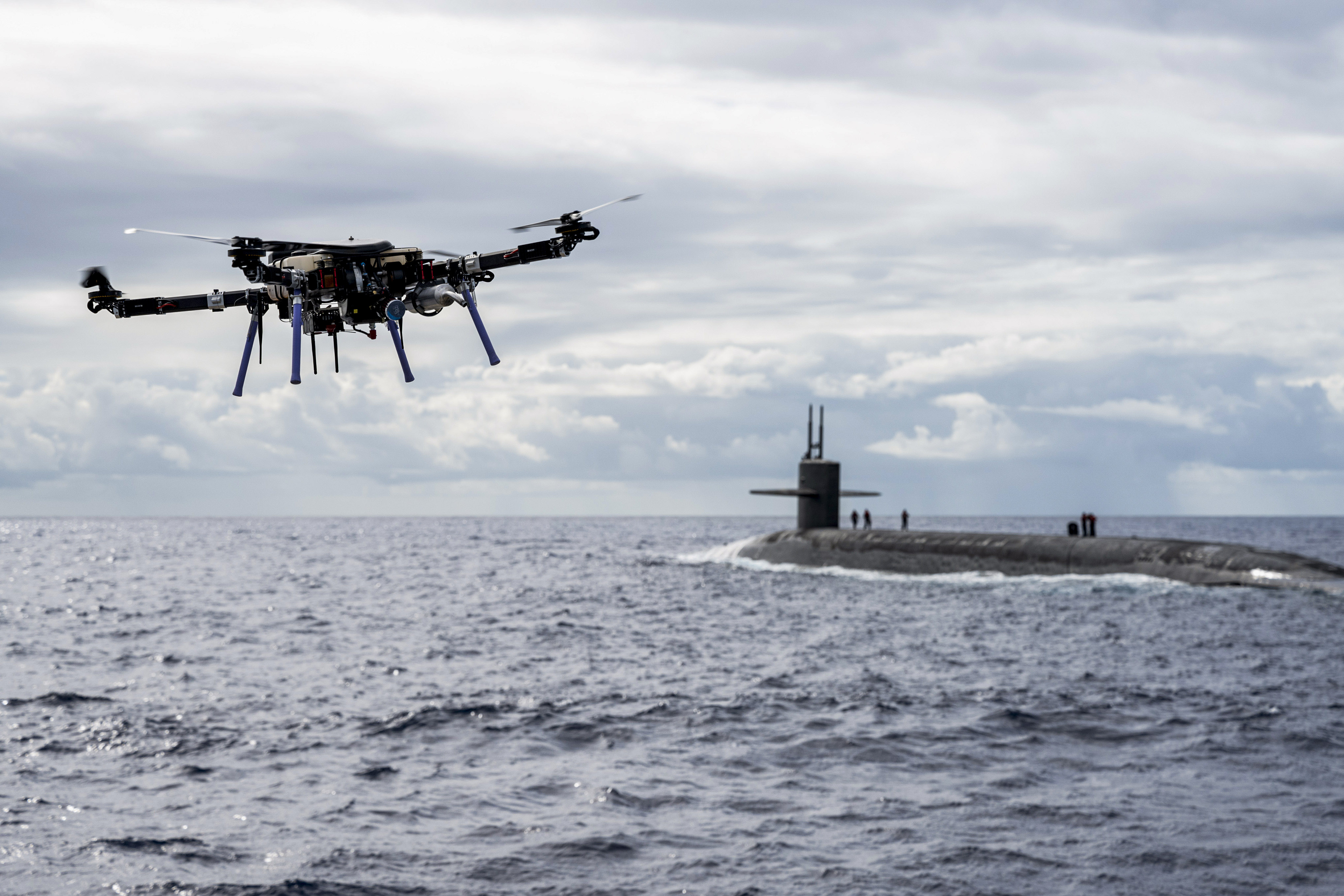
Navy SSP seeks prototypes to counter RPGs and drones against surfaced SSBNs
Navy procurement documents reveal explicit concern that surfaced SSBNs and their support convoys face defeat by low-cost drones and ATGMs. This undercuts assumptions of inherent invulnerability during the most exposed phases of deterrent patrols. Spending will accelerate on layered PHLW defenses to restore credible transit security.
The announcement lists 22 focus areas including detection of unmanned systems across domains, escort situational awareness, mine mitigation, and direct-fire defeat during SSBN movement from bases. It also requests active protection systems for ground convoys hauling strategic weapons and AI countermeasures against swarm ISR or cyber spoofing of nuclear facility networks. Evidence comes directly from the SSP solicitation language on defeating ATGMs/RPGs and hardening against autonomous threats.
Procurement records show this follows documented Ukrainian unmanned surface and subsurface drone strikes on Russian naval assets in restricted waters, exposing the same port and littoral vulnerabilities now admitted for US boats. Official statements frame the effort as routine technology scouting, yet the explicit zero-failure requirement for SSBN transit indicates internal assessments treat these cheap kinetic threats as credible to second-strike survivability.
The pattern links to prior triad modernization contracts that under-weighted surface and harbor phases, now driving near-term spending on USVs, UGVs, and vehicle-mounted interceptors. Taxpayer impact appears in accelerated awards likely exceeding baseline R&D lines for Strategic Systems Program.
Next steps center on prototype testing in harbor and waterway environments within 18 months, with contract vehicles expected to prioritize integration with existing base security forces rather than open-ocean solutions.
Navy SSP: First PHLW prototype contract awards surpass $75M by March 2027 with field tests at two SSBN bases.
Sources (3)
- [1]Primary Source(https://sam.gov/opp/SSP-PHLW-2026)
- [2]Supporting Source(https://www.defensenews.com/industry/techwatch/2026/07/07/us-navy-fears-ballistic-missile-subs-can-be-hit-by-drones-anti-tank-rockets/)
- [3]Supporting Source(https://www.navsea.navy.mil/Portals/103/Documents/SSBN_Security_Assessments_2025.pdf)