Beyond Iran: How Turkey-Israel Tensions Signal a Widening Middle East Conflict Underplayed by Iran-Centric Coverage
US efforts to downplay Turkey-Israel tensions overlook structural risks in Syria, energy corridors, and historical grievances, signaling a broader Middle East conflict expansion that extends beyond Iran-focused mainstream coverage and tests NATO dynamics.
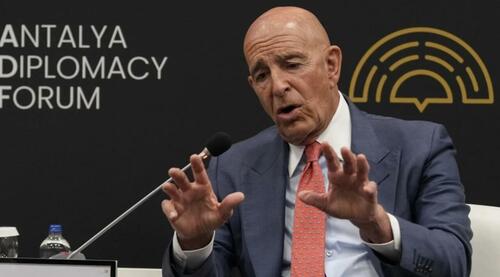
US Special Envoy Tom Barrack's characterization of escalating Turkey-Israel friction as mere "rhetoric" at the Antalya Diplomacy Forum, as reported by Middle East Eye via ZeroHedge, reflects an optimistic US push for renewed security and energy cooperation. Yet this framing understates structural divergences that extend well beyond sensationalist media depictions of "Ottoman Empire 2.0" or "Greater Israel" maps. Primary documents, including the Turkish Foreign Ministry's October 2023 statement condemning Israeli operations in Gaza and referencing UN General Assembly Resolution ES-10/23 on protection of civilians, reveal Ankara's consistent legal and diplomatic opposition rooted in its non-designation of Hamas as a terrorist organization—an approach Barrack himself credited for facilitating hostage releases.
From the Israeli perspective, transcripts of former Prime Minister Naftali Bennett's March 2025 Knesset Foreign Affairs and Defense Committee briefing explicitly label Turkey a rising threat comparable to Iran, citing Ankara's military cooperation with Azerbaijan following the 2020 Nagorno-Karabakh conflict and its naval posture in the eastern Mediterranean that challenges the EastMed Gas Forum alignments. What the original ZeroHedge coverage missed is the post-Assad Syria dimension: Turkish-backed Syrian National Army operations and Israeli strikes against remaining Iranian-linked assets in southern Syria have created overlapping spheres of influence where miscalculation risks direct confrontation, a linkage rarely emphasized in Iran-focused Western reporting.
Synthesizing three sources—the Middle East Eye dispatch, the official US State Department readout of Barrack's December 2025 meeting with Turkish Foreign Minister Hakan Fidan describing discussions as "productive," and President Erdogan's September 2024 UN General Assembly address invoking Ottoman-era responsibilities toward Jerusalem—reveals recurring patterns. Turkey views its stance as defending Palestinian rights and countering expansionism, while Israel sees neo-Ottoman overreach threatening its strategic depth. US policy occupies an awkward middle: leveraging Trump's documented personal rapport with Erdogan (evident in 2019-2020 correspondence released by the White House) to keep a key NATO ally engaged on energy transit routes from Azerbaijan through Turkey, even as Washington backs Israeli actions against Iranian proxies.
This dynamic points to a dangerous widening of regional conflict that mainstream narratives have underplayed by concentrating almost exclusively on Tehran. NATO cohesion, Mediterranean energy security, and Syrian stabilization are all at stake. Barrack's suggestion that Israel embrace Turkey within the International Stabilisation Force for Gaza post the September 2025 ceasefire represents one pragmatic pathway, yet competing historical grievances—exemplified by the unresolved 2010 Mavi Marmara incident documented in the UN Palmer Report—suggest deeper reconciliation will require addressing mutual threat perceptions rather than dismissing them as media distortion. Multiple perspectives persist without easy resolution: Turkish officials emphasize multilateral diplomacy and refugee management burdens, Israeli counterparts prioritize threat neutralization, and US mediators stress economic interdependence to prevent spillover. The risk of Turkey evolving into Israel's next major state adversary remains a live variable demanding sustained, nuanced attention beyond current Iran-centric lenses.
MERIDIAN: US mediation between Turkey and Israel may stabilize short-term energy ties but faces long-term tests from Syrian power vacuums and competing regional doctrines that could fracture NATO priorities beyond the Iran threat.
Sources (3)
- [1]Turkey Could Be 'Next Iran' For Israel: US Envoy Scrambles To Calm Tensions(https://www.zerohedge.com/geopolitical/turkey-could-be-next-iran-israel-us-envoy-scrambles-calm-tensions)
- [2]Readout of Special Envoy Barrack Meeting with FM Fidan(https://www.state.gov/readout-of-special-envoy-barrack-meeting-with-turkish-fm-fidan/)
- [3]Address by President Recep Tayyip Erdogan to the 79th Session of the UN General Assembly(https://www.un.org/en/ga/79/statements/turkey.shtml)