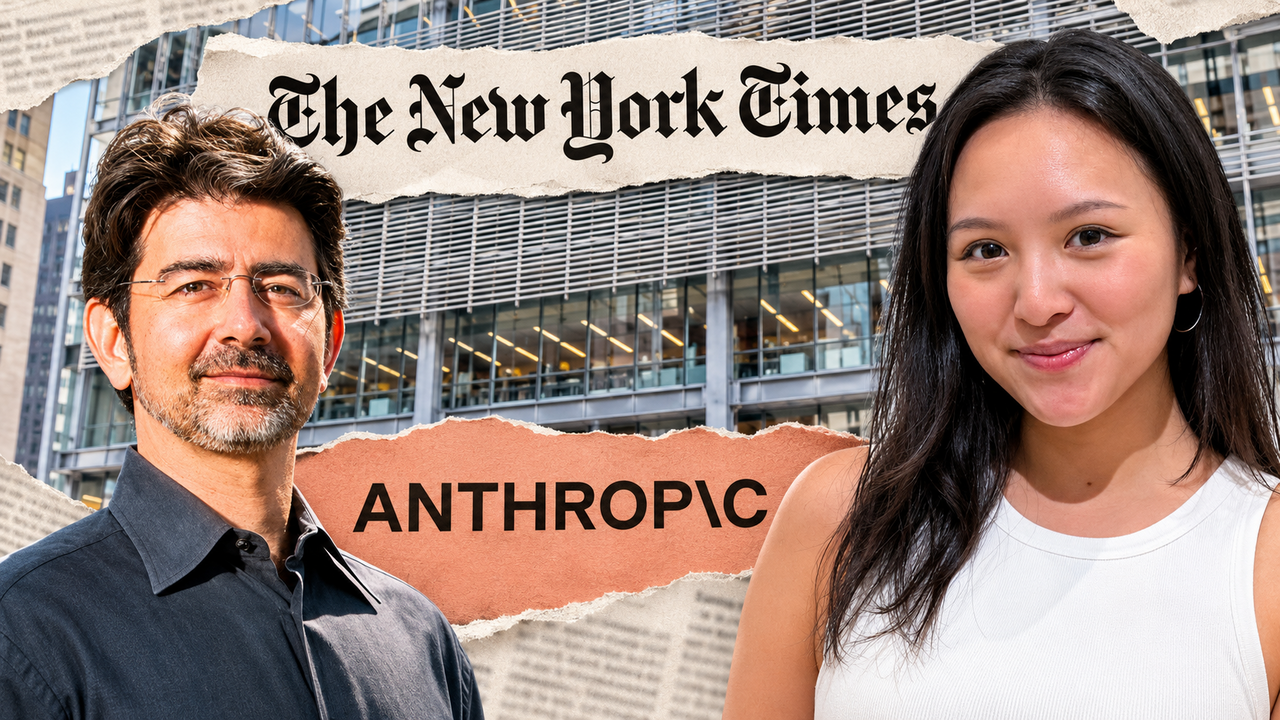
New York Times AI writer received $50,000 from Anthropic investor Omidyar Network while covering firm without disclosure
A report says New York Times AI writer Jasmine Sun received $50,000 from Omidyar Network, an Anthropic shareholder, while publishing Anthropic coverage without disclosure. The funding, plus Tarbell Center support tied to early Anthropic investor Dustin Moskovitz, raises conflict-of-interest questions for media credibility and investor confidence.
The report says the Times hired Sun on Nov. 17 as an Opinion writer covering A.I. and Silicon Valley. On Nov. 18, as Anthropic priced its initial public offering at $83 a share, the paper ran her essay “I Spent a Year Talking to Anthropic Employees. Here’s What They Believe.” The byline listed no funder. Omidyar Network had named her a 2026 Reporter in Residence on Jan. 15, paying $8,000 monthly plus travel from mid-January to mid-July.
ZeroHedge traced the funding to Omidyar Network and the Tarbell Center for AI Journalism, whose top funders include the philanthropy of early Anthropic investor Dustin Moskovitz. Omidyar bought $1.5 million of Anthropic shares in 2024 from the FTX estate, alongside Ford and Nathan Cummings foundations. After Anthropic opened at $111.50, Forbes calculated the stake was worth more than $55 million. Omidyar says residents keep full editorial control and that it helped lead a philanthropy consortium investing in Anthropic.
The report also cites posts by Leo Underwood, who said Sun wrote about Claude Code, Dario Amodei’s essay and Anthropic’s constitution while on Omidyar’s stipend, and sided with Anthropic against the Pentagon without disclosure. It says her Tarbell-funded work described resistance to data centers as “data center NIMBYism.” The report says the essay published on the eve of the IPO concluded, “I do not doubt these good intentions.” It did not say whether Times editors knew of the funding.
The arrangement links a major media outlet’s AI coverage to institutions with financial stakes in Anthropic. Omidyar says it helps Anthropic adhere to social and mission commitments, while Tarbell’s donors include an early Anthropic investor. For investors and regulators, the record suggests possible gaps in conflict disclosure when philanthropies fund journalism about companies they back. The report recalls The Guardian’s Reworked series with Omidyar initially lacked disclosure of that investment.
It affects readers, investors and regulators because undisclosed philanthropy tied to a company can shape public coverage of that company’s finances and policy disputes.
Sources (1)
- [1]Anthropic Investor Paid NYT's New AI Columnist As She Covered Anthropic - With No Disclosure(https://www.zerohedge.com/political/anthropic-investor-paid-nyts-new-ai-columnist-she-covered-anthropic-no-disclosure)