Artemis II: Beyond the Photo-Op, Building the Foundations of a Cislunar Economy
Artemis II is more than a crewed lunar flyby; it tests the technical and governance foundations for a cislunar economy, advancing international collaboration while revealing persistent cost, schedule, and technical risks that standard coverage largely ignores.
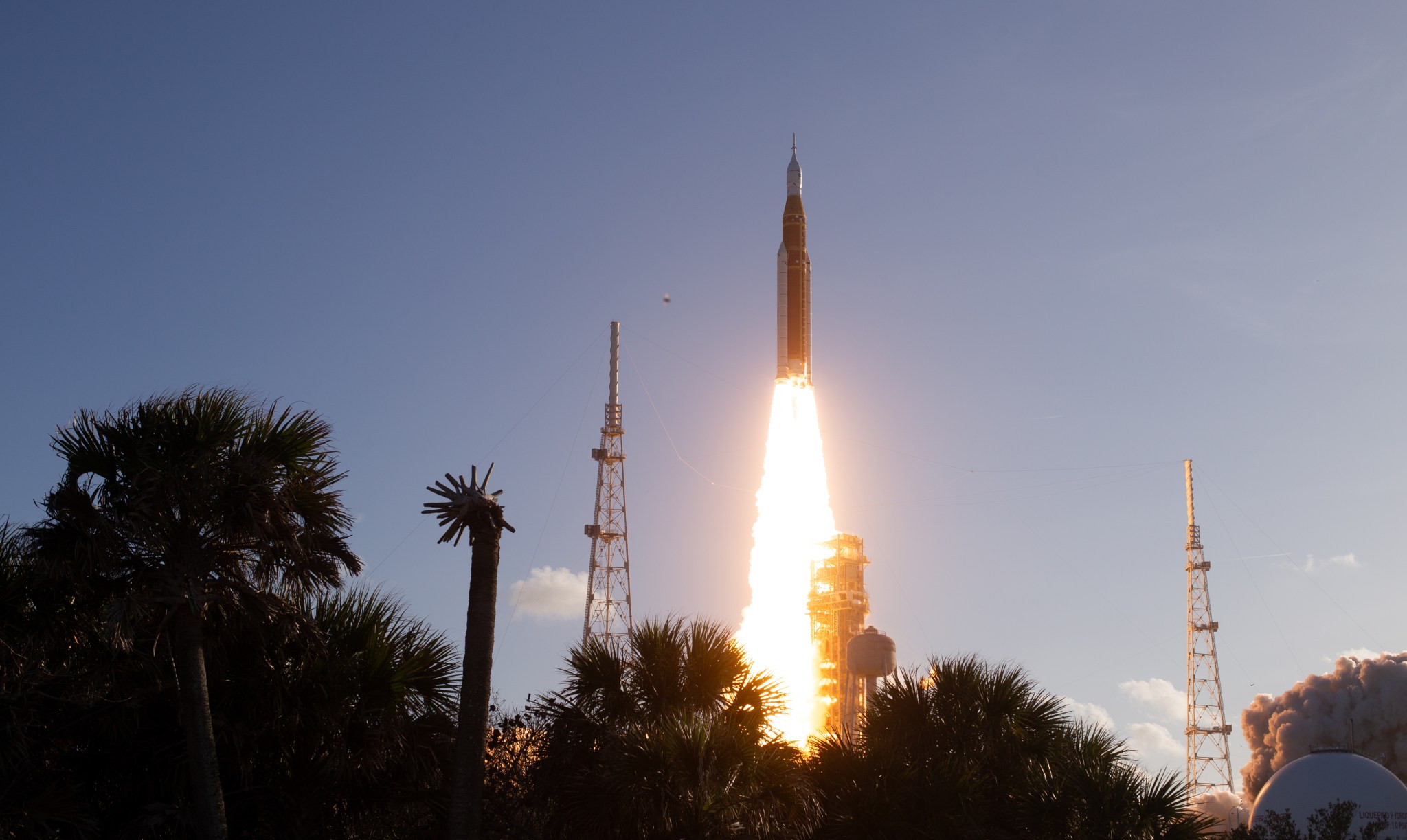
The NASA image of the SLS rocket and Orion spacecraft lifting off on April 1, 2026, captures a visually striking but narratively thin moment. While the original source limits itself to basic crew details and a 10-day lunar flyby, it misses the deeper structural significance of Artemis II as the inflection point for sustained human operations in cislunar space. This mission represents NASA's first crewed lunar venture since Apollo 17 in 1972, but its true importance lies in testing technologies and governance models for an emerging economic domain rather than one-off exploration.
Synthesizing NASA's Artemis Program technical documentation, the Planetary Society's 2023 analysis of lunar return architectures, and McKinsey's 2024 space economy report, a clearer picture emerges. The crew—Reid Wiseman, Victor Glover, Christina Koch, and CSA astronaut Jeremy Hansen—embodies deliberate international collaboration under the Artemis Accords, now signed by over 40 nations. This framework, unlike the bilateral Apollo-Soyuz era, establishes norms for resource utilization and safety zones that will govern future commercial activity. The original coverage completely underplays this shift from flags-and-footprints to infrastructure development.
What mainstream reporting often gets wrong is framing Artemis II solely as a technical demonstration. In reality, the mission validates Orion's life support and communication systems for the Lunar Gateway, a critical staging point for cislunar operations. McKinsey projects the broader space economy could surpass $1 trillion annually by 2040, with cislunar activities in propellant depots, orbital manufacturing, and lunar resource extraction forming the backbone. Patterns from the International Space Station show how initial government investment crowds in private capital—Northrop Grumman, Blue Origin, and SpaceX are already positioned as key partners.
Yet significant limitations remain. The SLS program has experienced repeated delays and cost overruns exceeding $2 billion according to Government Accountability Office assessments, which rely on program-level aggregates rather than granular performance sampling. Technical issues identified in Artemis I, particularly the Orion heat shield, highlight risks that lack the methodological rigor of peer-reviewed engineering studies. Geopolitical tensions could also fragment the Accords, as seen in competing Chinese lunar ambitions.
Artemis II therefore marks not just a return to the Moon but the deliberate construction of an economic ecosystem. By prioritizing interoperability, in-space refueling, and multinational governance, NASA is laying groundwork for a self-reinforcing cislunar market that future missions will inherit.
HELIX: Artemis II looks like a Moon mission on the surface, but it's actually the first operational test of infrastructure and agreements that will enable a permanent, commercially viable cislunar economy.
Sources (3)
- [1]Primary Source(https://www.nasa.gov/image-article/artemis-ii-astronauts-launch-to-moon/)
- [2]Artemis Program Overview(https://www.nasa.gov/artemis-program/)
- [3]The Space Economy: How to Capture a $1 Trillion Opportunity(https://www.mckinsey.com/industries/aerospace-and-defense/our-insights/the-space-economy)