National Guard Cyber Deployment in Minnesota Signals Militarization of Local Infrastructure Defense
Minnesota’s deployment of National Guard cyber teams to Winona County after repeated ransomware incidents reveals the growing convergence of cyber attacks with military response protocols, exposing systemic preparedness gaps at the local government level that conventional coverage continues to understate.
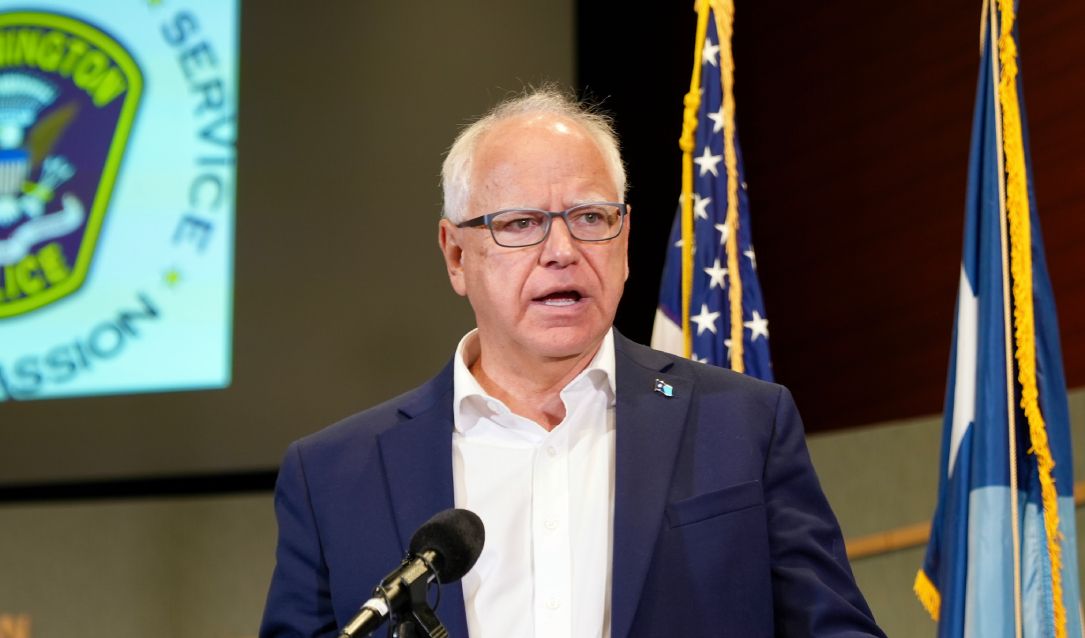
The Minnesota governor’s decision to deploy the National Guard to Winona County following a significant cyberattack this week marks another data point in the accelerating fusion of cyber incidents and traditional national security machinery. While The Record’s reporting accurately captures Governor Tim Walz’s executive order and the county’s admission that the attack exceeded both internal and commercial response capabilities, it frames the event too narrowly as a local IT crisis. What it misses is the deeper pattern: repeated normalization of military cyber units as first responders for municipal systems, exposing chronic underinvestment in local critical infrastructure that mainstream outlets continue to treat as disconnected ransomware anecdotes.
Winona County, population roughly 50,000, declared a local emergency in January after a ransomware incident and has now suffered a second major disruption in April. The governor’s order notably avoids linking the two events, yet the recurrence within four months suggests either persistent access by the same actor or a targeted campaign against under-defended Midwestern counties. This mirrors the state’s earlier activation of Guard cyber teams for the City of St. Paul ransomware attack in 2023 and a string of incidents against Minneapolis. Such repetition within one state reveals a regional vulnerability that federal threat intelligence has largely failed to disrupt.
Synthesizing broader data clarifies the stakes. A 2022 GAO report (GAO-22-104279) on ransomware against local governments found that jurisdictions under 50,000 residents rarely possess dedicated cybersecurity staff, incident response plans, or segmented networks—precisely the profile of Winona County. CISA’s own alerts and the FBI’s 2023 Internet Crime Complaint Center report document a 25% year-over-year increase in ransomware complaints against state, local, tribal, and territorial entities, with emergency services and public health systems among the most impacted. These sources, when read together with the National Guard Bureau’s cyber strategy emphasizing “defense support to civil authorities,” illustrate an emerging doctrine: when commercial MSSPs and local IT fail, the military fills the gap.
This convergence carries structural implications the original coverage ignored. Deploying uniformed cyber personnel funded through emergency powers effectively militarizes what should be civilian critical infrastructure protection. It strains Guard units already tasked with overseas missions and natural disasters while creating precedent for federalizing response to incidents that fall below the threshold of armed attack. The pattern also highlights policy failure at the local level—decades of deferred modernization, fragmented procurement, and reliance on outdated legacy systems have turned county servers into soft targets for both criminal ransomware groups and, increasingly, state-affiliated actors probing resilience ahead of potential hybrid conflict.
Mainstream reporting still defaults to the language of “IT disruptions” and recovery timelines. That framing obscures the national security dimension: when 911 systems, emergency dispatch, and public health databases go dark, the impact is physical, not virtual. Winona’s case is not an isolated failure; it is a symptom of critical infrastructure policy that remains federal in rhetoric but local in execution, with counties bearing burdens they were never resourced to carry. Until grant programs, regulatory mandates, and intelligence sharing address this asymmetry, National Guard call-ups will become the default off-ramp—signaling both tactical adaptation and strategic deficiency.
SENTINEL: Expect National Guard cyber activations to become routine rather than exceptional as smaller jurisdictions remain soft targets; this will accelerate doctrine shifts that treat domestic ransomware as hybrid threats requiring standing military support agreements, further straining Guard readiness and exposing federal-local preparedness imbalances.
Sources (3)
- [1]Minnesota governor sends national guard to county after cyberattack(https://therecord.media/minnesota-sends-national-guard-after-local-cyberattack)
- [2]GAO-22-104279: Ransomware Attacks on Local Governments(https://www.gao.gov/products/gao-22-104279)
- [3]FBI 2023 Internet Crime Report(https://www.ic3.gov/Media/PDF/AnnualReport/2023_IC3Report.pdf)