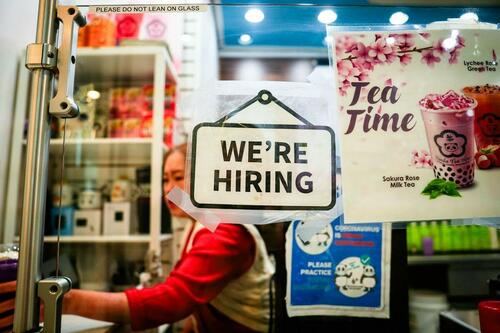
7% Rise in US Bankruptcy Filings Signals Mounting Pressure on Small Businesses, Jobs, and Consumer Credit
US bankruptcy filings rose 7% YoY in May 2026 with small business cases up 36%, confirming ongoing economic strain from high interest rates and inflation that is likely to impact employment, credit conditions, and prices in the coming year.
Total U.S. bankruptcy filings rose 7% year-over-year in May 2026 to 51,772, according to the latest data released by the American Bankruptcy Institute (ABI), with individual filings climbing 8% and small business filings surging 36%. This continues a clear upward trend observed throughout the year: commercial Chapter 11 filings increased 37% in the first quarter, Subchapter V small business elections jumped 67% in Q1, and overall filings have risen roughly 11-14% across multiple months compared to 2025 levels.
While large corporate Chapter 11 filings dipped slightly in May, the sharp increase in small business distress stands out. These smaller entities, often operating with thinner margins, are being squeezed by the cumulative effects of interest rates held at 3.5-3.75% by the Federal Reserve, inflation that climbed to 3.8% in April amid geopolitical tensions, and elevated operating costs. Recent examples include specialty materials firm Trinseo PLC filing Chapter 11 to reduce roughly $2 billion in debt and pet food supplier Integrated Proteins entering bankruptcy with liabilities up to $500 million.
The lens of this data reveals more than a simple monthly uptick—it is a concrete early indicator of broader economic stress that typically transmits to jobs, credit availability, and consumer prices within the following year. As small businesses restructure or close, layoffs follow, reducing household income and triggering rises in consumer delinquencies (already worsening to around 4.8% with household debt approaching $18.8 trillion). This in turn constrains credit access further, as lenders tighten standards, while surviving firms pass along higher costs, reinforcing inflationary pressures in a self-reinforcing cycle.
Official U.S. Courts statistics confirm the longer-term pattern, with total bankruptcies up 11% for the year ending December 2025 and the trend accelerating into 2026. Analysts describe the current environment as the 'calm before the storm,' with inflationary pressures, fuel costs, and macroeconomic uncertainty from Middle East conflicts likely to drive further filings. Unlike headline-grabbing large corporate failures, the quiet grind on small businesses often flies under the radar yet serves as a leading signal for wider contraction. Small business optimism remains marginally positive per NFIB data, but actions taken against inflation and labor shortages suggest many are already adapting to survive rather than thrive.
This measured but persistent rise underscores how elevated borrowing costs and sticky inflation are forcing a financial reset across the economy, one that could dampen hiring, tighten consumer credit, and exert upward pressure on prices as the year progresses.
LIMINAL: Small business bankruptcies surging 36% act as an early domino that will lead to job cuts, tighter credit, and higher consumer prices within the next 12 months as the lagged effects of rates and inflation fully materialize.
Sources (4)
- [1]May Small Business Filings Increase 36% From Previous Year(https://www.abi.org/node/1003234)
- [2]First Quarter Subchapter V Small Business Filings Increase 67 Percent over Previous Year(https://www.abi.org/node/1002603)
- [3]Bankruptcy Filings Rise 11 Percent(https://www.uscourts.gov/data-news/judiciary-news/2026/02/04/bankruptcy-filings-rise-11-percent)
- [4]Bankruptcy Statistics [Updated For 2026](https://www.debt.org/bankruptcy/statistics/)