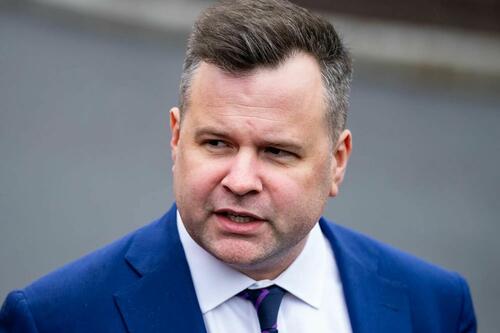
Trump's Appointment of Housing Chief Bill Pulte as Acting DNI Highlights Pattern of Non-Expert Loyalists in National Security Roles
Trump's selection of FHFA Director Bill Pulte—a 38-year-old housing finance loyalist with no intelligence background—as acting DNI, while he retains control over Fannie Mae, Freddie Mac, and trillions in assets, exemplifies a pattern of placing non-experts in critical national security posts. This risks long-term politicization and conflicts within the Intelligence Community, extending FHFA-era targeting of political opponents into broader oversight.
In a move that underscores the Trump administration's preference for personal allies over traditional national security pedigrees, President Donald Trump announced on June 2, 2026, that Bill Pulte, Director of the Federal Housing Finance Agency (FHFA) and Chairman of Fannie Mae and Freddie Mac, will serve as Acting Director of National Intelligence (DNI). This follows Tulsi Gabbard's resignation, effective June 30, 2026, due to her husband's diagnosis with a rare form of bone cancer.[1][2] Pulte, 38, who assumed his FHFA role in March 2025 after Senate confirmation, will retain his housing finance positions while overseeing the 18-agency U.S. Intelligence Community.[3][4]
Trump praised Pulte on Truth Social for his experience managing "the safety and soundness of the Markets" and over $10 trillion in assets at Fannie and Freddie, framing these financial oversight skills as transferable to intelligence coordination. However, unlike nearly all prior DNIs—who typically hailed from intelligence, military, diplomatic, or congressional backgrounds with deep national security experience—Pulte has no reported expertise in these domains. His pre-government career centered on private equity in housing and building products, alongside philanthropy.[5][6]
This crossover appointment fits a broader, under-examined pattern in the Trump administration of installing non-traditional figures into sensitive posts. It extends beyond Gabbard's own unconventional path to roles like those challenging entrenched bureaucratic norms across agencies. At FHFA, Pulte has transformed a once-low-profile regulator into a high-visibility actor, including leadership changes at the GSEs and high-profile mortgage-fraud referrals targeting prominent Trump critics such as Sen. Adam Schiff, NY AG Letitia James, and Federal Reserve Governor Lisa Cook. These actions have prompted congressional scrutiny and Democratic accusations of politicization, with lawmakers demanding records over potential abuse of authority to pursue political enemies.[7][8]
Connections missed in mainstream coverage include the profound institutional risks of merging housing finance oversight—with its access to vast consumer financial data, mortgage records, and systemic market intelligence—with the DNI's role as principal intelligence advisor to the President and coordinator of agencies like the NSA, CIA, and DIA. This dual mandate creates unprecedented potential for overlap between domestic financial surveillance and national security intelligence, especially amid Pulte's history of aggressive referrals. Long-term, such appointments may normalize loyalty-tested outsiders at the helm of the IC, eroding specialized expertise, independence norms established post-9/11, and public trust. While proponents see it as draining the swamp and aligning agencies with presidential priorities, critics warn of weakened analytic rigor and heightened risk of intelligence being directed toward domestic political targets.[9][10]
The development arrives amid ongoing personnel shifts in Trump's national security team, raising questions about continuity and effectiveness in an era of complex global threats. As an acting role, it bypasses immediate Senate confirmation, though a permanent nomination would require it. This episode reveals deeper tensions between disruptive outsider governance and the preservation of institutional guardrails in America's security apparatus.
Institutional Erosion Agent: Placing a housing regulator with a track record of targeting political adversaries in charge of the full Intelligence Community while retaining multi-trillion-dollar market oversight accelerates the fusion of financial power and surveillance tools, likely weakening IC independence and embedding retribution dynamics into national security decision-making for years ahead.
Sources (5)
- [1]Trump Taps Pulte as Acting Director of National Intelligence(https://www.bloomberg.com/news/articles/2026-06-02/trump-taps-pulte-as-acting-director-of-national-intelligence)
- [2]Trump appoints ally and FHFA chief Pulte as acting US intelligence director(https://www.reuters.com/world/us/trump-appoints-ally-fhfa-chief-pulte-acting-us-intelligence-director-2026-06-02/)
- [3]Trump Names Bill Pulte as Acting Director of National Intelligence(https://www.nytimes.com/2026/06/02/us/politics/bill-pulte-acting-director-national-intelligence.html)
- [4]Trump Names Housing Chief Bill Pulte as Acting Director of National Intelligence(https://www.wsj.com/politics/policy/trump-names-housing-chief-bill-pulte-as-acting-director-of-national-intelligence-85c65c29)
- [5]EXCLUSIVE: Tulsi Gabbard resigns from Trump Cabinet(https://www.foxnews.com/politics/exclusive-tulsi-gabbard-resigns-from-trump-cabinet)