EU's €1B Ukraine Lessons Fund: Forging Strategic Autonomy as American Security Guarantees Erode
The EU's €1.07B defense R&D awards, heavily focused on drones and Ukrainian lessons, signal a strategic pivot toward autonomy and deterrence as confidence in long-term US security guarantees diminishes. Analysis reveals deeper transatlantic hedging, industrial base expansion, and integration of combat data missed by initial coverage.
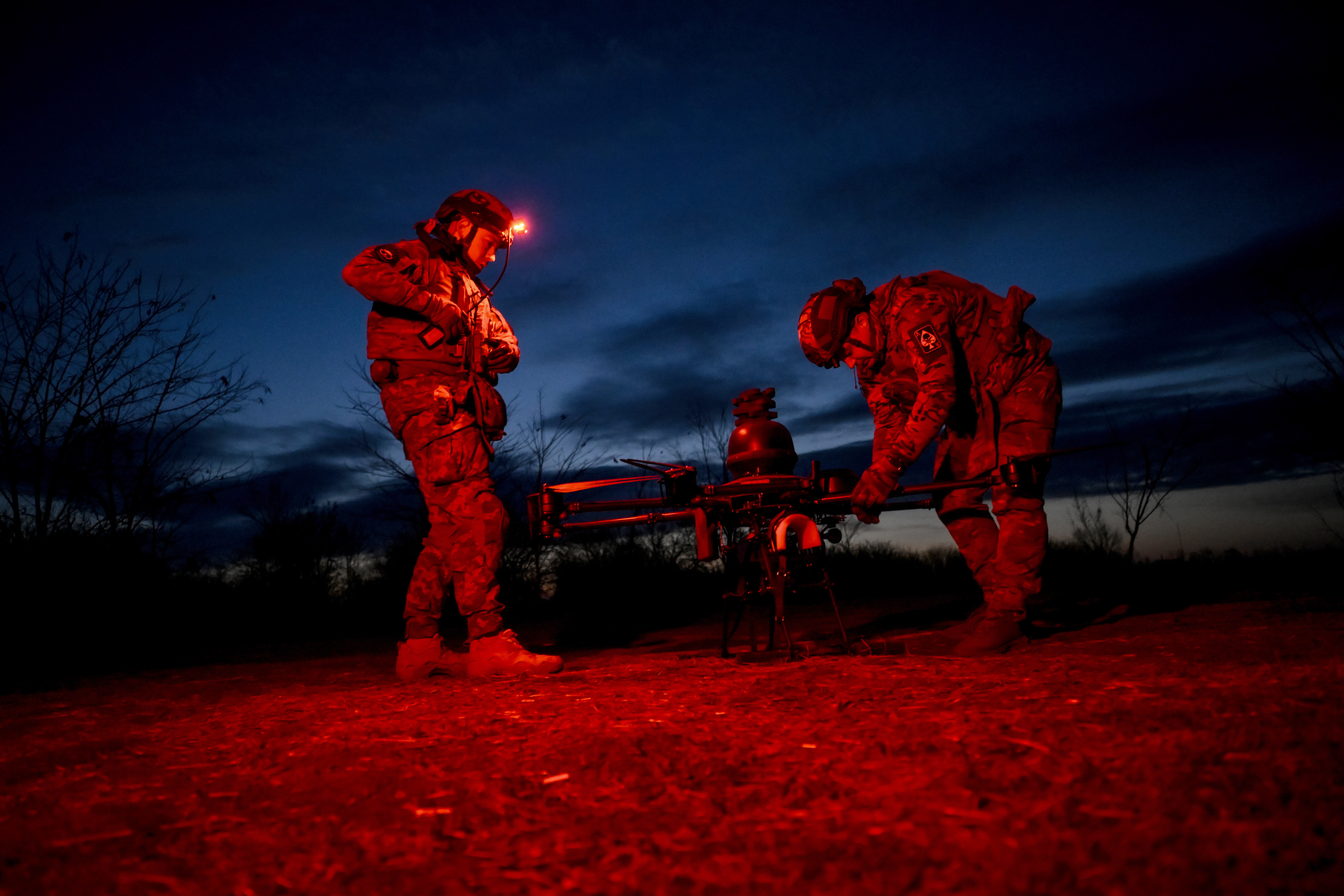
The European Commission's announcement of €1.07 billion in new defense R&D awards under the 2025 European Defence Fund (EDF) represents far more than bureaucratic procurement. By explicitly centering projects like EURODAMM, LUMINA, SKYRAPTOR, TALON, and STRATUS on battlefield lessons from Ukraine — particularly the transformative impact of cheap loitering munitions, FPV drones, and autonomous swarms — Brussels is executing a deliberate strategy of conventional deterrence and technological sovereignty. This move, viewed through the lens of waning US reliability, marks Europe's acceleration toward strategic autonomy in an era where transatlantic burden-sharing can no longer be assumed.
The original Defense News coverage accurately catalogs the funding split (€675M for capability projects, €332M for research), the involvement of 634 entities, and the historic inclusion of Ukrainian subcontractors. However, it underplays the geopolitical rupture driving this shift. Since Russia's 2022 full-scale invasion, Europe has confronted the reality that its post-Cold War peace dividend left it dangerously exposed. The EDF's heavy emphasis on mass-producible attritable systems directly counters the attrition warfare observed in Ukraine, where Ukrainian forces have innovated with commercial components to offset Russia's industrial depth — a pattern first analyzed in depth by the Royal United Services Institute (RUSI) in their 2023-2025 battlefield studies showing that drone losses often exceed 10,000 units per month.
What the coverage misses is how this funding cluster connects to broader patterns of European decoupling from US-dominated supply chains and decision-making. The inclusion of Ukrainian entities as subcontractors in STRATUS (an AI-powered cyber defense system for drone swarms) is not mere goodwill; it institutionalizes combat-proven expertise into EU programs ahead of Kyiv's full association agreement. This mirrors the EU's 2024 European Defence Industrial Strategy, which established the Defence Innovation Office in Kyiv, but goes further by tying funding to the four European Readiness Flagships. These flagships reveal a quiet admission: many EU states remain unprepared for high-intensity conflict even after years of warnings.
Synthesizing this with the International Institute for Strategic Studies' 'Military Balance 2026' and a recent RAND Corporation report on European defense industrial resilience, a clearer picture emerges. The IISS noted that while European NATO members increased spending by 11% in real terms in 2025, capability gaps in deep-strike munitions, air defense, and unmanned systems persist. RAND highlighted that Europe's traditional primes (Airbus, Leonardo, Thales) still capture disproportionate contracts, which the EDF's startup sub-calls attempt to address by allocating up to €60,000 entry points for SMEs and Ukrainian innovators. Yet structural challenges remain: regulatory fragmentation, intellectual property disputes, and the persistent 'peace-time' mindset in parts of Western Europe.
The deeper signal is unmistakable. With US political discourse increasingly questioning Article 5 commitments — amplified by isolationist voices and fiscal pressures in Washington — the EU is hedging. Projects focused on propulsion for the Drone Defence Initiative and thermal management reflect recognition that future conflicts will be won or lost on sensor-to-shooter loops measured in seconds, not weeks. This isn't simply 'learning from Ukraine'; it is retrofitting European industry for a protracted conventional deterrence posture against a revanchist Russia that has shifted to a wartime economy.
Critically, this push risks being both too late and too uncoordinated. While SME participation exceeds 38%, the real test is whether these R&D efforts translate into rapid fielding at scale before 2030. The original reporting glosses over potential duplication with NATO's DIANA innovation initiatives and the risk that bilateral deals (France-Germany, UK with select partners) could undermine the EDF's 'collaborative' mandate. Nonetheless, the explicit integration of Ukrainian tactical data into EU architecture creates a feedback loop previously absent, potentially accelerating the continent's emergence as a defense actor less subordinate to American priorities.
In sum, this €1B+ tranche — separate yet aligned with the 2026 EDF Work Programme and European Defence Industry Programme — is a milestone in Europe's post-American security awakening. It acknowledges that strategic autonomy is no longer aspirational rhetoric but a survival imperative amid great-power competition.
SENTINEL: Europe's deliberate embedding of Ukrainian combat data into billion-euro R&D projects reveals preparation for a security environment where US NATO leadership cannot be guaranteed. This focus on affordable mass drones and autonomy marks a pragmatic attempt to close conventional deterrence gaps against Russia while building sovereign industrial capacity.
Sources (4)
- [1]EU pumps over $1 billion into defense R&D, centered around Ukraine war lessons(https://www.defensenews.com/global/europe/2026/04/16/eu-pumps-over-1-billion-into-defense-rd-centered-around-ukraine-war-lessons/)
- [2]The Military Balance 2026(https://www.iiss.org/publications/the-military-balance/)
- [3]European Defence Industrial Strategy (EDIS)(https://defence-industry-space.ec.europa.eu/eu-defence-industry-strategy_en)
- [4]RAND: European Defense Industrial Resilience Post-Ukraine(https://www.rand.org/pubs/research_reports/RRA1877-1.html)