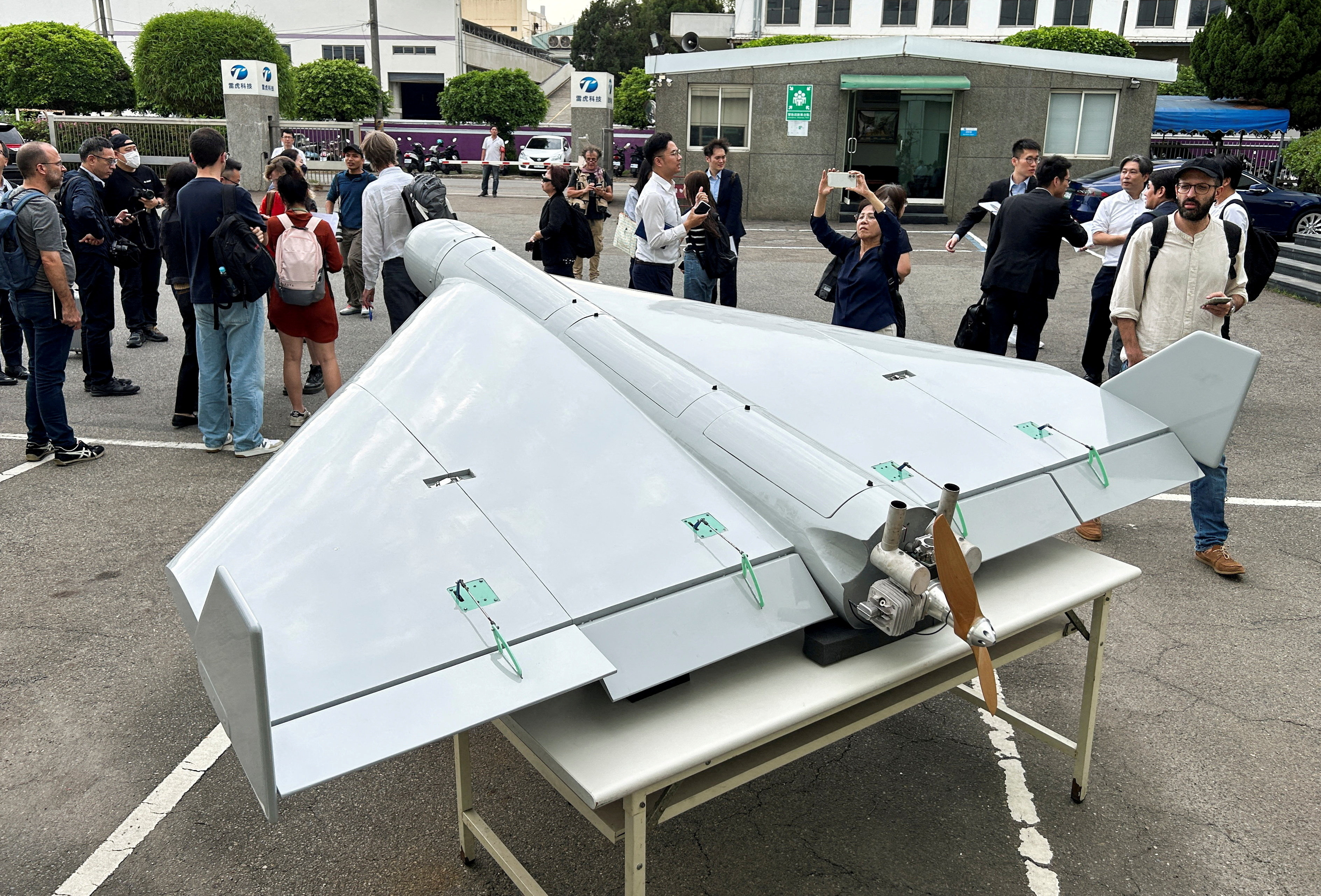
Taiwan drone budget split exposes procurement delays despite US push for asymmetric swarm
Taiwan’s drone deterrence push collides with legislative funding disputes that prioritize US arms and annual caps over rapid asymmetric production. Evidence from Ukraine and Taiwan budget documents shows the hornet’s nest requires decentralized output the current split cannot deliver on schedule.
Raymond Greene, director of the American Institute in Taiwan, stated at the Taichung drone forum that asymmetric unmanned systems represent a game-changing deterrent, citing Ukraine’s experience where small drones shifted battlefield odds. Taiwan’s government responded with a new T$210 billion package targeting surveillance and coastal attack drones by 2031, yet the opposition-controlled legislature had already rejected two-thirds of the original T$1.25 trillion special budget, earmarking remaining funds strictly for US-origin systems. Procurement records show Taichung firms Thunder Tiger and AIDC positioned for rapid scaling, but the funding source change inserts annual legislative reviews that historically slow delivery timelines.
Official statements emphasize collective deterrence with democratic supply chains, yet contract awards reveal no current production surge matching the required density. Independent analysis of Ukraine’s 2022-2024 drone expenditures indicates defender swarms require decentralized manufacturing and immediate fielding, not phased budgets capped at T$40 billion per year. The KMT proposal’s main-budget mechanism adds oversight layers that favor established contractors over the distributed small-unit production needed for a true hornet’s nest.
Lai Ching-te’s race-against-time framing aligns with observed Chinese gray-zone activity around outlying islands, but the political split on funding mechanisms creates measurable risk of capability gaps through 2028. Cross-referenced defense contractor filings show AIDC expanding composite facilities while legislative caps constrain order volumes below the threshold for sustained swarm density.
Next indicators to monitor are first-quarter 2027 contract awards and any supplemental requests tied to specific unit production targets rather than broad spending ceilings.
AIT Director: First distributed drone production contracts under the new T$210B package will total under T$35 billion by end-2027 due to annual legislative caps.
Sources (3)
- [1]Primary Source(https://www.defensenews.com/industry/techwatch/2026/07/03/taiwan-needs-a-hornets-nest-of-drones-to-deter-conflict-us-diplomat-says/)
- [2]Supporting Source(https://www.reuters.com/world/asia-pacific/taiwan-president-calls-urgent-build-up-asymmetric-capabilities-2026-07-02/)
- [3]Supporting Source(https://www.mnd.gov.tw/Publish.aspx?pid=72720)