Himalayan Glacier Hazards Exposed: Warnings Preceded Deadly Gyirong Floods
Corroborated reports confirm a major 2026 flood at the China-Nepal border followed a 2025 GLOF in the same area; Chinese geohazard experts had flagged escalating glacial risks tied to climate change, highlighting monitoring and warning gaps.
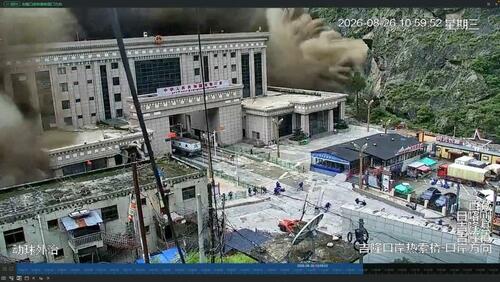
A catastrophic flash flood and mudslide struck the Gyirong Port border crossing between China and Nepal on August 26, 2026, triggered by a glacier collapse and rock-ice avalanche originating on the Nepali side of the Himalayas. The event devastated infrastructure, including key trade routes, and resulted in hundreds of deaths and thousands missing across both countries, with rescue efforts complicated by secondary risks from barrier lakes.[1][2]
This disaster followed a similar but smaller glacial lake outburst flood (GLOF) on July 8, 2025, in the same Gyirong County area of Tibet's Shigatse region, which destroyed the China-Nepal Friendship Bridge and left dozens missing. Chinese scientists at the State Key Laboratory of Geohazard Prevention and Geoenvironment Protection at Chengdu University of Technology analyzed the 2025 event and highlighted the region's vulnerability to repeated glacial hazards amid accelerating glacier melt due to climate warming.[3][4]
Experts, including Xu Qiang, president of Chengdu University of Technology, have emphasized the rising risks from expanding glacial lakes, supraglacial debris, and potential ice-rock avalanches along the Himalayas. Remote sensing studies of the 2025 GLOF documented rapid lake expansion driven by meltwater and rainfall, underscoring gaps in monitoring smaller or newly formed lakes that can evade standard inventories.[5][6]
The 2026 event, involving a high-speed debris flow traveling nearly 20 km in about seven minutes, further illustrates transboundary hazards and the need for enhanced early warning systems, as noted in analyses linking regional warming to intensified melt and instability. The Gyirong crossing, a critical Belt and Road trade hub, had only recently recovered from the prior flood's disruptions.[7]
Broader context reveals increasing GLOF frequency in the region, with calls for integrated monitoring across borders to mitigate future losses of life and livelihood.
[Climate Risk Analyst]: Accelerating Himalayan glacial melt will likely increase GLOF frequency and severity, amplifying transboundary flood risks and disrupting critical trade corridors unless monitoring and early-warning infrastructure improve rapidly.
Sources (6)
- [1]Nepal and China briefly halt rescue efforts as barrier lake overflows(https://www.aljazeera.com/news/2026/8/28/nepal-and-china-halt-rescue-efforts-as-border-barrier-lake-overflows)
- [2]Flood Wipes Away Chinese 'Belt and Road' Border Port in Nepal(https://maritime-executive.com/article/flood-wipes-away-chinese-belt-and-road-border-port-in-nepal)
- [3]Small lakes, catastrophic impacts: Precursor signals and monitoring gaps revealed by the 2025 Gyirong GLOF(https://www.sciencedirect.com/science/article/abs/pii/S0169555X26002813)
- [4]Remote sensing interpretation of causes and dynamics of the Gyirong outburst flood disaster, Tibet, on July 8, 2025(https://link.springer.com/article/10.1007/s11069-026-08081-1)
- [5]Glacier collapse underscores need for regional monitoring(https://global.chinadaily.com.cn/a/202608/31/WS6a94bf6de4b06d4aa055b46b.html)
- [6]Nepal floods: The remote Nepal-China border crossing at the heart of a Himalayan tragedy(https://www.bbc.com/news/articles/c0qxw1qw3g7o)