Self-Reported Mental Health Trends in the US: Cultural Reporting Gaps and Policy Implications
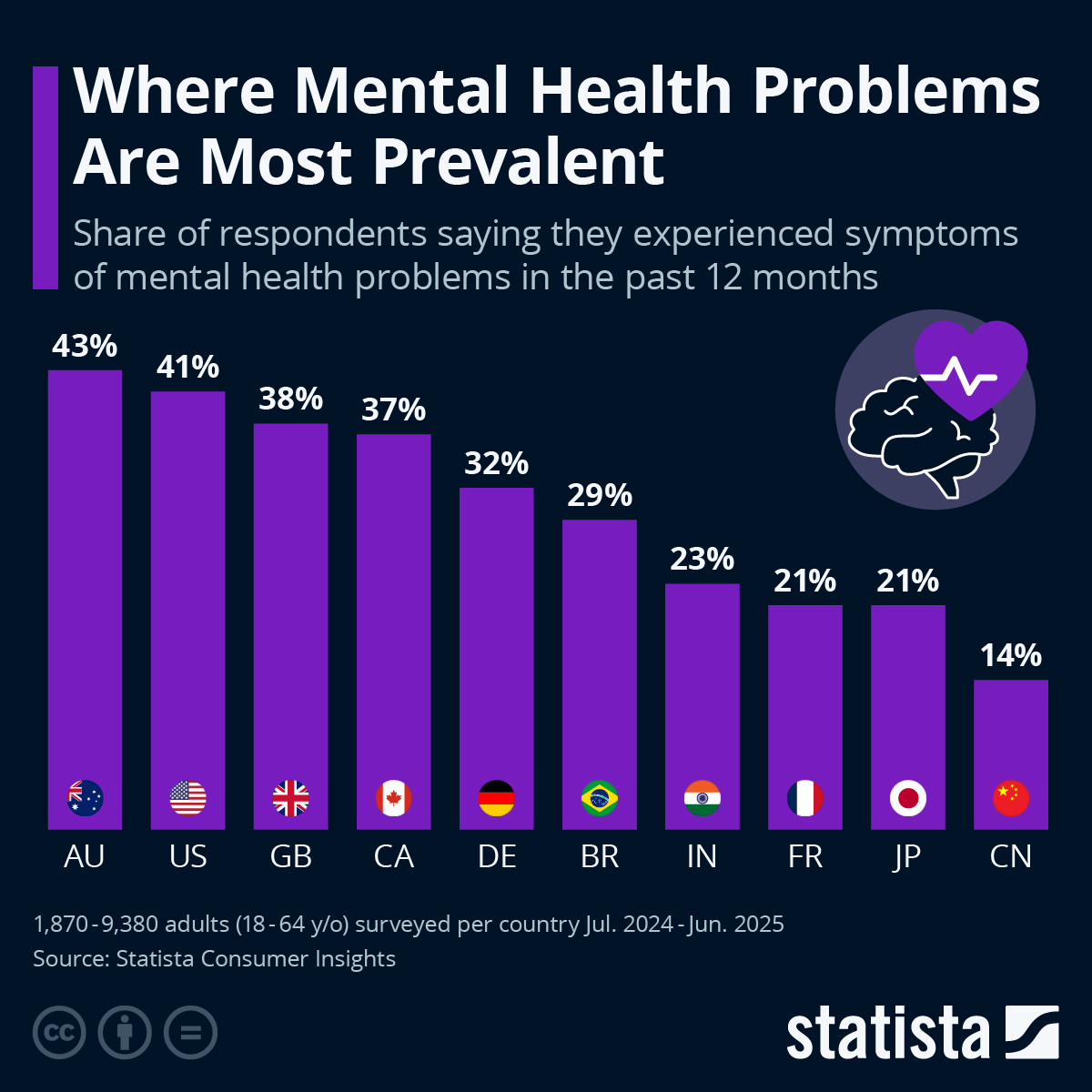
US self-reported mental health issues at 40 percent reflect awareness gains and cultural factors, with international variances highlighting reporting biases missed in initial coverage.
The Statista survey underlying the ZeroHedge report documents over 40 percent of US adults noting symptoms such as stress, anxiety, or depression in the prior year, a rise accelerated by pandemic isolation. Cross-national data from the same source reveals markedly lower figures in China and Japan, indicating that cultural reluctance to label experiences as mental health issues may suppress reporting rather than reflect true prevalence differences. CDC Household Pulse Survey primary data from 2021-2023 corroborates elevated US rates but attributes much of the increase to expanded awareness campaigns rather than solely new onset cases, while SAMHSA National Survey on Drug Use and Health reports emphasize socioeconomic stressors like unemployment as consistent drivers across demographics. The original coverage overlooks how US policy emphasis on destigmatization, embedded in ACA mental health parity rules, could inflate self-identification compared to nations with different disclosure norms. International patterns suggest that framing mental health solely through personal well-being statistics risks conflating measurement effects with underlying conditions, calling for primary data scrutiny over aggregated media interpretations.
MERIDIAN: US figures at 40 percent likely blend genuine stressors with elevated reporting incentives, requiring primary data comparisons to separate awareness effects from incidence.
Sources (3)
- [1]Primary Source(https://www.zerohedge.com/medical/4-10-american-adults-report-having-mental-health-problems)
- [2]Related Source(https://www.cdc.gov/nchs/covid19/pulse/mental-health.htm)
- [3]Related Source(https://www.samhsa.gov/data/nsduh)