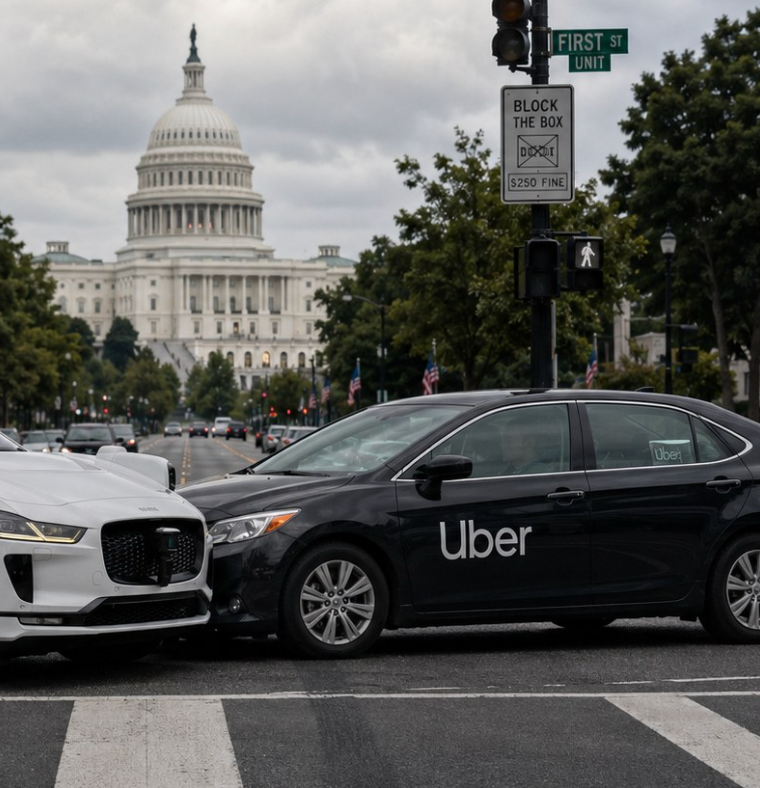
Uber Warns DC Rideshare Reforms Could Raise Fares 10%, Exacerbate Driver Shortages Amid Broader Regulatory Push
DC's proposed rideshare overhaul risks higher fares and fewer drivers per Uber, tied to insurance, accessibility, and pricing rules, amid AV job displacement concerns impacting millions in the gig sector.
As Washington, D.C., considers the For-Hire Passenger Service Reform Act of 2026 introduced by Councilmember Brianne Nadeau, Uber has testified that provisions for expanded insurance requirements, faster wheelchair-accessible vehicle availability, and prohibitions on surveillance-based pricing discrimination could deter drivers and push fares higher by around 10% in the first year. The bill, set for public hearing on October 19, 2026, aims to modernize outdated for-hire vehicle laws, close loopholes exploited by operators like Empower, enhance consumer protections, and ensure greater transparency in surge pricing and driver pay. Uber representative LaVita Gardner warned in prepared testimony that 'onerous onboarding restrictions' seen elsewhere could lead to thousands of drivers exiting the platform, with costs passed to riders—particularly affecting lower-income users already facing high fares. This warning aligns with Axios reporting on the same day, highlighting Uber's concerns over regulatory rigidity that treats rideshares like legacy taxi fleets. Broader context reveals parallel debates over autonomous vehicles (AVs), where similar workforce displacement fears have sparked driver protests; data from AV markets shows declines in trips per hour and earnings for human drivers. Nadeau's legislation also addresses insurance gaps and accessibility, drawing on committee reports documenting enforcement challenges. While proponents argue these updates bring 'international best practices' and level the playing field, critics including Uber note potential unintended consequences for driver supply and affordability in a city grappling with job market pressures. Connections to national trends underscore how local rules on insurance, data practices, and AV integration could ripple into consumer costs and gig economy stability.
Uber: Regulatory layering on insurance and access mandates will accelerate driver attrition in high-cost markets like DC, compounding fare inflation and reducing service availability for price-sensitive riders while AV debates intensify parallel workforce pressures.
Sources (5)
- [1]Exclusive: As D.C. weighs rideshare reform, Uber warns of higher fares(https://www.axios.com/local/washington-dc/2026/10/19/uber-rideshare-fares)
- [2]Nadeau introduces overhaul of for-hire vehicle laws(https://brianneknadeau.com/nadeau-introduces-overhaul-of-for-hire-vehicle-laws/)
- [3]Public Works and Operations Hearing Notice - For-Hire Passenger Service Reform Act of 2026(https://lims.dccouncil.gov/Hearings/hearings/2440)
- [4]D.C. wants to protect ride-share jobs. Riders could pay the price.(https://reason.com/2026/10/08/d-c-wants-to-protect-ride-share-jobs-riders-could-pay-the-price/)
- [5]DC robotaxi debate grows as drivers warn of job losses(https://wjla.com/news/local/dc-robotaxi-debate-grows-as-drivers-warn-of-job-losses-washington-city-council-autonomous-vehicles-uber-drivers-workforce-fund-regulatory-framework-waymo)