US Highlights China's Yellow Sea Coercion in Trilateral Talks; Japan, South Korea Sign Arctic Partnership Pact
Credible reporting confirms Rubio's remarks on Chinese coercion in the Yellow Sea during the trilateral meeting and the signing of the Arctic partnership MOC, with South Korea and Japan avoiding direct references in their statements. The move signals deeper U.S.-ally coordination on maritime and Arctic security amid supply chain risks.
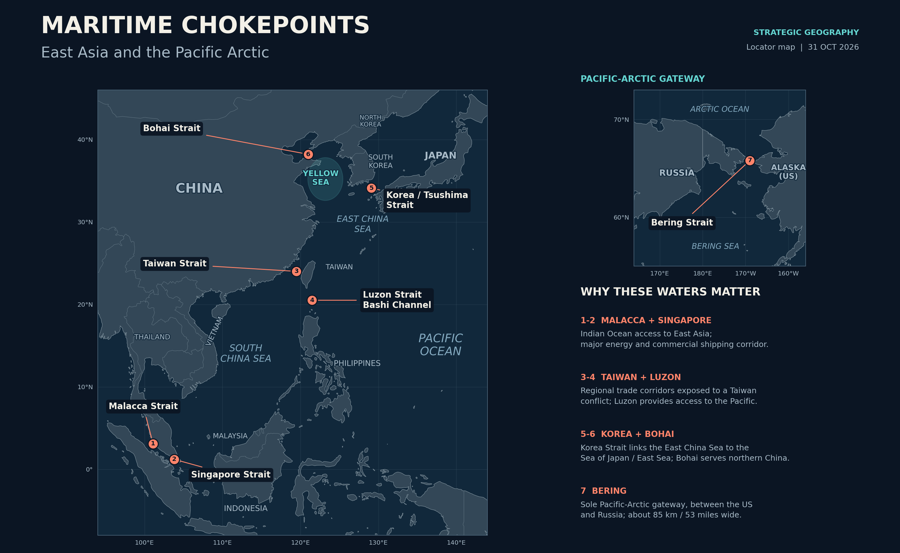
On October 30, 2026, on the sidelines of the G20 foreign ministers' meeting in Atlanta, U.S. Secretary of State Marco Rubio met with Japanese Foreign Minister Toshimitsu Motegi and South Korean Foreign Minister Cho Hyun. According to the official U.S. State Department readout, Rubio raised concerns over China's efforts to assert control in the South China Sea, its coercive behavior in the East China Sea and Yellow Sea (referred to as the West Sea in some contexts), and Russia-China cooperation undermining Indo-Pacific stability.[1]
The three ministers signed a Memorandum of Cooperation establishing the Trilateral Arctic Pacific Partnership (TAPP) to explore maritime cooperation and economic opportunities in the Pacific Arctic, including potential working groups on safety, emergency response, and supply chain resilience.[2][3] This builds on prior trilateral efforts in economic security, small modular reactors, and countering North Korean threats.
South Korean and Japanese post-meeting statements focused on regional developments, unilateral status quo changes, and opposition to coercion without naming China or the Yellow Sea specifically. Korean media noted this as the first explicit U.S. State Department reference to China's 'coercive behavior in the Yellow Sea' in trilateral readouts this year.[4]
The partnership targets the Bering Strait chokepoint and broader Indo-Pacific maritime routes critical for energy and trade, amid allies' vulnerabilities to disruptions in areas like the Taiwan Strait (carrying substantial shares of Japanese and Korean trade) and Yellow Sea ports. It extends cooperation northward while linking security with supply chain protection against great-power competition.
Broader G20 discussions emphasized freedom of navigation, food and energy security, and economic coercion, reflecting U.S. efforts to coordinate with allies on China- and Russia-related challenges.
Analyst: The TAPP and explicit Yellow Sea references mark an incremental but deliberate expansion of trilateral deterrence and economic resilience frameworks, potentially pressuring supply chains and Arctic access routes in response to Sino-Russian alignment.
Sources (4)
- [1]United States-Japan-Republic of Korea (ROK) Trilateral Foreign Ministers’ Meeting(https://www.state.gov/releases/office-of-the-spokesman/2026/10/united-states-japan-republic-of-korea-rok-trilateral-foreign-ministers-meeting-2)
- [2]US Raises China's 'Coercive Behavior in Yellow Sea' at Trilateral Meeting; Seoul and Tokyo Make No Mention(https://news.sbs.co.kr/english/article.do?news_id=N1008824397)
- [3]Japan, U.S., S. Korea Sign Arctic Cooperation Memo(https://www.nippon.com/en/articles/-/56704)
- [4]US, Japan, South Korea Sign Trilateral Arctic Pacific Pact(https://www.newkerala.com/news/a/us-japan-south-korea-sign-arctic-pact-481.htm)