SNAP Reforms Under OBBBA Drive Sharp Enrollment Drop and Looming State Cost-Shares, Pressuring Food Retailers
Credible USDA and legislative sources confirm declining SNAP enrollment and upcoming state cost-shares from high error rates under the 2025 OBBBA, creating headwinds for SNAP-exposed food retailers amid reduced participant spending.
USDA data released June 24, 2026, confirms the national SNAP payment error rate for FY2025 at 10.62%, representing roughly $10.1 billion in improper payments and exceeding the 6% congressional threshold in most states. This triggers state cost-sharing obligations of 5-15% of benefit costs beginning October 2027 under the One Big Beautiful Bill Act (OBBBA) of 2025, enacted July 2025.
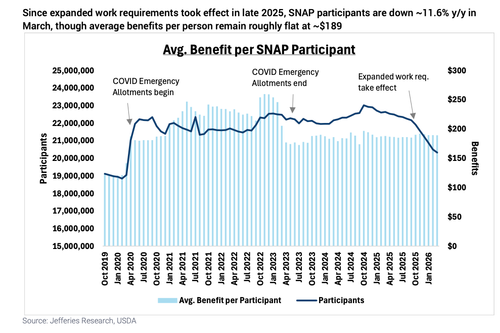
SNAP participation has fallen sharply, with national figures dropping from approximately 42.8 million in mid-2025 to around 37-38 million by early 2026—a decline of 4-5.5 million people or nearly 11%, driven by expanded work requirements and eligibility tightening. Retailers heavily reliant on SNAP redemptions, including Dollar General, Dollar Tree, Walmart, Kroger, and regional chains like Food Lion, face reduced customer spending as a direct result.
These changes coincide with broader fiscal pressures; states with persistently high error rates now have incentives to impose stricter eligibility reviews or reduce outreach, potentially amplifying benefit reductions. While administration officials highlight fraud reduction and program integrity, analyses from CBPP and others note rising risks of food insecurity among children, seniors, and working families. Connections to retailer margins are indirect but significant: lower SNAP volumes compound existing margin squeezes from inflation and competition, without evidence of offsetting price spikes in the near term. Official USDA quality control reports and congressional records provide the core documentation.
[Retail Analyst]: Reduced SNAP volumes from eligibility tightening and state cost-shares will pressure center-store and value-retailer revenues by late 2026-2027, with potential state-level benefit friction amplifying the effect beyond initial enrollment drops.
Sources (5)
- [1]USDA Announces FY 2025 State Payment Error Rates in SNAP(https://www.usda.gov/about-usda/news/press-releases/2026/06/24/usda-announces-fy-2025-state-payment-error-rates-snap)
- [2]FY 2025 SNAP Payment Error Rates Point to Increased Costs for States – FFIS(https://ffis.org/issue-brief/fy-2025-snap-payment-error-rates-point-to-increased-costs-for-states/)
- [3]SNAP Quality Control | Food and Nutrition Administration(https://www.fna.usda.gov/snap/qc)
- [4]SNAP Tracker: People Are Losing Food Assistance as the Republican Megabill(https://www.cbpp.org/research/food-assistance/snap-tracker-people-are-losing-food-assistance-as-the-republican-megabill)
- [5]One Big Beautiful Bill Act of 2025 - FNA.USDA.gov(https://www.fna.usda.gov/obbb)