Timing and Incentives: Ebola Alert Follows Contained Hantavirus Cruise Incident as WHO Navigates Post-US Funding Reality
Following a contained Andes hantavirus outbreak on the MV Hondius cruise ship that elicited limited public reaction, WHO announced a new Ebola (Bundibugyo) outbreak in DRC’s Ituri Province with 13 confirmed cases amid hundreds of suspected illnesses. This occurs months after the U.S. completed its 2026 withdrawal from WHO, removing significant funding. The sequence fits a pattern of sequential health alerts that warrant examination of institutional incentives, trust erosion, and whether amplification exceeds strict epidemiological necessity—contextualized by DRC’s 17 prior Ebola episodes and the hantavirus event’s low general-risk profile.
In May 2026, two distinct viral events captured international health attention in quick succession. First, a cluster of Andes hantavirus infections emerged aboard the Dutch-flagged expedition cruise ship MV Hondius. The outbreak, linked to a strain capable of limited human-to-human transmission, resulted in roughly 11 cases (eight confirmed) and three deaths among approximately 150 passengers and crew. WHO updates explicitly noted the lengthy incubation period—up to 45 days—and stated that additional cases were expected among repatriated passengers under monitoring. Risk to the broader public was consistently described by CDC and WHO as extremely low, with focused efforts on contact tracing, quarantine, and disembarkation protocols across multiple countries. The story received steady coverage but did not escalate into widespread public alarm or policy overhauls.[1][2][3]
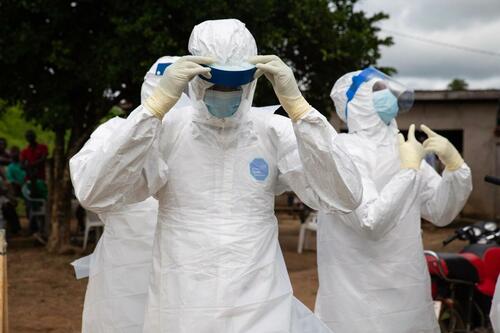
Within days, WHO Director-General Tedros Adhanom Ghebreyesus and DRC authorities announced confirmation of a new Ebola outbreak (Bundibugyo species) in Ituri Province. Laboratory testing identified 13 confirmed cases out of samples from a cluster of severe illness; broader surveillance reported 246 suspected cases and between 65-80 community deaths. This marks the 17th recorded Ebola outbreak in the DRC since 1976. WHO immediately scaled up support with $500,000 from its contingency fund, deploying experts for surveillance, contact tracing, and infection control. Tedros emphasized DRC’s experience managing such events and the need for a robust response, language that echoes past international appeals during localized filovirus incidents.[4][5][6]
Contextualizing these events reveals a recurring pattern worthy of scrutiny. The United States formally completed its withdrawal from WHO in January 2026, following an executive order by President Trump citing the organization’s COVID-19 performance, lack of reform, and political independence concerns. As a former top funder, the U.S. exit removed substantial assessed and voluntary contributions—estimates often cited around 15-20% of WHO’s budget—leaving the agency in a tighter financial position at a time when global trust in supranational health messaging remains fractured post-pandemic. Official statements from both WHO and U.S. officials confirm the withdrawal’s completion and its budgetary implications.[7][8]
Connections others miss include the institutional incentive structure: organizations facing resource constraints may amplify visibility of familiar, containable threats (Ebola has never sparked a global pandemic despite repeated DRC outbreaks) shortly after lower-visibility incidents (the hantavirus cruise cluster) fail to generate sustained engagement or new mandates. The hantavirus coverage highlighted human-to-human transmission rarity outside the Andes strain and the success of targeted public health measures; the near-immediate pivot to Ebola messaging invoking “global solidarity” and scaled-up funding requests fits a template observed in prior cycles where outbreak announcements coincide with budgetary or relevance pressures. DRC’s long history with Ebola—effective containment through experience rather than novel global theater—provides a controlled backdrop against which alarm language can be deployed without immediate falsification, yet it invites skepticism about whether the cadence and rhetoric serve pure epidemiological needs or organizational continuity. Official data show both events are real; the heterodox lens questions whether amplification thresholds and sequencing reflect threat proportionality or predictable bureaucratic behavior after major donor exit and eroded public confidence. History demonstrates dangerous outbreaks can occur, but repeated alignment of scare-adjacent rhetoric with funding shortfalls merits tracking beyond press releases.
Skeptic Analyst: Expect continued rotation through familiar regional pathogens with global rhetoric whenever WHO budgets tighten or trust metrics dip; genuine containment will likely succeed locally while narrative momentum sustains relevance.
Sources (5)
- [1]WHO Disease Outbreak News - Hantavirus cluster linked to cruise ship travel(https://www.who.int/emergencies/disease-outbreak-news/item/2026-DON601)
- [2]Democratic Republic of the Congo confirms new Ebola outbreak, WHO scales up support(https://www.afro.who.int/countries/democratic-republic-of-congo/news/democratic-republic-congo-confirms-new-ebola-outbreak-who-scales-upsupport)
- [3]Congo confirms new Ebola outbreak, 80 deaths(https://www.reuters.com/business/healthcare-pharmaceuticals/africa-cdc-says-ebola-outbreak-confirmed-congos-ituri-province-2026-05-15/)
- [4]Fact Sheet: U.S. Withdrawal from the World Health Organization(https://www.hhs.gov/press-room/fact-sheet-us-withdrawal-from-the-world-health-organization.html)
- [5]US officially leaves World Health Organization(https://www.bbc.com/news/articles/cn9zznx8qdno)