Goldman COO's Illiquidity Warning Reveals Private Credit as Shadow Banking's Systemic Vulnerability
Goldman Sachs COO John Waldron warned that retail investors (20% of the $1.7T U.S. private credit market) have been given an inflated sense of liquidity in what are truly illiquid vehicles with strict redemption gates. Synthesized with recent redemption rushes, Stanford research on valuation contagion, and Fed analysis of bank interconnections, this points to underappreciated systemic risks in shadow finance that could cascade into forced sales, credit contraction, and broader instability if economic or geopolitical shocks test the system's resilience.
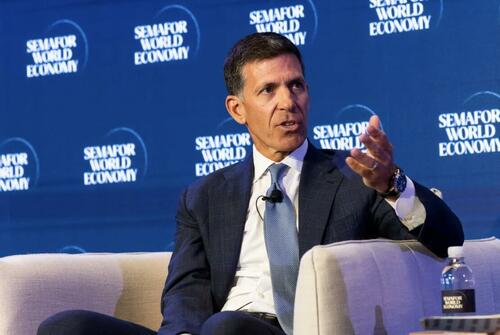
At Semafor’s World Economy event, Goldman Sachs President and COO John Waldron delivered a stark assessment of the $1.7 trillion private credit market: many managers have misrepresented the true illiquidity of their products to retail investors, who now comprise about 20% of U.S. exposure. "Not everybody has marketed their product as clearly as, certainly we would like to see with the clarity that this is really not a liquid product. It’s not semi-liquid. It’s really illiquid," Waldron stated. "Those retail investors, I think, have the perception of more liquidity than is the reality." He noted that redemption caps often limit withdrawals to around 5% per period, setting the stage for gates to rise amid any undercurrents of trouble.[1][1]
While Waldron expressed continued optimism about economic resilience—citing strong Q1 earnings, limited evidence of weakness, and no imminent private credit crisis absent a broader downturn—he flagged risks from prolonged geopolitical tensions, including the Iran conflict and potential disruptions to the Strait of Hormuz that could spike oil prices and trigger demand destruction. This nuance is critical: the market's extraordinary growth has been fueled by retail inflows seeking yield in a higher-rate environment, yet the structural mismatch between marketed accessibility and actual exit barriers creates a latent vulnerability.
Recent events corroborate the warning. The Wall Street Journal reported unprecedented redemption requests from wealthy investors in private credit funds, with analysts forecasting continued pressure, sluggish fundraising, rising defaults, and potential liquidity crises forcing asset sales or borrowing. Major firms have already imposed gates, rattling the sector. Reuters coverage similarly detailed stresses rippling through Wall Street, with redemption caps at players like Blue Owl, Ares, and others highlighting how quickly sentiment can shift.[2][3]
Deeper analysis reveals connections mainstream reporting often underplays. Stanford Graduate School of Business research warns that "democratizing" private markets via ETFs, BDCs, and retail vehicles transforms them into a "systemic risk machine." Opaque, model-driven valuations in private credit invite "valuation contagion": a public ETF discount or markdown can erode confidence in NAVs across interconnected funds, sponsors, and platforms, sparking capital flight, funding squeezes, and solvency doubts even without widespread defaults. Daily-liquidity wrappers around illiquid loans exacerbate mismatches, creating persistent discounts and transmission channels absent in traditional institutional closed-end funds.[4]
These risks intersect with traditional banking. A Federal Reserve analysis of bank lending to private credit vehicles notes growing interconnectedness through credit lines and partnerships. While immediate systemic impacts appear contained due to modest leverage and capital lockups, stress scenarios involving mass drawdowns could strain liquidity, especially if correlated with broader NBFI pressures. The lack of transparency in this shadow finance segment—now rivaling parts of traditional credit markets—mirrors pre-2008 vulnerabilities but with added retail and valuation opacity layers that could politicize losses or force regulatory overreach.[5]
Financial Times reporting on Waldron's comments and private capital risks underscores that while some executives (including at PIMCO) downplay systemic threats in favor of "disappointment" and lower returns, the retail perception gap amid $1.7T scale deserves scrutiny. Private credit filled a post-GFC void left by regulated banks, yet its evolution into a lightly overseen shadow system with retail access introduces novel contagion vectors: redemption spirals, fire sales in secondary markets, credit tightening, and spillovers to public markets. As geopolitical and economic narratives of "resilience" compete with these undercurrents, the Goldman COO's remarks serve as a rare mainstream signal of dangers that could erupt rapidly if confidence erodes—potentially accelerating the next crash through channels many prefer to ignore until gates slam shut.
LIMINAL: Retail misperceptions of liquidity in private credit, layered atop opaque valuations and bank credit-line linkages in the $1.7T shadow market, form a hidden trigger for redemption spirals and contagion that could rapidly escalate into the next financial crisis when economic resilience finally cracks under geopolitical or rate pressures.
Sources (5)
- [1]Some private credit funds have misrepresented liquidity to retail investors(https://www.semafor.com/article/04/15/2026/goldman-sachs-john-waldron-says-some-private-credit-funds-have-misrepresented-liquidity-to-retail-investors)
- [2]The Wealthy Investors That Powered Private Credit Are Rushing for the Exits(https://www.wsj.com/finance/investing/the-wealthy-investors-that-powered-private-credit-are-rushing-for-the-exits-7a3db81e)
- [3]The Democratization of Private Equity Could Create a Systemic Risk Machine(https://www.gsb.stanford.edu/insights/democratization-private-equity-could-create-systemic-risk-machine)
- [4]Bank Lending to Private Credit: Size, Characteristics, and Financial Stability Implications(https://www.federalreserve.gov/econres/notes/feds-notes/bank-lending-to-private-credit-size-characteristics-and-financial-stability-implications-20250523.html)
- [5]Goldman president warns private credit funds are not marketed properly(https://www.ft.com/content/3e91f018-d9c1-4ef4-a416-f80c97d930d8)