Collateral Damage or Targeted Symbol? Tehran Synagogue Strike Lays Bare Propaganda Wars and Iran's Selective Religious Tolerance
US-Israeli strikes damaged Tehran's historic Rafi-Nia Synagogue, reported as destroyed by Iranian media but deemed collateral damage by Israel. The event exposes Iran's complex, propagandistic relationship with its protected Jewish minority (approx. 10,000 strong with parliamentary representation) and highlights religious ironies and narrative spins overlooked in mainstream coverage of the conflict.
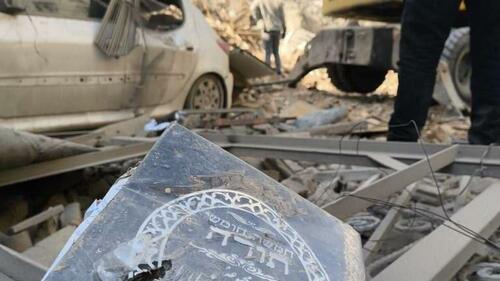
Amid escalating US-Israeli strikes on Iran in early April 2026, the Rafi-Nia (or Rafi Niya) Synagogue in central Tehran near Palestine Square sustained heavy damage, with Iranian state media reporting it as 'completely destroyed.' Footage from the site showed Hebrew-language books and Torah scrolls scattered in the rubble, prompting rescue operations. Iranian outlets including Shargh, Mehr News, and IRNA initially framed the incident as a deliberate Israeli strike on a Jewish site during Passover, with Jewish parliamentary representative Homayoun Sameh condemning the 'Zionist regime' for showing 'no mercy' to the community.[1][1]
Israeli officials, including the IDF, acknowledged the damage but described it as unintended 'collateral damage' from a targeted strike on a senior commander in Iran's Khatam al-Anbiya military emergency command. The IDF expressed regret, emphasizing that synagogues are not targeted. Independent verification by outlets like The Times of Israel and Haaretz confirmed the location and visual evidence while noting conflicting assessments on whether the site was fully destroyed or badly damaged.[2][3]
This episode reveals deeper, often glossed-over dimensions of the Iran conflict. Iran is home to an estimated 10,000 Jews—one of the largest remaining communities in the Middle East outside Israel—with protected legal status, a dedicated seat in parliament, and roughly 30 synagogues in Tehran alone. The Rafi-Nia Synagogue, built in the 20th century, served Persian Jews for decades. Yet its position near Palestine Square, a focal point for regime-sponsored anti-Israel rallies, underscores the Iranian government's instrumentalization of its Jewish minority: affording them symbolic tolerance to project pluralism while demanding public condemnations of Israel and Zionism. Jewish leaders' swift statements aligning with the regime illustrate this tightrope.[4]
The propaganda dimensions are equally messy. Iranian media leveraged the strike to portray US-Israeli actions as anti-Jewish aggression, potentially inflaming domestic sentiment and international opinion despite the community's distinct identity from Israeli policies. For Israel, the incident complicates narratives of precision warfare against a hostile regime rather than its people, occurring amid urban strikes where religious and civilian sites overlap. Mainstream reporting has often prioritized casualty tallies and military escalation, underplaying how this event exposes the conflict's religious ironies: a Jewish house of worship caught in strikes by the Jewish state against a nation that both shelters and exploits its Jews. This selective tolerance—Jews protected but other minorities persecuted—mirrors broader regime contradictions, while the visual of desecrated scriptures fuels information warfare on all sides. Connections to historical precedents, such as minority communities impacted in past regional wars, suggest long-term repercussions including accelerated Iranian Jewish emigration and hardened global polarization.[4]
Ultimately, the Rafi-Nia incident is no mere footnote; it humanizes the collateral realities of high-intensity conflict while serving as a Rorschach test for competing narratives in a war where religion, politics, and propaganda remain inextricably tangled.
LIMINAL: This strike will boost Iranian propaganda by framing Jews as shared victims, straining Israel's moral positioning and accelerating tensions around religious symbolism, while prompting more Iranian Jews to reconsider their precarious protected status.
Sources (5)
- [1]Synagogue in Tehran ‘completely destroyed’ in US-Israeli attack(https://www.aljazeera.com/news/2026/4/7/synagogue-in-tehran-destroyed-in-us-israeli-strikes-on-iran)
- [2]IDF admits Tehran synagogue was 'collateral damage' in strike on Iran commander(https://www.timesofisrael.com/iran-claims-tehran-synagogue-badly-damaged-in-israeli-airstrike-israeli-official-we-dont-target-synagogues/)
- [3]Iran Claims Tehran Synagogue Was 'Completely Destroyed' by U.S.-Israeli Strike(https://www.haaretz.com/middle-east-news/iran/2026-04-07/ty-article/iran-claims-tehran-synagogue-was-completely-destroyed-by-u-s-israeli-strike/0000019d-692d-d759-ab9d-79bd2a580000)
- [4]Israel Reacts to Reports It Bombed Synagogue in Iran(https://www.newsweek.com/israel-reacts-to-reports-it-bombed-synagogue-in-iran-11793398)
- [5]Tehran synagogue damaged by missile strike according to Iranian media(https://www.jpost.com/middle-east/iran-news/article-892314)