AI's Structural Blind Spot: Regurgitating Flawed Data at Scale Amid Science's Replicability Crisis
Synthesizes evidence that generative AI's regurgitation of unverified data—exacerbated by science's replicability issues and AI-generated fake papers—represents a core technical limit with cascading effects on institutional trust and information ecosystems.
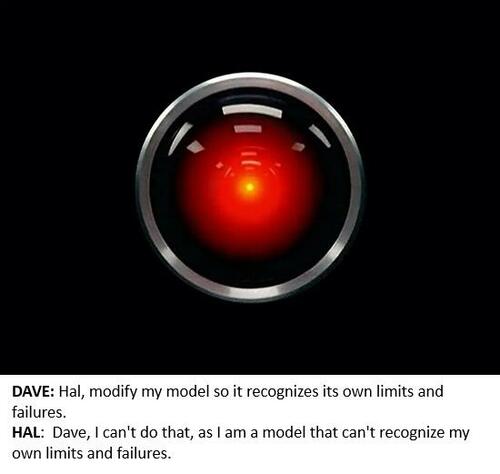
Generative AI systems fundamentally operate as sophisticated pattern-matchers trained on vast datasets, lacking any intrinsic mechanism to distinguish verified truth from error, bias, or fabrication. This leads to 'hallucinations'—plausible-sounding but inaccurate outputs—and the amplification of existing misinformation embedded in training corpora. As documented across technical literature, these errors arise because models predict tokens based on statistical correlations rather than epistemic validation.[1][2]
This limitation intersects directly with longstanding concerns in scientific publishing. Former New England Journal of Medicine editor Marcia Angell observed that it is 'simply no longer possible to believe much of the clinical research that is published,' a view rooted in conflicts of interest and systemic biases that predate AI but now compound its risks.[3] The broader 'replicability crisis' in science—where many studies fail independent reproduction—means AI training data often includes non-reproducible or questionable findings, which models then regurgitate at industrial scale.
The problem has escalated with generative AI enabling 'paper mills' to flood academic channels with fabricated manuscripts. Analyses show GPT-style models producing authentic-looking but fake papers that infiltrate Google Scholar and predatory journals, threatening the integrity of the scholarly record and accelerating model collapse through feedback loops of synthetic data.[4][5] Detection tools are emerging but lag behind the volume, with estimates of hundreds of thousands of questionable publications annually.[6]
Societally, this erodes trust in AI-assisted domains like medicine, policy, and economics, where outputs inherit and scale the flaws of their inputs. Mitigation strategies such as retrieval-augmented generation help but cannot eliminate the core architectural issue: AI does not 'know' or verify; it synthesizes. Without robust human oversight and improved data curation, adoption risks entrenching misinformation rather than resolving information scarcity.
[Epistemic Analyst]: Persistent reliance on ungrounded generative models will accelerate erosion of public trust in both AI outputs and the scientific record, necessitating hybrid human-AI verification systems as a baseline requirement for high-stakes applications.
Sources (6)
- [1]Hallucination (artificial intelligence)(https://en.wikipedia.org/wiki/Hallucination_(artificial_intelligence))
- [2]AI hallucination: towards a comprehensive classification...(https://www.nature.com/articles/s41599-024-03811-x)
- [3]GPT-fabricated scientific papers on Google Scholar(https://misinforeview.hks.harvard.edu/article/gpt-fabricated-scientific-papers-on-google-scholar-key-features-spread-and-implications-for-preempting-evidence-manipulation/)
- [4]an explorative case study around an AI-generated article...(https://link.springer.com/article/10.1186/s41073-025-00165-z)
- [5]Skeptical of medical science reports?(https://pmc.ncbi.nlm.nih.gov/articles/PMC4572812/)
- [6]AI-Generated Scientific Papers: Crisis? What Crisis?(https://pmc.ncbi.nlm.nih.gov/articles/PMC12810629/)