Russia-North Korea Diplomatic Engagement in Occupied Kherson: Patterns of Alliance-Building Beyond Symbolic Provocation
Saldo-Shin meeting at DPRK embassy normalizes engagement on occupied Ukrainian territory, implementing elements of the 2024 Russia-DPRK strategic treaty. Analysis connects troop deployments, technology transfers and sanctions patterns missed in initial reporting, showing a maturing multi-actor alignment with consequences for conflict length and global defense postures.
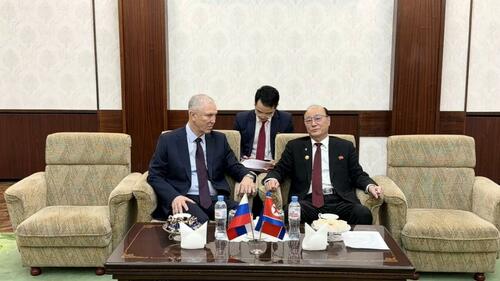
The meeting between Vladimir Saldo, Moscow-appointed administrator of occupied parts of Ukraine's Kherson region, and North Korean Ambassador Shin Hong-cheol at the DPRK embassy in Moscow marks an incremental but notable step in the normalization of Russia's claimed territories. According to photographs and statements released by Saldo and reported by The Moscow Times and Korea JoongAng Daily, discussions covered agriculture, humanitarian projects, culture, sports and education. While the ZeroHedge coverage correctly identifies the symbolic weight of hosting such talks involving an official from occupied Ukraine, it understates the degree to which this fits a longer sequence of formalized bilateral instruments and under-reports reciprocal technical cooperation.
Primary documents provide clearer context. The June 2024 Treaty on Comprehensive Strategic Partnership signed by Presidents Putin and Kim Jong Un in Pyongyang contains explicit mutual assistance clauses (Article 4) that go beyond previous friendship treaties. Russian state wire TASS and Korean Central News Agency releases from that summit describe commitments to 'develop ties in all fields' without referencing UN sanctions regimes. South Korean National Intelligence Service briefings, as cited in Yonhap reporting from late 2024 and early 2025, estimate 10,000-12,000 DPRK troops deployed in support of Russian operations, primarily in the Kursk sector, with roughly 2,000 casualties. These assessments also note continued DPRK shipments of artillery shells and short-range ballistic missiles, supplied in exchange for Russian microelectronics, machine tools and satellite technology.
Coverage focused solely on the 'provocation' aspect misses two structural patterns. First, agricultural and educational language frequently serves as diplomatic euphemism in Russia-DPRK communications; similar phrasing appeared in 2023-2024 protocols that later preceded expanded munitions transfers. Second, conducting the meeting with an administrator of occupied territory continues Moscow's campaign for incremental international recognition of its annexations, a pattern also visible in limited engagements with Eritrea, Mali and Burkina Faso officials. Western responses, including U.S. State Department statements condemning sanctions evasion and NATO assessments of manpower augmentation, emphasize illegality under international law and risk of prolonged attrition warfare. Russian and North Korean readouts instead frame the cooperation as sovereign bilateralism unrelated to third-party conflicts.
Chinese official statements maintain formal neutrality on the status of the four Ukrainian regions while increasing cross-border trade volumes with both Russia and the DPRK, according to Chinese customs data. This creates a tiered anti-Western alignment: direct combat support from Pyongyang, dual-use industrial inputs from Beijing, and sanctions circumvention networks involving Tehran. The Kherson-Moscow meeting therefore reflects not an isolated diplomatic event but an operationalization of the 2024 treaty in occupied territory, with implications for conflict duration, European defense expenditure trajectories above 2% GDP targets, and investor risk premia on commodities and Eurasian stability. Multiple perspectives exist on whether this broadens or merely exposes pre-existing fissures in the post-1945 order; primary treaty texts and intelligence estimates suggest the former is more consistent with observable delivery of troops, materiel and diplomatic access.
MERIDIAN: Russia-North Korea institutionalization in occupied Ukraine follows the letter of their 2024 treaty and observed troop/materiel exchanges; expect continued incremental diplomatic recognition attempts and corresponding upward pressure on European defense budgets through 2027.
Sources (3)
- [1]Treaty on Comprehensive Strategic Partnership between the Russian Federation and the Democratic People's Republic of Korea(https://www.mid.ru/en/foreign_policy/international_contracts/2024/06/19-treaty/)
- [2]Yonhap: N. Korea has sent 12,000 troops to Russia, Seoul says(https://en.yna.co.kr/view/AEN20241218002300325)
- [3]Reuters: Putin, Kim sign treaty on comprehensive strategic partnership(https://www.reuters.com/world/europe/putin-kim-sign-partnership-treaty-during-rare-summit-2024-06-19/)