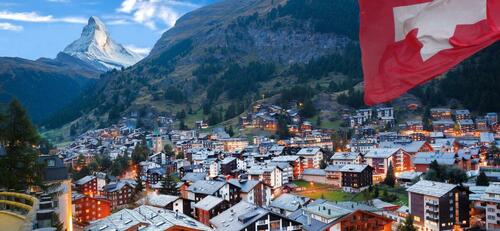
Switzerland's Lex Koller Tightening: A Pragmatic Model of National Self-Preservation Echoing Europe's Populist Undercurrent
Switzerland is tightening the Lex Koller law to restrict non-EU foreign purchases of homes and investment properties amid a housing crisis, responding to SVP pressure for a 10-million population cap. This offers a concrete policy model of national preservation aligning with Europe’s rising populist demands for immigration and resource controls, often downplayed by legacy media.
In mid-April 2026, the Swiss Federal Council announced plans to significantly strengthen the Lex Koller law, reimposing authorization requirements for non-EU/EFTA nationals seeking to purchase primary residences, mandating resale within two years of relocation, and restricting foreign acquisitions of commercial properties for rental or investment purposes. Annual quotas for holiday homes will be reduced, and loopholes allowing foreign investors to bypass restrictions via publicly traded real estate companies will be closed. These measures, open for consultation until mid-July 2026, directly respond to acute housing shortages exacerbated by population growth and foreign demand.[1][2]
This development cannot be separated from the Swiss People’s Party (SVP) initiative 'No to 10 Million Swiss,' set for a nationwide vote on June 14, 2026. The proposal seeks to cap Switzerland’s permanent resident population at 10 million, triggering stricter asylum policies and potential termination of the EU free movement agreement if thresholds are breached. The government opposes the hard cap but has advanced Lex Koller reforms as a targeted alternative to address the very pressures cited by SVP: rising rents, infrastructure strain, stagnating per-capita income, and environmental pressures.[3]
Legacy media often frames Europe’s housing crises primarily through supply-side failures or climate policy, yet Switzerland’s moves highlight a heterodox reality: rapid demographic change via mass immigration and unchecked foreign capital deployment in residential markets actively displaces native populations. Switzerland, long viewed as a stable, wealthy outlier, is now modeling 'national self-preservation' — prioritizing citizens’ access to finite resources like housing and land. This pragmatic course connects directly to the populist surge visible from France’s National Rally and Italy’s Brothers of Italy to Germany’s AfD and the Netherlands’ PVV, movements that legacy outlets frequently dismiss as xenophobic rather than responsive to material conditions.
What others miss is the deeper tension: Switzerland’s reforms risk complicating its recently negotiated EU package, exposing the friction between bilateral sovereignty and supranational economic integration. By refocusing Lex Koller on its original intent — preventing speculative foreign ownership — Bern is signaling that unlimited globalization of real estate markets undermines social cohesion. Similar dynamics fuel debates in Canada, Australia, and New Zealand, where foreign buyers have distorted housing affordability, yet Europe’s proximity to migration routes amplifies the stakes.
If successful, Switzerland’s template could legitimize parallel policies elsewhere: tighter residency-linked ownership rules, curbs on golden visas, and explicit prioritization of native housing access. This represents less a fringe ideology than a rational recalibration toward preserving the carrying capacity of small, high-trust nations. The SVP initiative and Lex Koller revival reveal a truth ignored in mainstream discourse — that cultural and demographic continuity remains a legitimate governance concern, one that technocratic EU frameworks struggle to accommodate. Switzerland is not closing itself off but reasserting boundaries that allow its unique model to endure.
Liminal Analysis: Switzerland's measured restrictions on foreign ownership and implicit population controls will likely inspire copycat policies in Austria, Netherlands, and Eastern Europe, accelerating a quiet re-sovereigntization trend that challenges post-1990s EU orthodoxy on free movement and capital flows.
Sources (4)
- [1]Switzerland plans stricter rules for real estate purchases by foreigners(https://www.reuters.com/business/switzerland-plans-stricter-rules-real-estate-purchases-by-foreigners-2026-04-15/)
- [2]Swiss government to tighten foreign property ownership(https://www.swissinfo.ch/eng/housing/access-to-swiss-housing-restricted-for-foreigners/91260448)
- [3]Switzerland Seeking to Curb Foreign Home Buying Amid Shortages(https://www.bloomberg.com/news/articles/2026-04-16/switzerland-seeking-to-curb-foreign-home-buying-amid-shortages)
- [4]Swiss government warns against ten-million population cap(https://www.swissinfo.ch/eng/swiss-politics/federal-council-warns-against-no-10-million-swiss-initiative/91104285)