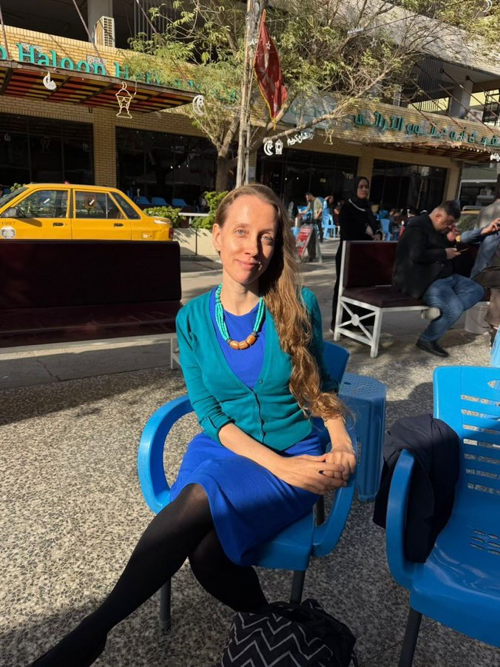
Kidnapping of American Journalist Shelly Kittleson in Baghdad Highlights Extreme Dangers for Independent Reporters Amid Iran Conflict Buildup
American journalist Shelly Kittleson was kidnapped in central Baghdad on March 31, 2026, with suspected ties to Iranian-backed militias like Kataib Hezbollah. Iraqi forces arrested one suspect during a pursuit. The event highlights growing threats to independent reporters amid rising regional tensions with Iran, echoing a prior high-profile militia kidnapping.
On March 31, 2026, veteran American freelance journalist Shelly Kittleson was abducted in broad daylight in central Baghdad near the Palestine Hotel on Al-Saadoun Street. Iraqi authorities confirmed that unidentified armed men stopped her vehicle, pulled her from the car, and fled. During a subsequent security pursuit based on precise intelligence, one of the kidnappers' vehicles overturned, resulting in the arrest of at least one suspect, according to Iraq's Interior Ministry. Kittleson, who has reported extensively from Iraq, Syria, and Afghanistan for outlets including Al-Monitor, Foreign Policy, BBC, and Politico, has long covered sensitive topics including militia activities and regional politics. This incident bears striking similarities to the 2023 abduction of Russian-Israeli researcher Elizabeth Tsurkov, who was held for over two years by the Iranian-backed militia Kataib Hezbollah before her release. Multiple reports have pointed to possible involvement by Kataib Hezbollah or affiliated Shiite militias, which function as Iranian proxies in Iraq and have a history of targeting perceived adversaries. As tensions escalate between Iran and Western-aligned powers, with ongoing proxy conflicts and fears of wider regional war, the kidnapping underscores the increasing risks to independent journalists operating without the protection of major media organizations. Iraqi security forces have made strides in asserting control, yet the influence of powerful militias embedded within the country's political framework continues to create a hazardous environment for those shining light on these dynamics. Kittleson's case serves as a stark reminder that in a rapidly destabilizing Middle East, even experienced reporters with deep local knowledge remain vulnerable to those seeking to silence critical coverage.
LIMINAL: This abduction signals Iranian-backed militias growing bolder in targeting Western journalists and researchers in Iraq as a low-cost way to project power and deter scrutiny during periods of heightened Iran-US and Iran-Israel tensions, likely forcing more reporters to operate remotely or with heavy security.
Sources (4)
- [1]American journalist Shelly Kittleson abducted in Iraq(https://www.al-monitor.com/originals/2026/03/american-journalist-shelly-kittleson-abducted-iraq)
- [2]Journalist holding US passport kidnapped in Baghdad, police sources say(https://english.alarabiya.net/News/middle-east/2026/03/31/journalist-holding-us-passport-kidnapped-in-baghdad-police-sources-say)
- [3]Interior Ministry reports arrest in foreign journalist kidnapping(https://shafaq.com/en/Security/Iraq-arrests-suspect-in-US-journalist-Shelly-Kittleson-kidnapping)
- [4]American journalist Shelly Kittleson kidnapped in central Baghdad, one suspect arrested(https://timesofindia.indiatimes.com/world/middle-east/american-journalist-shelly-kittleson-kidnapped-in-central-baghdad-one-suspect-arrested/articleshow/129933983.cms)