De-Extinct Dire Wolves: Biotech Leap Raises Overlooked Ethical Risks for Ecosystem Engineering and Climate Adaptation
Colossal Biosciences' breeding-age de-extinct dire wolves (genetically edited gray wolf proxies) mark a biotech milestone but spark ethical debates on genetic engineering, ecological risks, and its under-discussed role in climate adaptation through ecosystem redesign.
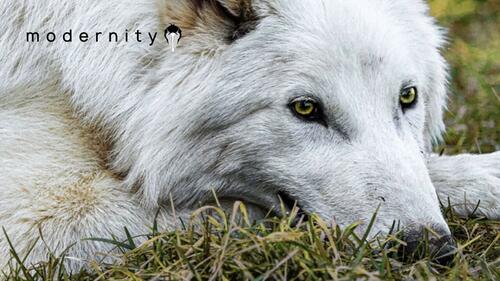
Colossal Biosciences has achieved what it calls the world's first successful de-extinction, producing three genetically engineered dire wolf proxies named Romulus, Remus, and Khaleesi, born in late 2024 and early 2025 through CRISPR editing of gray wolf embryos. These animals, now breeding-aged as of 2026, exhibit key traits reconstructed from ancient DNA including larger size, distinct dentition, white coats, and unique vocalizations. The company maintains them in a 2,000-acre semi-wild preserve and plans to expand the population initially via assisted reproduction to ensure genetic diversity before transitioning to natural breeding. Parallel projects target the woolly mammoth (targeting a calf by 2028), thylacine, dodo, moa, and recently the bluebuck antelope.
While Colossal frames this as aligned with IUCN guidelines for conservation technology that could benefit living species, the creations are not identical clones of the extinct Aenocyon dirus but heavily edited gray wolves with approximately 20 targeted genetic changes across 14 genes. Scientific critiques emphasize this represents phenotypic approximation rather than true species resurrection, raising questions about whether these animals can fulfill original ecological roles in modern, human-altered landscapes. Critics argue the approach risks misleading the public by branding genetically modified wolves as 'de-extinct' while potentially introducing novel traits that could disrupt existing predator-prey dynamics if ever released beyond controlled preserves.
The editorial lens reveals connections frequently missed in climate discourse: de-extinction biotechnology is emerging as a radical form of ecosystem adaptation often sidelined in favor of emissions-focused strategies. Colossal's mammoth project, for instance, seeks to restore Arctic tundra functions that could slow permafrost thaw and methane release through grazing and vegetation trampling. Similarly, reintroducing dire wolf-like predators could theoretically regulate herbivore populations to promote carbon-sequestering plant communities in North America. Yet this raises profound ethical stakes around genetic engineering's power to 'rewrite' extinction endings. What are the welfare implications for surrogate dogs and the edited animals themselves? How do we assess long-term risks of gene flow or unintended ecosystem cascades in climates already shifting rapidly? Mainstream climate adaptation conversations rarely grapple with synthetic biology's god-like capacity to redesign food webs, potentially normalizing interventions whose full consequences remain unpredictable.
Colossal emphasizes ethical oversight, semi-wild habitats, and dual-use benefits for endangered species conservation. However, the rapid advancement across multiple species demands broader societal debate on boundaries for human-directed evolution. As these dire wolves approach natural breeding, the technology transitions from proof-of-concept to potential deployment, forcing us to confront whether biotech can responsibly augment nature's resilience or if it risks compounding the disruptions humanity has already wrought.
LIMINAL: Colossal's dire wolf success normalizes synthetic biology for ecosystem hacking that could aid climate resilience but carries high risks of unintended genetic and ecological fallout we are unprepared to manage.
Sources (4)
- [1]Dire Wolf - Colossal Biosciences(https://colossal.com/direwolf/)
- [2]The Return of the Dire Wolf(https://time.com/7274542/colossal-dire-wolf/)
- [3]Engineered proxies and the illusion of de-extinction(https://www.sciencedirect.com/science/article/pii/S2213671125001092)
- [4]Colossal Biosciences announces 'de-extinction' plan for bluebuck antelope(https://www.cnn.com/science/bluebuck-colossal-biosciences-deextinction-spc-c2e)