July Retail Sales Slump Reflects Post-Prime Day Shift, Fading Stimulus, and World Cup Hangover Amid Evolving Consumer Patterns
Official July 2026 U.S. retail sales data confirms a 0.6% MoM drop driven by calendar shifts, weather, fading fiscal support, and post-World Cup effects, with BofA card data highlighting evolving income-based spending patterns that could influence consumer behavior through 2027.
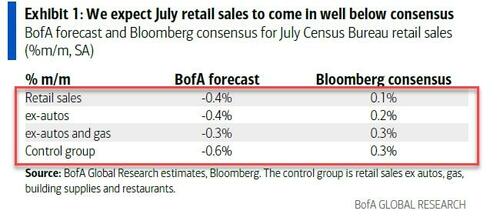
U.S. retail and food services sales fell 0.6% month-over-month in July 2026 to $763.6 billion, the largest decline since May 2025 and well below expectations for a 0.1% gain, according to the U.S. Census Bureau. Year-over-year growth slowed to 5.0%. The control group, a key input for GDP calculations, dropped 0.4%. Official data aligns with Bank of America card transaction insights pointing to weakness in non-store (online) retailers—the second-largest monthly drop since the pandemic—alongside declines in clothing, furniture, and gasoline stations.
Contributing factors included the earlier timing of Amazon Prime Day promotions in June, which pulled forward spending, combined with a mid-July heat wave and a modest post-FIFA World Cup 2026 spending hangover as major tournament matches concluded. Fading support from larger tax refunds under recent legislation also weighed on results. Real (inflation-adjusted) retail sales remained positive but decelerated.
Under the surface, the data reveals shifting dynamics: lower-income households sustained stronger year-over-year card spending growth than higher-income ones in recent weeks, suggesting the prior 'K-shaped' recovery is flattening into more uniform but cooling patterns, even in discretionary categories. BofA analysts explicitly flagged the World Cup, online promotions, and narrowing income gaps as summer spending influences in their July 2026 Consumer Checkpoint report.
For retail consumers managing post-World Cup budgets, this signals potential near-term caution in discretionary purchases like apparel and home goods through year-end, with back-to-school and holiday seasons likely to face more normalized demand rather than event-driven spikes. The slowdown may pressure pricing and promotions in the coming months as retailers adjust to tempered momentum.
[Retail Analyst]: Lower- and middle-income households may drive steadier but less exuberant holiday spending into early 2027, prompting retailers to emphasize value promotions over premium event tie-ins as post-World Cup normalization sets in.
Sources (5)
- [1]Advance Monthly Sales for Retail and Food Services July 2026(https://www.census.gov/retail/sales.html)
- [2]US consumers cut retail spending sharply in July(https://www.cnn.com/2026/08/14/economy/us-retail-sales-july)
- [3]U.S. retail sales dropped 0.6% in July 2026(https://qz.com/us-retail-sales-july-2026-decline-081426)
- [4]US Retail Sales(https://tradingeconomics.com/united-states/retail-sales)
- [5]Consumer Checkpoint: Consumers hit the back of the net(https://institute.bankofamerica.com/content/dam/economic-insights/consumer-checkpoint-july-2026.pdf)