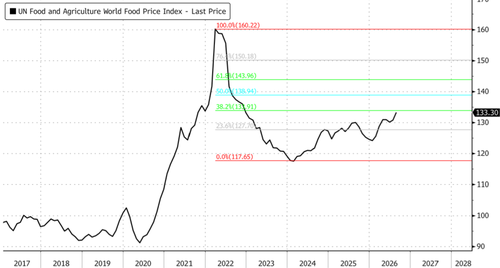
FAO Food Price Index Hits 133.3 in August, Driven by Sugar and Wheat Gains Amid Black Sea and Hormuz Disruptions
FAO data records renewed upward pressure on global food commodities from multiple supply constraints. Russia and Iran gain bargaining power from transit chokepoints while importers absorb higher costs. The pattern risks feeding into 2024 inflation prints before central banks complete tightening cycles.
The August reading marks the highest level since 2022 for the FAO basket of traded commodities. Every major category advanced, reversing earlier declines and aligning with separate Bloomberg Agriculture Spot Index data showing its largest monthly gain since 2011. Primary drivers include collapsed Black Sea grain transit volumes after Russia exited the 2022 export agreement and reduced fertilizer shipments from sanctioned Russian producers.
State incentives explain the pattern. Russia retains leverage over Ukrainian ports while facing limited costs from higher global prices that support its own grain exports. Iran holds potential to constrain Hormuz tanker traffic, raising diesel and input costs for importers. El Niño yield risks add supply pressure without direct attribution to any single actor's policy.
Central banks now face renewed imported inflation just as they assess rate restrictiveness. Wheat and sugar price momentum transmits directly into consumer indices in import-dependent states, complicating fiscal balances in Egypt, Bangladesh and parts of sub-Saharan Africa.
Absent renewed Black Sea access or fertilizer export relief, the index trajectory points to further gains through Q4, with documented thresholds above 140 likely to trigger additional national stockpiling and export controls.
FAO: Food Price Index exceeds 140 by December 2023 if Black Sea shipments remain below 2022 averages.
Sources (2)
- [1]Primary Source(https://www.fao.org/worldfoodsituation/foodpricesindex/en/)
- [2]Supporting Source(https://www.bloomberg.com/markets/commodities)