US Fiscal 2026 Deficit Hits $1.99 Trillion Amid Record $1.36 Trillion Interest Costs, Pressuring Future Taxes and Services
Corroborated Treasury and CBO data show FY2026 deficit at $1.99T with record interest at $1.36T; analysis highlights direct links to higher future taxes or cuts in services for Americans via crowding-out effects.
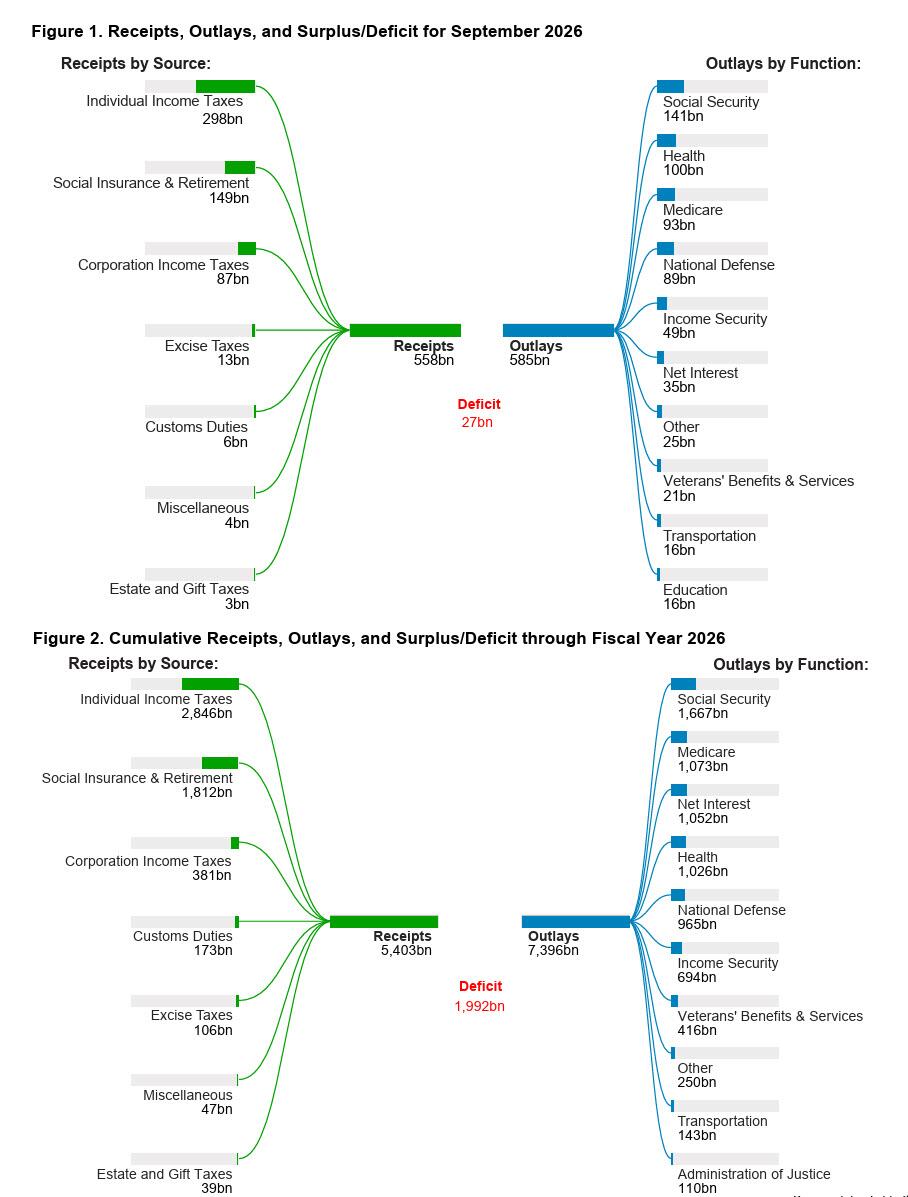
Official Treasury data released October 16, 2026, confirms the US closed fiscal year 2026 (ended September 30) with a $1.99 trillion budget deficit, up $217 billion from the prior year and the largest since 2021. Receipts totaled a record $5.40 trillion while outlays reached $7.40 trillion. Gross interest on the debt climbed 12% to a record $1.36 trillion, now second only to Social Security in major spending categories.[1][2]
This trajectory directly affects everyday Americans through potential future tax increases or reduced services. Rising interest payments—projected to grow further with debt exceeding $40 trillion and higher yields—crowd out discretionary spending on infrastructure, education, and healthcare. CBO and Treasury figures show mandatory programs like Social Security ($1.7 trillion) and Medicare already dominate, leaving less room for new initiatives without borrowing more or raising revenues.[3]
Tariff refunds following a Supreme Court ruling contributed to the wider gap, while defense and entitlement spending rose. For households, sustained deficits at 6.2% of GDP amid steady growth signal higher borrowing costs that could translate to elevated mortgage rates, credit card interest, and eventual fiscal adjustments—either via broader taxes or benefit reforms. Analysts note interest alone now rivals or exceeds major programs, amplifying pressure on services as debt service accelerates.[4]
The Monthly Treasury Statement and CBO reviews align closely with these outcomes, underscoring that without policy shifts, interest costs will continue climbing sharply, potentially surpassing Social Security growth rates and forcing trade-offs that touch retirement benefits, public investments, and personal finances.
Treasury/Fed: Persistent high deficits will drive interest costs above $1.5T annually by 2028, likely prompting either tax hikes or spending restraint that directly reduces discretionary services like infrastructure and education while raising borrowing costs for households.
Sources (6)
- [1]US annual budget gap hits nearly $2 trillion, largest in 5 years(https://www.reuters.com/world/us/us-fiscal-2026-budget-deficit-rises-199-trillion-largest-5-years-2026-10-16/)
- [2]US Budget Deficit Widens to $1.99 Trillion for 2026 as Spending Rises(https://www.bloomberg.com/news/articles/2026-10-16/us-posts-1-99-trillion-budget-gap-for-2026-as-spending-climbs)
- [3]U.S. Budget Deficit Nears $2 Trillion, a Reality Check for Trump’s Cost Cutting(https://www.nytimes.com/2026/10/16/business/us-budget-deficit-nears-2-trillion-a-reality-check-for-trumps-cost-cutting.html)
- [4]U.S. budget deficit for 2026 fiscal year near $2 trillion(https://www.cnbc.com/2026/10/16/us-budget-deficit-2026.html)
- [5]Monthly Treasury Statement via ALFRED (St. Louis Fed)(https://alfred.stlouisfed.org/series?seid=MTSDS133FMS)
- [6]CBO: FY 2026 Budget Deficit Totaled $2 Trillion(https://www.americanactionforum.org/insight/cbo-fy-2026-budget-deficit-totaled-2-trillion/)