Fracturing the Arsenal: Japan's Post-WWII Arms Export Revolution Signals Accelerating Decline in U.S. Alliance Leverage
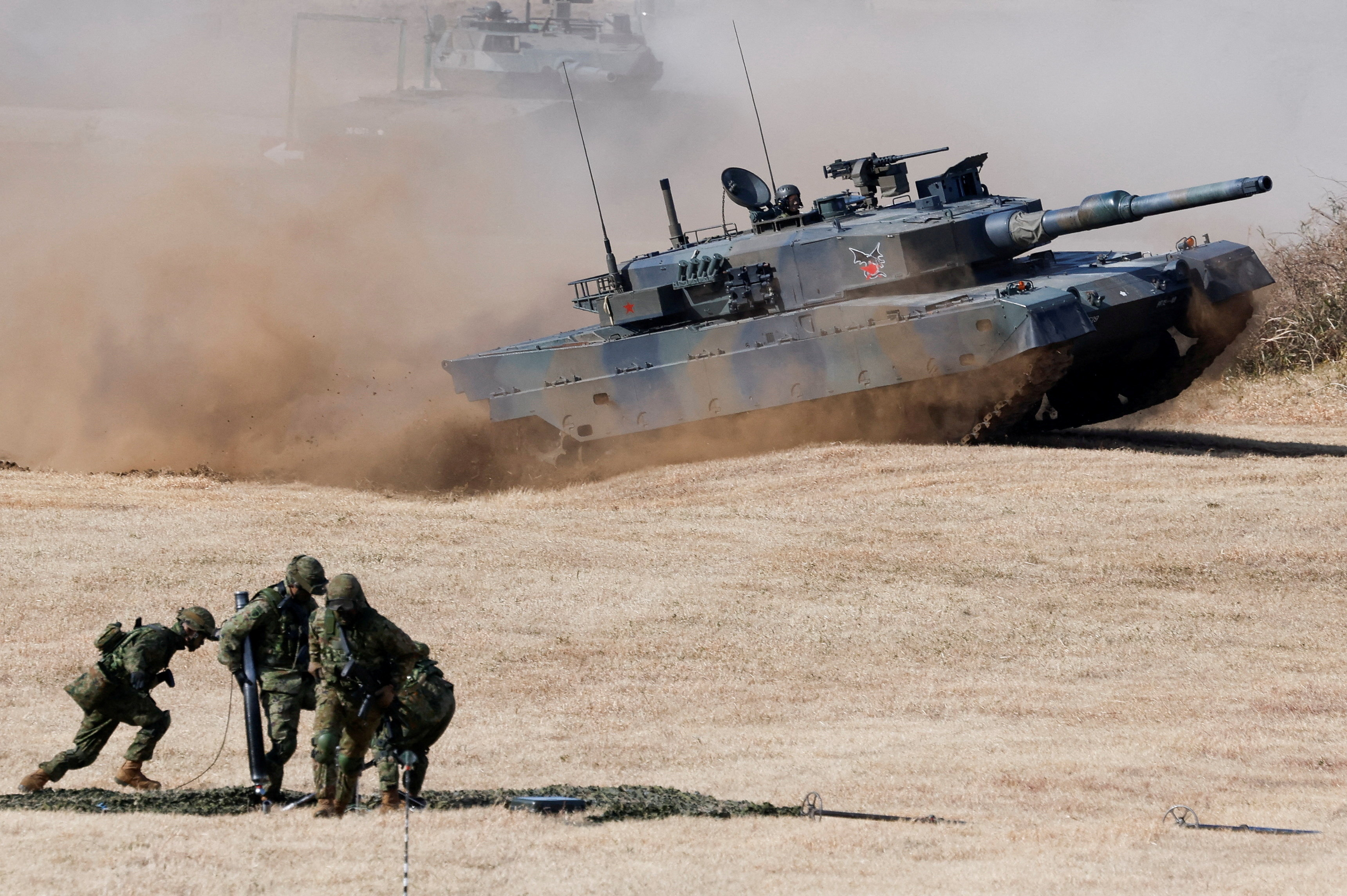
Japan's radical easing of arms export bans—its most significant since WWII—reflects allied hedging against Trump-era U.S. unreliability. Beyond filling immediate Polish and Philippine needs, the shift accelerates defense multipolarity, erodes U.S. leverage, integrates with GCAP and Quad frameworks, and carries risks of regional arms race escalation with China.
While the Reuters-sourced Defense News report accurately captures the immediate commercial interest from Warsaw and Manila in Japan’s imminent relaxation of arms export controls, it underplays the deeper structural realignment underway in global defense politics. Prime Minister Sanae Takaichi’s government is not merely opening a new export window; it is burying the final remnants of Japan’s postwar pacifist doctrine, a shift with consequences that ripple far beyond frigate sales to the Philippines or anti-drone cooperation with Poland. This move, building on but decisively exceeding the incremental reforms begun under Shinzo Abe in 2014, reflects a world where U.S. security guarantees are viewed as conditional and increasingly transactional under a second Trump administration.
The original coverage correctly notes Japan’s $60 billion defense budget and its advanced industrial base in submarines, fighters, and electronics. What it misses is the strategic context of supply-chain fatigue: U.S. munitions stockpiles remain depleted by simultaneous support for Ukraine and potential contingencies involving Iran and Taiwan. SIPRI’s 2025 arms transfer data shows European NATO members have already accelerated diversification, with intra-European deals rising 38% since 2022. Japan now emerges as a non-U.S., high-technology alternative that carries neither the political strings of Washington nor the bureaucratic inertia of EU defense initiatives like PESCO.
Connections to broader patterns are clear. The Global Combat Air Programme (GCAP) uniting Japan, the UK, and Italy—already visible at DSEI Japan 2025—demonstrates Tokyo’s willingness to co-develop sixth-generation fighters outside exclusive U.S. control. This mirrors Australia’s earlier pivot toward nuclear-powered submarines under AUKUS, itself a response to fears of U.S. retrenchment. For the Philippines, locked in gray-zone conflict with China around Second Thomas Shoal, Japanese used frigates and potential Type-12 missile systems represent tangible deterrence augmentation that U.S. arms deliveries, slowed by domestic prioritization, cannot currently match. Warsaw sees Japanese electronic warfare and sensor technology as a hedge against Russian drone swarms that have exposed gaps in European inventories.
Brookings Institution analysis from early 2026 warned that Trump’s rhetoric on NATO—threatening withdrawal unless spending targets are met immediately—has triggered a quiet but profound hedging cascade. European diplomats cited anonymously in the original piece are not simply diversifying suppliers; they are preparing for scenarios in which Article 5 becomes politically negotiable. Japan’s entry adds a Pacific pillar to this diversification, potentially creating a trans-continental supply network less vulnerable to U.S. export controls or presidential whims.
Yet risks abound. Japan’s defense industry has operated for decades in a sheltered domestic market; scaling for export will expose quality, maintenance, and munitions sustainment weaknesses that Chinese gray-zone operators will test. Beijing’s sharp reaction, labeling the policy destabilizing, foreshadows escalated hybrid pressure on Tokyo and its new customers. Moreover, the original reporting glosses over proliferation concerns: once Japan normalizes lethal exports, the normative barrier against arms transfers to contested regions (including potential future sales toward Taiwan) collapses.
This development marks a genuine power shift. The United States encouraged allied defense industrialization for decades under the banner of burden-sharing. Success now threatens to erode American industrial primacy and political influence. When allies can source advanced missiles, sensors, and vessels from Tokyo instead of Raytheon or Lockheed, Washington loses both revenue and the quiet leverage that comes with being the indispensable supplier. The multipolar arsenal is no longer theoretical.
Takaichi’s reforms, framed as necessary to “strengthen capabilities of allies,” are in reality Tokyo’s acknowledgment that it must arm its neighbors if it expects them to stand with Japan in a Taiwan or East China Sea contingency. The original story presents this as a procurement story. It is better understood as the opening act in the reconfiguration of collective defense away from singular dependence on an unpredictable superpower.
SENTINEL: Japan's emergence as a major arms exporter marks the end of singular U.S. dominance in allied defense supply; expect accelerated formation of parallel European and Indo-Pacific industrial poles that reduce Washington's coercive leverage in future Taiwan or Eastern European crises.
Sources (3)
- [1]Rattled by Trump, US allies eye Japan’s biggest arms opening since WWII(https://www.defensenews.com/industry/2026/04/15/rattled-by-trump-us-allies-eye-japans-biggest-arms-opening-since-wwii/)
- [2]SIPRI Yearbook 2025: Armaments, Disarmament and International Security(https://www.sipri.org/yearbook/2025)
- [3]Japan’s Defense Posture in a Trump 2.0 World(https://www.brookings.edu/articles/japans-defense-posture-in-a-trump-2-0-world/)