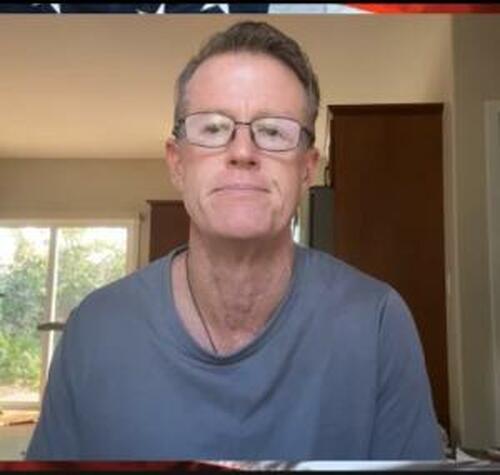
Credit Cycle Reversal: Dowd's $10,000 Gold Forecast Highlights Private Lending Risks Overlooked by Mainstream Reporting
Ed Dowd warns of cascading credit issues starting in private markets, forecasting $10k gold amid recession risks from housing, China, and Iran tensions; analysis reveals mainstream underemphasis on policy responses and historical BIS/IMF-documented shadow banking patterns.
Wall Street analyst Ed Dowd's recent warnings about a 'credit destruction cycle' beginning in private credit markets offer a lens into structural fragilities that extend beyond the immediate observations in the USAWatchdog interview republished by ZeroHedge. Dowd points to gating by major funds including Blue Owl, Apollo, BlackRock, and KKR as evidence that the two-year surge in lending from private credit to the broader economy is reversing, potentially cascading into recessionary conditions by 2026. This aligns with patterns seen in prior credit crunches where non-bank intermediaries, often called shadow banks, amplify downturns due to liquidity mismatches.
The original coverage emphasizes gating and redemptions among high-net-worth and institutional investors but underplays the historical context from primary sources like the Bank for International Settlements' Quarterly Review, which has repeatedly documented how prolonged low-interest environments lead to excessive risk-taking in private debt markets. BIS data from recent years shows private credit assets under management exceeding $1.5 trillion globally, a phenomenon that accelerated post-2008 and during the COVID-era quantitative easing, filling gaps left by regulated banks under tighter capital rules.
Synthesizing this with the International Monetary Fund's World Economic Outlook (April 2024 edition), which flagged vulnerabilities in non-bank financial intermediation, reveals connections missed in alarmist coverage: China's property sector deleveraging and weak domestic demand could exacerbate global demand destruction, yet IMF projections also note potential policy buffers through fiscal and monetary tools. On geopolitics, Dowd layers in the Iran conflict as a turbocharger for oil shocks and recession risks, including possible Strait of Hormuz disruptions. However, U.S. Treasury and Federal Reserve Financial Stability Reports present a more measured perspective, stressing ongoing monitoring of leverage without endorsing inevitable systemic collapse, highlighting that demand destruction from higher energy prices may itself temper inflationary pressures as Dowd predicts.
What mainstream economic reporting often misses is the policy dimension: primary Federal Reserve documents from past stress periods demonstrate willingness to backstop credit markets via emergency facilities, a tool not addressed in the source. Dowd's bullish stance on gold reaching $10,000 by 2030 and preference for cash reflects skepticism toward central bank credibility amid potential asset bubbles in AI and housing corrections, where rents declining ahead of home prices could trigger further contraction. Counter perspectives from the World Gold Council’s demand trends reports cite gold's safe-haven status driven by central bank purchases in emerging markets, but stop short of extreme price targets absent hyperinflationary scenarios.
Overall, while Dowd illuminates underappreciated risks in the post-easy-money transition, including a bursting AI bubble and China's challenges, primary official assessments suggest outcomes hinge on conflict resolution speed and regulatory agility rather than predetermined collapse. This multi-perspective view underscores systemic interconnections without forecasting a singular path.
MERIDIAN: Dowd flags private credit as the canary for broader credit contraction and gold as a hedge, yet primary central bank reports indicate intervention tools remain available to moderate the pace of any systemic rollover.
Sources (3)
- [1]Cash Is King, Dowd Sees $10,000 Gold As The Credit Market "Is Starting To End The Party"(https://www.zerohedge.com/markets/cash-king-dowd-sees-10000-gold-credit-market-starting-end-party)
- [2]BIS Quarterly Review - Credit Cycles and Non-Bank Intermediation(https://www.bis.org/publ/qtrpdf/r_qt2403.htm)
- [3]IMF World Economic Outlook April 2024(https://www.imf.org/en/Publications/WEO/Issues/2024/04/16/world-economic-outlook-april-2024)