U.S. Launches Domestic Biosecurity Offensive Against Resurgent New World Screwworm as Outbreak Approaches Southern Border
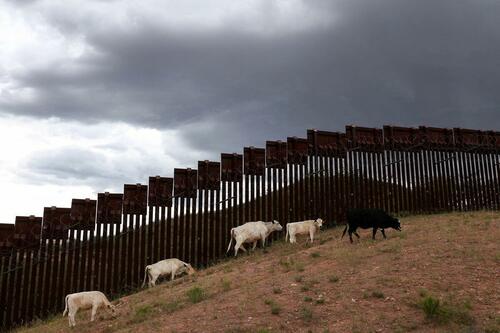
The U.S. is constructing a large-scale sterile fly factory in Texas to counter the northward spread of flesh-eating New World Screwworm from Mexico, driven by a 2023 resurgence across Central America. Official USDA and CDC data confirm hundreds of thousands of cases, prompting import bans and a militarized agricultural defense strategy with significant economic and biosecurity implications.
Official U.S. government sources confirm that on April 17, 2026, Secretary of Agriculture Brooke L. Rollins and Lieutenant General William H. “Butch” Graham of the U.S. Army Corps of Engineers broke ground on a major sterile fly production facility at Moore Air Base in Edinburg, Texas. The project, valued at approximately $610-750 million, aims to produce up to 300 million sterile New World Screwworm (NWS) flies per week once at full capacity, with initial operations targeted for November 2027. This marks a significant shift toward domestic production, reducing reliance on facilities in Panama and a new Mexican plant funded by $21 million in U.S. investment.
The New World Screwworm is a parasitic fly whose larvae burrow into the flesh of warm-blooded animals, including livestock, wildlife, and occasionally humans, creating expanding wounds that can be fatal if untreated. Females lay up to 3,000 eggs in a lifetime, often in open wounds or orifices. The sterile insect technique—releasing irradiated males that mate with wild females to produce non-viable eggs—has historically eradicated the pest from the U.S. and much of Central America.
CDC reports document a major resurgence beginning in 2023 in Panama and Costa Rica, which has since spread throughout Central America and Mexico. As of April 14, 2026, authorities have recorded nearly 168,000 animal cases and over 1,700 human cases in the region, with some fatalities. Recent detections in Mexican states like Tamaulipas and Nuevo Leon place active cases within 70-90 miles of the U.S. border. In response, the U.S. has restricted imports of live cattle, horses, and bison from Mexico.
This joint USDA-U.S. Army effort is framed as a national security and food supply chain priority under a five-pronged strategy. Texas, the nation's top cattle producer, faces particular risk to its livestock industry, rural economies, and the broader agricultural supply chain. While mainstream coverage has focused on the immediate response, deeper analysis reveals potential contributing factors including expanded farming activities in affected regions that may have accelerated spread, alongside possible climate influences allowing the tropical parasite to advance northward more readily than in previous decades.
The involvement of the Army Corps of Engineers and expedited procurement processes underscore the biosecurity dimension—treating an agricultural pest as a potential threat to economic resilience and public health. Human infections remain rare in the current outbreak but can be severe, highlighting vulnerabilities if swarms reach U.S. territory. This development connects to broader patterns of emerging zoonotic and vector-borne threats amplified by global trade, land use changes, and shifting environmental conditions, areas often underreported relative to their potential systemic impact.
LIMINAL: The rapid northward advance of NWS since the 2023 outbreak, now within striking distance of the U.S. border, exposes gaps in long-term hemispheric pest eradication and could trigger multi-billion-dollar losses to livestock if containment fails, forcing a permanent shift to militarized, domestic biosecurity infrastructure amid changing climate and land-use pressures.
Sources (5)
- [1]USDA and U.S. Army Corps of Engineers Break Ground on New Texas Sterile Fly Production Facility(https://www.usda.gov/about-usda/news/press-releases/2026/04/17/usda-and-us-army-corps-engineers-break-ground-new-texas-sterile-fly-production-facility)
- [2]New World Screwworm Outbreak - Situation Summary(https://www.cdc.gov/new-world-screwworm/situation-summary/index.html)
- [3]New World Screwworm: Outbreak Moves into Northern Mexico(https://www.cdc.gov/han/php/notices/han00526.html)
- [4]Current Status of New World Screwworm(https://www.aphis.usda.gov/livestock-poultry-disease/stop-screwworm/current-status)
- [5]Sterile fly facility to fight New World screwworm from border(https://myfox8.com/news/border-report/sterile-fly-facility-to-fight-new-world-screwworm-breaks-ground-on-border/)