Iran Ceasefire Signals and Petrochemical Halt: Mapping Risks, Face-Saving Compromises, and Energy Chokepoint Volatility
Ceasefire framework progress reported by Axios coincides with Iran's petrochemical export suspension and conditional Hormuz compromise on the Omani side, exposing intertwined Lebanon dynamics, historical blockade patterns, and differentiated impacts on global energy and petrochemical supply chains.
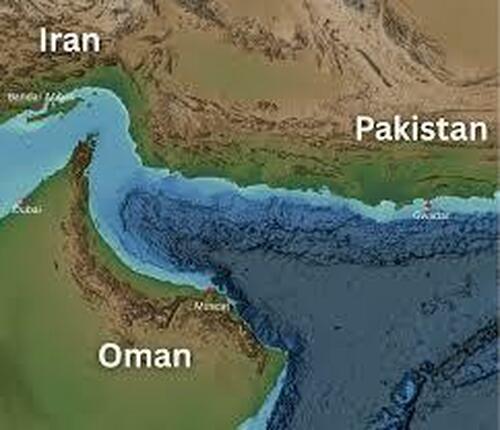
Negotiators from Washington and Tehran have reported incremental progress toward a framework agreement aimed at ending active hostilities, according to two U.S. officials cited by Axios on April 15, 2026. This development coincides with Iran's state media announcement, via ISNA, of a complete halt to petrochemical exports 'until further notice' and Reuters-sourced indications that Tehran may permit unconditional passage for vessels on the Omani side of the Strait of Hormuz while retaining control over its own territorial waters. These moves occur alongside a U.S. naval blockade enforced by CENTCOM, additional troop deployments reported by the Washington Post, and ongoing Israeli operations in southern Lebanon that have drawn Iranian condemnation.
Primary documents, including the CENTCOM maritime warning transcript and the April 15 CENTCOM statement confirming nine vessels turned back in the first 48 hours, establish that the blockade has disrupted maritime access to Iranian ports without yet triggering direct naval confrontation. Reuters reporting on the potential Hormuz arrangement draws from sources close to Tehran describing it as a face-saving mechanism that respects Omani sovereignty, echoing Oman's historical role as quiet mediator seen in the 2013-2015 JCPOA lead-up talks.
Original coverage, including the ZeroHedge synthesis, correctly flags the juxtaposition of ceasefire momentum and export suspension but understates two critical patterns. First, it gives insufficient weight to the linkage between the Lebanese theater and Hormuz dynamics: Iranian statements explicitly tie threats to Red Sea shipping with Israeli evacuation orders in southern Lebanon, a pattern consistent with proxy escalation cycles observed in 2006, 2019, and 2024. Primary Iranian Foreign Ministry readouts from April 14, 2026, frame Lebanese developments as inseparable from any Hormuz understanding. Second, coverage overlooks the distinct market signal of the petrochemical halt versus crude oil flows. While crude represents roughly 20 percent of global seaborne trade through Hormuz per longstanding EIA data, petrochemicals feed specialized downstream chains in plastics, fertilizers, and pharmaceuticals; their interruption compounds supply shocks differently than crude price spikes alone.
U.S. perspectives, articulated by President Trump’s remarks claiming military victory and Chinese acquiescence, portray the blockade and troop surge as coercive diplomacy yielding concessions. Iranian state television and Press TV counter-narratives emphasize preservation of sovereignty over national waters and characterize any Oman-side arrangement as reciprocal de-escalation rather than capitulation. Omani diplomatic channels, historically documented in declassified U.S. State Department cables from the 1980s tanker war, offer a third vector favoring incremental, face-saving measures to avoid direct great-power collision.
What remains missing from most immediate reporting is the longer historical rhythm: Hormuz crises in 1984-88, 2019 tanker seizures, and 2022-23 shadow conflicts repeatedly demonstrated that partial, ambiguous compromises can lower volatility without resolving underlying strategic distrust. The unconfirmed nature of the 'in-principle agreement' noted by both U.S. and Iranian officials mirrors the 2015 JCPOA interim phase, where public optimism preceded protracted technical disputes. Polymarket probabilities (33 percent yes on permanent peace deal by April 30, 2026) reflect this calibrated skepticism.
Geopolitical risks center on miscalculation during blockade enforcement or Lebanese spillover, potentially closing the strait entirely and driving Brent volatility beyond levels seen in 2022. Opportunities exist in sequenced diplomacy: a one-week Lebanese ceasefire, if verified, could create negotiating space for broader maritime protocols involving Oman, Qatar, and multilateral observers. Global energy markets thus face a narrow window where tactical pauses may dampen short-term disruption but leave structural vulnerabilities intact should talks stall. Multiple actors continue to shape outcomes; primary statements rather than interpretive overlays remain the clearest guide.
MERIDIAN: Incremental diplomatic progress and the petrochemical export halt suggest Iran is applying calibrated economic pressure while testing face-saving exit ramps; energy market volatility will likely persist until verifiable implementation measures, especially around Lebanon de-escalation and Hormuz protocols, materialize.
Sources (3)
- [1]CENTCOM Maritime Warning and Blockade Statement(https://www.centcom.mil/NEWSROOM/Press-Release/2026/)
- [2]Axios: US and Iranian Negotiators Report Progress Toward Framework(https://www.axios.com/2026/04/15/us-iran-negotiators-progress-framework)
- [3]Reuters: Sources Close to Tehran on Hormuz Oman-Side Arrangement(https://www.reuters.com/world/middle-east/iran-consider-strait-hormuz-compromise-2026-04-15/)