L3Harris Missile IPO Signals War Economy Surge Amid Geopolitical Tensions
L3Harris’ Missile Solutions IPO, backed by a $1 billion Department of War investment, aligns with Trump’s 'war economy' push to refill U.S. weapons stockpiles amid Ukraine and Iran conflicts. Beyond investor appeal, it reflects escalating defense spending, supply chain risks, and the financialization of global tensions.
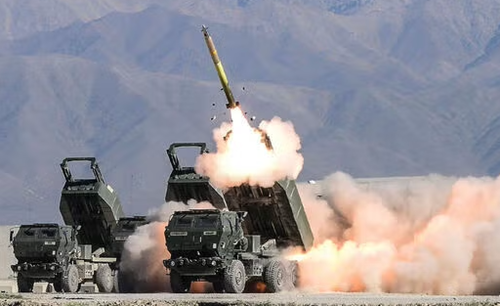
L3Harris Technologies’ confidential filing for an IPO of its Missile Solutions business (MSL) comes at a pivotal moment in U.S. defense policy under the Trump administration’s push for a 'war economy.' As reported by ZeroHedge, the filing aligns with a $1 billion investment from the Department of War (DoW) to bolster production of critical systems like PAC-3, THAAD, Tomahawk, and Standard Missiles. This move reflects a broader strategy to refill depleted U.S. weapons stockpiles amid ongoing conflicts in Ukraine and tensions with Iran. However, the story extends beyond a single IPO or investment. It underscores a systemic shift in global military-industrial dynamics, with implications for investors, policymakers, and international stability.
First, the timing of the IPO highlights a pattern of escalating defense spending driven by geopolitical flashpoints. The U.S. has already committed over $175 billion in aid to Ukraine since 2022, much of it in munitions, according to the U.S. Department of Defense’s public reports. Simultaneously, the Pentagon’s 2024 budget request of $842 billion—the highest in history—signals an intent to sustain long-term militarization. L3Harris’ MSL, positioned to capitalize on contracts for missile systems depleted in Ukraine and potentially needed in a Middle East escalation, is a direct beneficiary. Yet, ZeroHedge’s coverage misses the risk of over-reliance on defense stocks as a growth engine. Historical data from the 2000s Iraq and Afghanistan wars shows defense contractors like Lockheed Martin and Raytheon saw stock surges (up to 150% between 2001-2008), but subsequent drawdowns led to volatility when contracts dried up.
Second, the Trump administration’s 'war economy' rhetoric, including discussions with automakers like GM and Ford to repurpose civilian capacity for weapons production, echoes Cold War-era industrial mobilization but overlooks modern supply chain vulnerabilities. A 2023 Government Accountability Office (GAO) report on defense industrial base readiness warns of critical shortages in rare earth materials and skilled labor, issues that could hamstring rapid scaling. L3Harris’ ability to 'accelerate innovation,' as CEO Christopher Kubasik claims, may be constrained by these bottlenecks, a nuance absent from the original reporting. Moreover, the focus on domestic production ignores the global nature of defense supply chains—key components for systems like THAAD often rely on foreign partners, exposing risks of disruption from trade disputes or sanctions.
Third, the IPO raises questions about the financialization of conflict. While ZeroHedge frames this as a bullish signal for investors, it glosses over ethical and geopolitical ramifications. Defense IPOs can fuel arms races, as increased capital allows companies to lobby for more contracts, perpetuating cycles of militarization. A 2022 SIPRI report notes global military expenditure hit $2.24 trillion, with U.S. firms driving much of the growth. In the context of U.S.-China tensions, an emboldened defense sector could escalate proxy conflicts in the Indo-Pacific, a connection the original coverage does not explore.
In synthesizing these perspectives, L3Harris’ move is not just a corporate milestone but a microcosm of a militarized economic strategy with far-reaching consequences. Investors may see short-term gains, but systemic risks—supply chain fragility, post-conflict volatility, and global escalation—loom large. The Trump administration’s vision of a 'war economy' may strengthen domestic industry, but it also ties U.S. economic health to perpetual conflict, a gamble with no guaranteed payoff.
MERIDIAN: The L3Harris Missile Solutions IPO is likely to attract significant investor interest in the short term due to heightened defense spending, but supply chain constraints and post-conflict drawdowns could temper long-term gains.
Sources (3)
- [1]L3Harris' Missile Business Files To Go Public As Trump's War Economy Prepares For Launch(https://www.zerohedge.com/military/l3harris-missile-business-files-go-public-trumps-war-economy-prepares-launch)
- [2]U.S. Department of Defense Budget Request FY 2024(https://www.defense.gov/News/Releases/Release/Article/3326875/fy-2024-defense-budget-request/)
- [3]GAO Report: Defense Industrial Base Readiness(https://www.gao.gov/products/gao-23-106019)