US-Iran Conflict as Economic Lever: Russian Analyst, Chinese Media, and Market Data Reveal Monopoly Play Amid Multipolar Rivalry
Russian-Chinese analysis posits the US-Iran war as a business-driven tool for market consolidation in energy and shipping, backed by Reuters data on record US LNG exports amid regional chaos and Pozsar's insights on strategic pressure against China, revealing underreported economic imperialism in a multipolar context.
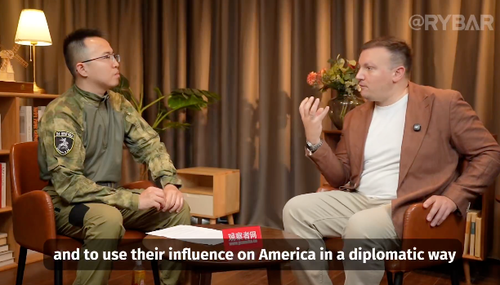
A recent interview by Russian military analyst Mikhail Zvinchuk of the Rybar project with Chinese outlet Guancha frames the US-Iran war not primarily as a response to nuclear threats but as a calculated disruption to consolidate Western dominance in global energy and logistics markets. Zvinchuk argues that the conflict enables large players like Maersk to outlast smaller competitors during shipping disruptions, while US LNG and oil exporters seize market share as Middle Eastern infrastructure falters. This view, aired in Chinese media, aligns with a heterodox lens of economic imperialism that mainstream Western outlets seldom emphasize.
Corroborating data supports key elements of this assessment. Reuters reporting confirms that US LNG exports hit record highs in March and April 2026 as the Middle East conflict curtailed roughly 20% of global LNG supply, with shipments to Asia surging and US terminals operating near maximum capacity. Qatar's position as a leading LNG supplier has been notably undermined, allowing American exporters to fill the void and rewire global energy flows. These outcomes match Zvinchuk's description of a 'market shakeout' favoring consolidated big players.
Independent analyst Zoltan Pozsar provides deeper context, describing the Trump administration's actions as 'methodically building a portfolio of assets' centered on maritime chokepoints and energy nodes—including the Strait of Hormuz, Venezuelan oil routes, and the Panama Canal—to pressure China. Pozsar clarifies the goal is not outright denial of energy to Beijing but to 'level the playing field' by raising costs for Chinese imports and reinforcing US leverage in global trade. This fits a historical pattern of Western powers using Middle East interventions to maintain control over critical sea lanes and commodity flows, now reframed against the backdrop of multipolar competition with China and its partners.
The Rybar channel, operated by Zvinchuk, has drawn US scrutiny—including a State Department bounty tied to alleged information operations—yet its economic interpretation of the conflict echoes realist analyses often voiced in non-Western capitals. Chinese platforms like Guancha amplify these perspectives, underscoring an information divide where adversarial states interpret US moves through the prism of profit-driven empire rather than stated security rationales. As global supply chains reconfigure and energy prices fluctuate, this episode highlights how regional wars can serve as instruments in the larger struggle over the architecture of 21st-century trade, potentially accelerating efforts by BRICS nations to develop alternative payment and logistics systems less dependent on US-controlled chokepoints.
Pozsar: Trump administration is stacking energy chokepoints and assets to raise China's costs and level the global trade playing field in favor of US interests.
Sources (4)
- [1]US LNG exports break record high as Middle East war disrupts global supply(https://www.reuters.com/business/energy/us-lng-exports-break-record-high-middle-east-war-disrupts-global-supply-2026-04-01/)
- [2]US LNG exports to Asia surged in April as Middle East conflict curtailed supply(https://www.reuters.com/business/energy/us-lng-exports-asia-surged-april-middle-east-conflict-curtailed-supply-2026-05-01/)
- [3]Meet the Russian blogger accused of U.S. election interference(https://www.washingtonpost.com/world/2024/11/04/russia-rybar-zvinchuk-election-interference/)
- [4]China's 'strategic non-action' as Persian Gulf war rages(https://www.interest.co.nz/public-policy/138077/long-china-presents-itself-counterpoint-stability-chaotic-usa-more-and-more)